 Guide On Map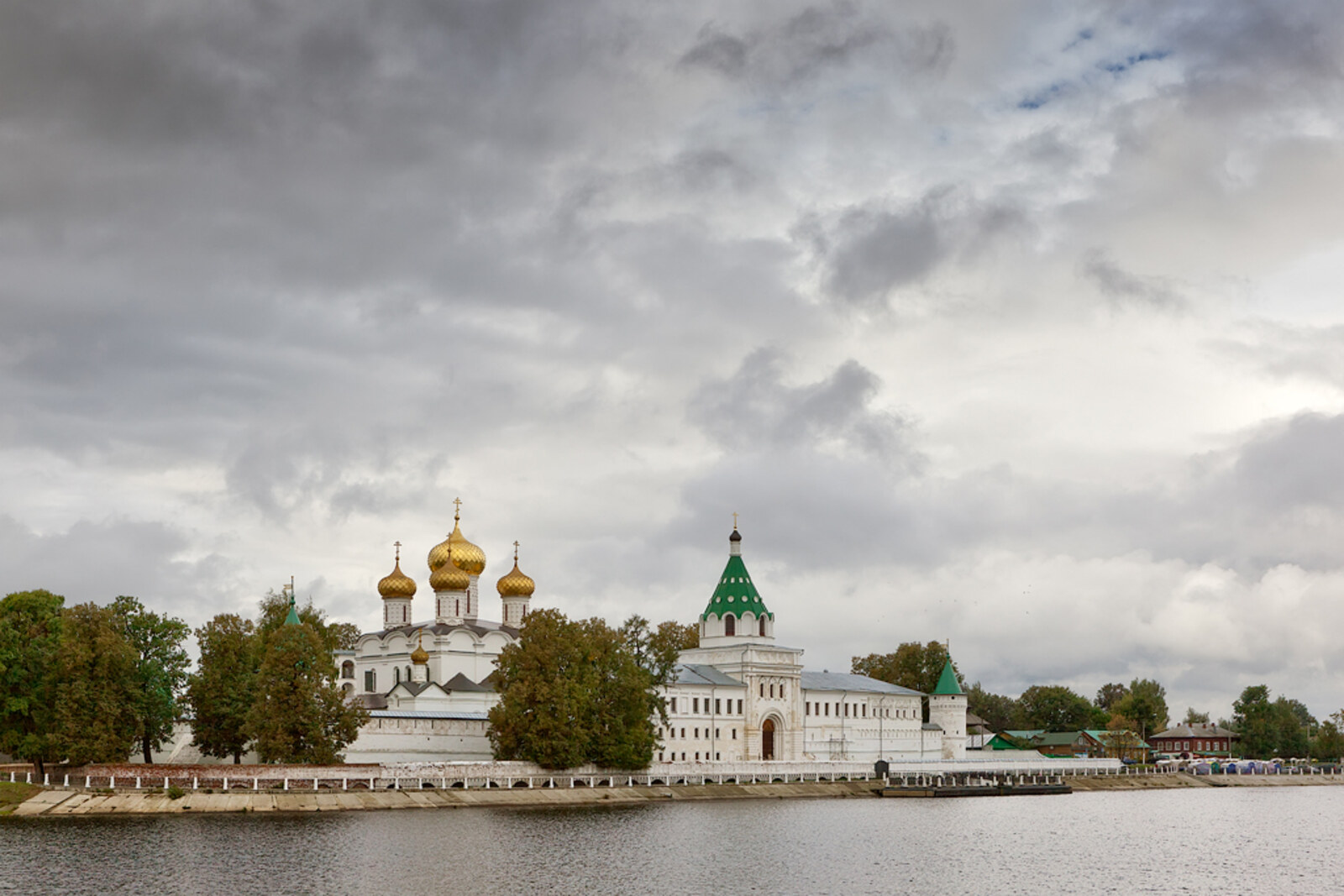
Look around first
What to notice
- The monastery walls and towers
- Trinity Cathedral of the Ipatiev Monastery
- The cellarer’s quarters
- Chapel of Mikhail of Malein
The story of the place
For six hours, the nun Marfa (Ksenia Shestova) refused to let her sixteen-year-old son leave Ipatiev Monastery for Moscow. The envoys asked Mikhail Fyodorovich Romanov to accept a decision already made without him: to become tsar. To his mother, this sounded like a request to send her son to the place where, within a few years, one young sovereign had been killed, another deposed, and the royal palace ransacked.
Marfa (Ksenia Shestova) did not become a nun of her own will. Before taking the veil, she was called Ksenia Shestova. In 1601, Tsar Boris Godunov accused the House of Romanov of conspiracy and forcibly tonsured Ksenia and her husband, Filaret (Fyodor Romanov), as monastics in order to remove possible rivals. Fyodor received the name Filaret, and Ksenia became Marfa; the spouses were separated and exiled. Little Mikhail was also sent away from Moscow. The family later returned, but by the beginning of sixteen thirteen, Filaret was in Polish captivity.
Marfa (Ksenia Shestova) inherited villages and land in Kostroma Uyezd. These holdings supported her household, servants, and son, so after the liberation of ravaged Moscow, the mother and Mikhail left for the Kostroma family estate and then took refuge behind the monastery’s stone walls. By March, they were living in the cellarer’s quarters, a building later called the Chambers of the Romanov Boyars.
The monastery’s full name combines two dedications. Its main church is consecrated in honor of the Holy Trinity, while the monastery is called Ipatiev after the hieromartyr Ipaty of Gangra, bishop of the ancient city of Gangra in Asia Minor. Monastery tradition says that Ipaty appeared to Chet, an ailing Tatar nobleman; Chet recovered and founded the monastery here. Early documents do not confirm this story, so Chet remains a figure of tradition.
While Mikhail lived here, the Zemsky Sobor assembled in Moscow—a gathering of clergy, boyars, nobles, townspeople, and Cossacks convened to choose a sovereign after years of internal strife. The House of Romanov was related to the former royal family, and Mikhail’s father held high ecclesiastical rank. Mikhail himself was too young to have acquired his own faction and old enemies. He was elected in absentia.
On the fourteenth of March, according to the calendar then in use, a procession bearing the council’s charter approached the monastery. Feodorit, Archbishop of Ryazan, who led the embassy, wanted the elected tsar’s consent and his mother’s blessing. Mikhail and Marfa (Ksenia Shestova) met the envoys at the gates and at first did not even want to go with them into Trinity Cathedral of the Ipatiev Monastery. Then everyone entered the church, read the charter, and heard another refusal. A report sent by the envoys to Moscow immediately after the events speaks of anger, tears, and hours of persuasion.
Marfa (Ksenia Shestova) did not limit herself to speaking of a mother’s fear. She recalled that people had already sworn allegiance to former sovereigns and then gone over to their opponents. After Boris Godunov’s death, his sixteen-year-old son Fyodor Godunov and his widow, Maria Godunova, were killed. The next tsar was deposed, forcibly tonsured, and handed over into captivity. The treasury was empty, many towns and villages were devastated, and there was nothing with which to pay serving men. If Mikhail accepted the throne, Marfa (Ksenia Shestova) said, he might be destroyed. Filaret could also suffer: the Polish king held Mikhail’s father hostage and could take revenge on him for his son’s accession.
The envoys replied that another refusal would again pit the supporters of different claimants against one another and continue the bloodshed. They promised to seek Filaret’s exchange. At last, Marfa (Ksenia Shestova) blessed Mikhail. Sources do not explain the exact moment of her decision. The familiar depiction in which the mother blesses her son specifically with the Feodorovskaya Icon took shape later; the report contemporary with the event speaks of icons brought in, prayer, and a mother’s blessing, but does not single out this image in the decisive gesture.
Mikhail accepted the council’s charter and the tsar’s staff. A messenger immediately carried the news to Moscow. Five days later, Mikhail left the monastery, spent seven weeks making his way along spring roads made impassable by mud to the capital, and was crowned tsar in summer. Filaret survived captivity, returned six years later in an exchange, became patriarch, and took part in governing alongside his son. Mikhail ruled for thirty-two years, and his descendants occupied the throne for more than three centuries.
The cathedral in which Marfa (Ksenia Shestova) made her refusal has not survived. In sixteen forty-nine, gunpowder stored in its lower level exploded and destroyed the church. The present Trinity Cathedral of the Ipatiev Monastery was built on the same site by decree of Mikhail’s son, Tsar Aleksei Mikhailovich. The Chapel of Ipaty of Gangra was retained there, and another was established in honor of Mikhail of Malein, the saint after whom the first tsar of the House of Romanov was named. Services are once again held in this chapel of the active monastery.
Useful on site
Museum grounds: May–September 09:00–17:30, October–April 10:00–17:00; closed on 1 January.
Checked: September 24, 2026. Check the official source before visiting.The monastery remains a religious space with separate rules for churches and museum premises. Confirm access in advance; if the grounds are closed, the account can end at the outer walls.