 Guide On Map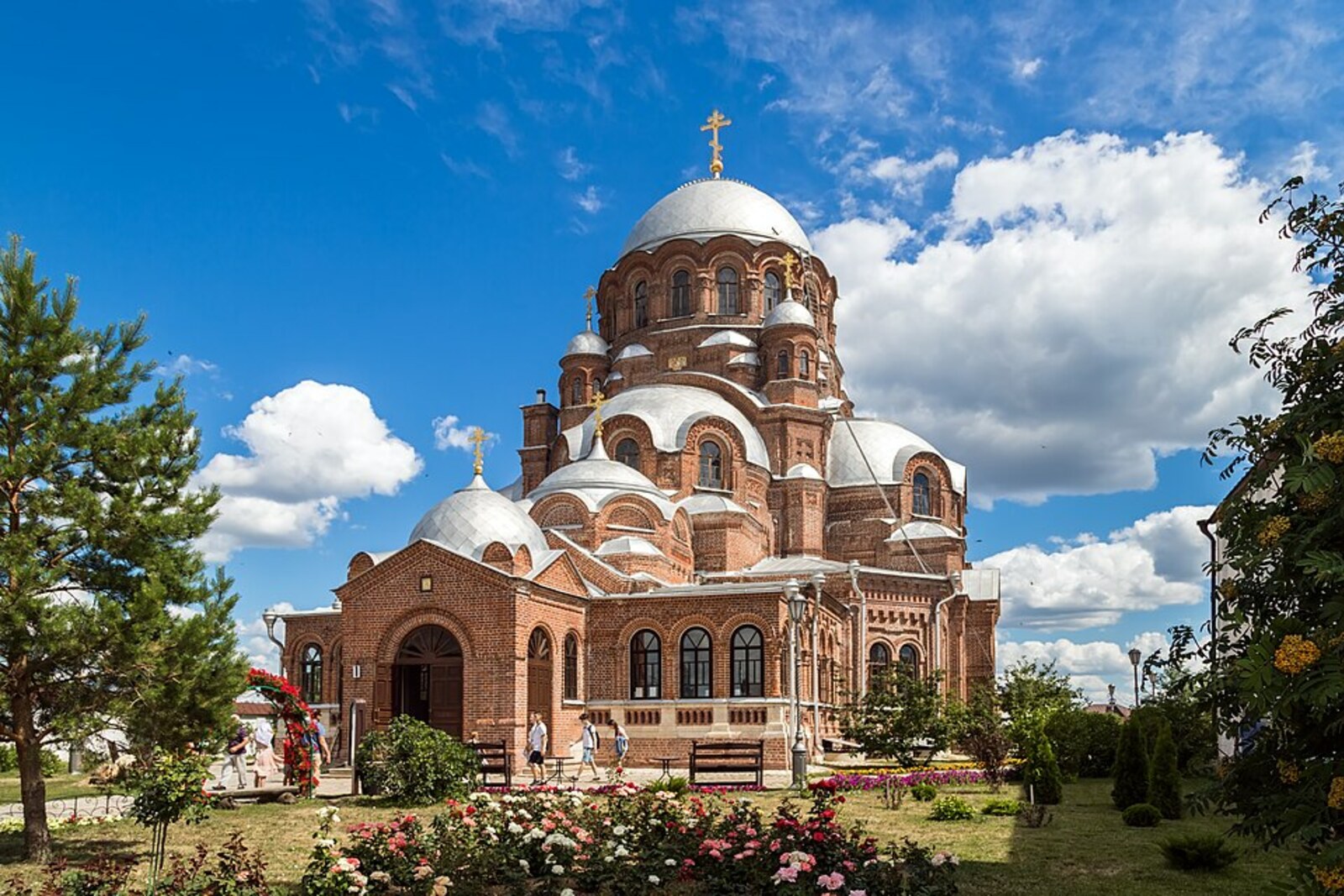
Look around first
What to notice
- Central dome
- Cross above the cathedral
- Porch
- Restored grave beneath the porch
The story of the place
Beneath the high central dome topped by a cross stands a large convent cathedral, designed for the sisters of the convent and worshippers who had previously found two small churches too cramped. Its dedication came from an old icon of the Mother of God, known in the convent from inventories. Its name recalls people seeking consolation in illness, misfortune, and loneliness.
Already seriously ill, Abbess Apfiya asked to have her grave made beneath the porch of the still unconsecrated cathedral. She chose the place herself, oversaw the work, and prepared a coffin a month before her death. The church for which she had launched the construction was nearly finished, but Apfiya never saw a single service held in it.
In the world, she was known as Anna Yumina. At the age of eight, she lost her father, a village priest; her mother was left without means with young children. At twenty-one, Anna came to the local St John the Baptist Convent with no money of her own. For twenty-two years she remained a novice, sang in the choir, then became the convent treasurer and finally its abbess.
By then, so many sisters and pilgrims gathered that the two small churches could not hold everyone even for a feast-day service. Apfiya sought one spacious church where nuns and laypeople could pray together. In eighteen ninety-seven, the convent treasury held just over fourteen thousand rubles—plainly too little for such a building. Nevertheless, the abbess received permission to begin the work.
Over the following years, she contributed more than one hundred thousand rubles to the construction: money from the diocesan treasury, donations, and her own savings. From her personal salary, Apfiya kept only enough for a modest funeral, so that after her death the sisters would not bear that expense. In eighteen ninety-eight, the cathedral's foundation was laid, and soon its huge central dome rose above Sviyazhsk.
The church was dedicated to an old convent icon of the Mother of God, known here from inventories as early as the eighteenth century. Its name begins with words from a church hymn. Those who sorrow in it are the sick, the wronged, the hungry, the lonely—all who seek consolation. On icons of this type, the Mother of God is depicted among such people, with angels helping them. That is why the words “Joy of All Who Sorrow” name both the Joy of All Who Sorrow Icon of the Mother of God and the cathedral built for the shared prayer of those for whom there had previously been too little room.
Apfiya died in the autumn of nineteen oh five. The sisters buried her in the prepared crypt beneath the porch; an unusual exception was made to allow burial beneath a church that had not yet been consecrated. The cathedral was consecrated only a year later.
Services are now held here again, and since ten twenty-one a convent has once more operated on this territory. Beneath the porch is Apfiya's restored grave. She lived to see the cross on the dome, while the sisters' first communal prayer service was already held above her crypt.
Useful on site
Active cathedral of St John the Baptist Convent; access to the interior depends on services and convent rules.
Checked: date not specified. Check the official source before visiting.The convent is active; if a service is underway inside, leave a detailed visit until later and view the building from outside.