 Guide On Map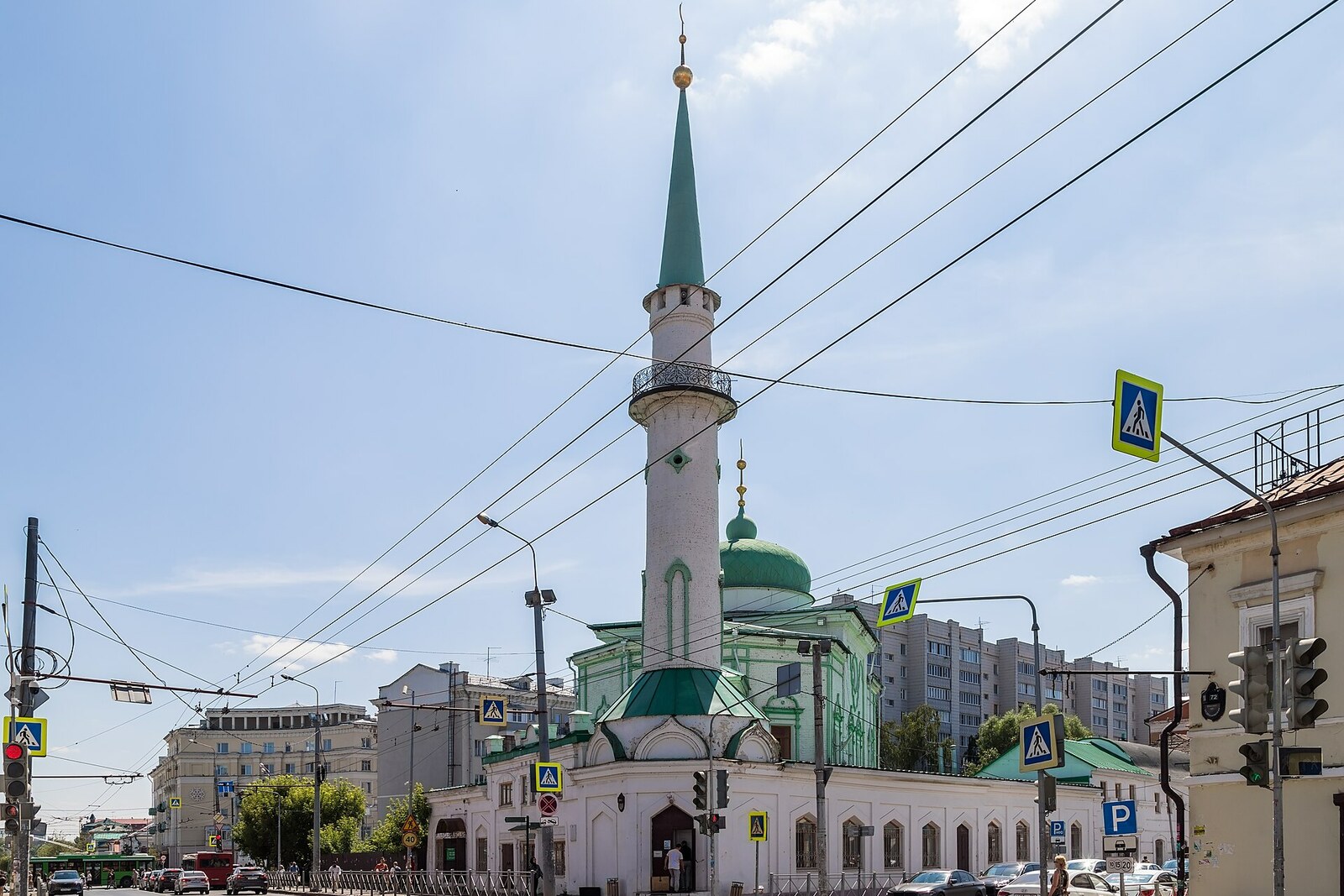
Look around first
What to notice
- The minaret above the entrance
- Low buildings of the former shops
- The passage through the trading building
- The prayer hall in the depths of the courtyard
The story of the place
According to a family recollection, one day during the obligatory prayer, Gubaidulla Yunusov came to his shops at Sennoy Bazaar and saw that the traders were not leaving their goods. Yunusov was a merchant of the first guild—he belonged to the highest merchant rank, owned a soapworks and two tanneries, and even sent goods to China. These people were his customers, partners, and neighbors. He could not persuade them to leave the bazaar for communal prayer, so he decided to build a mosque right among the trading rows.
For this, Yunusov bought a plot with an already unsuccessful history. In eighteen fifteen, the merchant’s widow Gabida Kitaeva tried to build a stone mosque here. The provincial administration first permitted construction, but church authorities objected: the Church of the Four Evangelists stood nearby, and, in the clergymen’s view, the muezzin’s call to prayer could interfere with Christian worship. The permit was withdrawn, and Kitaeva was told to look for another site. It was this land that Yunusov later acquired.
He himself never saw the mosque. Gubaidulla died in December eighteen forty-two and left it to his sons, Ibragim and Iskhak, to see the matter through. The brothers began with the foundation in the courtyard beside the family shops. Water appeared in the trenches. The architect proposed laying a wooden platform and placing granite blocks on top of it. Iskhak later said that one such foundation would have cost enough money for several ordinary mosques. Then the archbishop learned of the construction, and the police stopped the work. The brothers had already invested in the foundation; to abandon it would have meant losing money and violating their father’s will.
A way out was suggested by the city’s program of children’s shelters. Ibragim, who at the time headed Kazan’s Tatar merchant self-government, proposed opening a shelter for Muslim boys. The brothers contributed money for it and transferred fourteen trading shops: the premises were rented out, and the income went toward supporting the children. The mosque was included in the same project as a house mosque attached to the shelter. In the documents, it appeared together with the reconstruction of the shops—a prayer hall in the courtyard, a minaret, and a passage to it through the trading building.
The project was approved in eighteen forty-five, and four years later the mosque was completed. At first it was officially attached to the shelter, although those who prayed here were mainly the sellers and customers of Sennoy Bazaar. Sadretdin Utyashev, a teacher at the shelter, became the imam and brought the residents here on Fridays. In eighteen fifty-six, the mosque was made a congregational mosque. The imam of the neighboring congregation objected because he was losing some of his congregants and income, but the traders gained their own community where they spent their working day.
That is how it acquired the name Haymarket, or Bazaar Mosque. It was also called the Yunusov Mosque, after the family that left land, money, and shops here. The name “Nurulla,” meaning “light of Allah,” appeared much later: it was officially given in nineteen ninety-two, when the building was returned to the Muslim community. Before that, the mosque was used for institutions and housing for several decades, and the minaret, dismantled in nineteen twenty-nine, had to be rebuilt.
Sennoy Bazaar itself no longer exists. The prayer hall still stands diagonally in the depths of the courtyard, the street is lined with low buildings of the former shops, and the entrance passes beneath the minaret. People still enter the mosque through the connection between trade and prayer that Ibragim and Iskhak Yunusov established through the construction papers in order to fulfill their father’s will.
Useful on site
An active mosque; there are no separate hours for tourists, and the exterior can be viewed from the city street.
Checked: date not specified. Check the official source before visiting.Do not look for a literal reconstruction of the market: its scale must be reconstructed from the mosque’s position and the surrounding streets. Enter only in accordance with the congregation’s rules.