 Guide On Map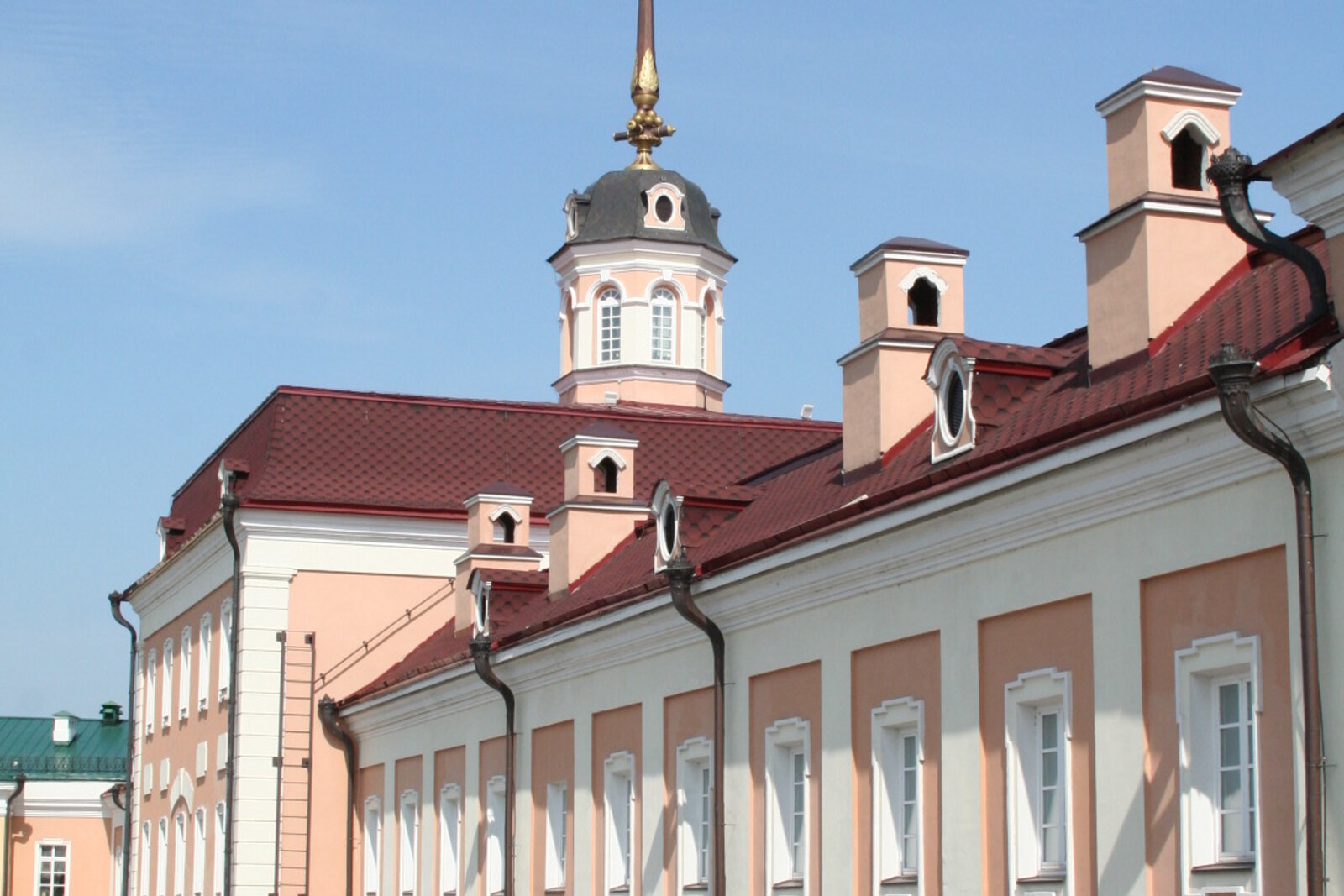
Look around first
What to notice
- Eastern Building
- Inner courtyard
- Casting pit
- Old brickwork
The story of the place
The fortress wall encloses this yard between the buildings, in one of which old brickwork is visible. Military craftsmen worked here: metal was melted in furnaces, parts were forged in forges, and the warehouses held the weapons reserve. Beneath the floor of the eastern building, a deep pit has survived, into which a mold for casting a cannon barrel was lowered; it is now displayed in the museum. The craftsmen lived beside the workshops, and later the buildings were occupied by pupils of military schools.
In eighteen twelve, Colonel of Artillery Zuyev received orders to establish a casting arsenal in the Kazan Kremlin. In the midst of the war, he was to set up reserve production: receive damaged guns, repair them, cast new cannons, make gun carriages and ammunition chests.
Kazan was chosen for practical reasons. Metal was delivered here along the Siberian roads, while heavy cargo and timber came by the Volga, and an artillery yard with furnaces, forges, and warehouses had already existed in the Kremlin since the end of the seventeenth century. Zuyev was assigned to rebuild the old workshops and erect a new building by the fortress wall. In eighteen thirteen, he reported that the work had been completed.
The craftsmen were registered with the military department and practiced blacksmithing, casting, turning, carpentry, and wheelmaking. Their barracks and apartments were here as well. Old cannons and copper coins withdrawn from circulation were sent for remelting. From the resulting alloy, the founders made new barrels, while the other workshops supplied them with wheels, fittings, and chests. Dozens of guns came from here over several years.
On September third, eighteen fifteen, a fire began in Yamskaya Sloboda and reached the Kremlin within a few hours. A store of gunpowder exploded in the artillery premises, killing three soldiers. People managed to carry out tin, paints, canvas, and sheet metal from the main stores, along with the treasury and documents. The recently built workshops and barracks burned down, and only a damaged stone shell remained of the forge.
The new commander of the arsenal, Lieutenant Colonel of Artillery Prince Semyon Baratayev, sought to resume casting. He housed the workshops, barracks, and storehouse in town houses on what was then Novo-Gorshechnaya Street, assigned the blacksmiths among the surviving forges, and sent the salvaged property to sheds on Arsk Field. Ninety-six craftsmen, journeymen, and apprentices continued their service, but cannon production left this Kremlin yard. The burned-out buildings were later given to military cantonists—soldiers' children whom the state was preparing for army service—and then adapted for a cadet school.
A direct trace of the former work was found only during restoration: beneath the floor of the eastern building, a casting pit about four meters deep was uncovered, with brickwork from the seventeenth and eighteenth centuries. A vertical mold for a future barrel was lowered into such a pit. It is now inside the museum. Zuyev's cannons are no longer here; the name Cannon Yard remains above the buildings where they were cast, repaired, and stored.
Useful on site
The yard is accessible during the site's opening hours; the Cannon Yard Museum follows the museum schedule.
Checked: date not specified. Check the official source before visiting.The casting pit and engineering finds may be accessible only inside the exhibition; without a separate visit, look around the yard and the buildings.