 Guide On Map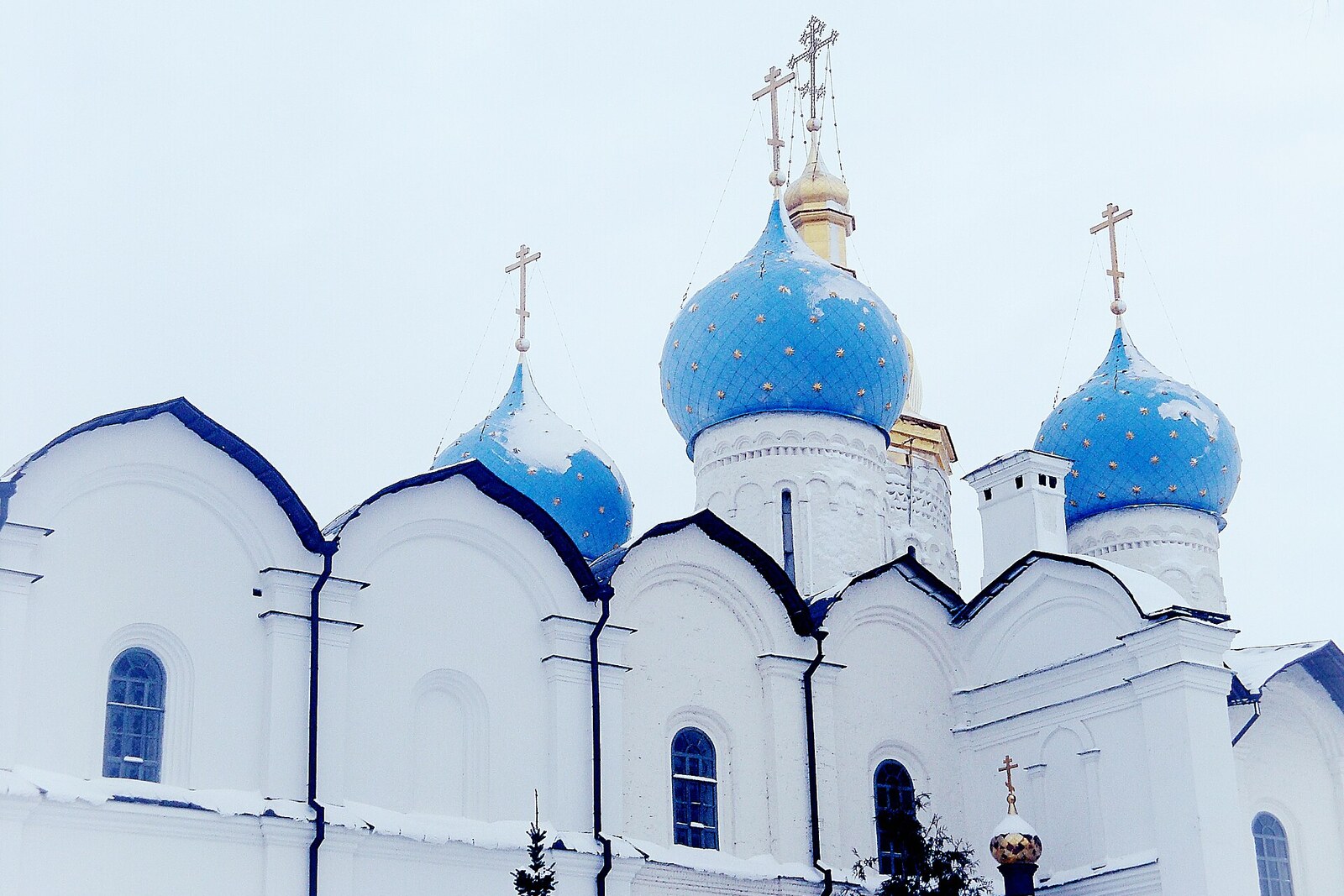
Look around first
What to notice
- White-stone central section
- Upper church
- Lower level with the museum
The story of the place
The name preserves the old order: the Kazan archbishop conducted services here, ordained priests, and decided the affairs of the eparchy. Beneath the upper church was the burial vault of its deceased heads; a museum of the cathedral’s history now operates in the lower level. The white-stone core of the present building has survived from the sixteenth century, and services are held upstairs again.
After Kazan was captured, a new Orthodox eparchy was established in the city. Its first archbishop, Gury, was to arrange the principal church, where the head of the Kazan Eparchy would conduct services, ordain priests, and make the most important church decisions. Under Gury, a stone cathedral was built on the site of a wooden church and consecrated in fifteen sixty-two.
The Annunciation, to which the church is dedicated, is a Gospel event: the archangel Gavriil told Mariya that she would become the mother of Iisus. The church was called a cathedral because it was the place of service of the Kazan archbishop. The deceased heads of the eparchy were buried below.
In July seventeen seventy-four, this arrangement determined the actions of Archbishop Veniamin. Emelyan Pugachev, the leader of the uprising, passed himself off as Emperor Pyotr III, who had survived, and wanted to seize Kazan. Veniamin had seen the burial of the real Pyotr III and sent messages to churches, urging people not to swear allegiance to the impostor.
Pugachev’s detachments occupied almost the entire city. Officials, nobles, merchants, soldiers, and townspeople took shelter behind the Kremlin walls. Veniamin remained with them and conducted services in the Annunciation Cathedral all day while the rebels shelled the fortress from three sides. When the gunfire died down, the archbishop carried out icons and led the clergy and townspeople in a religious procession along the inner walls. Pugachev’s followers did not take the Kremlin. After their army was defeated, the government commander came here first, and Veniamin held a thanksgiving prayer service.
Several months later, Ilya Aristov, a captured participant in the uprising, falsely accused the archbishop. He claimed that Veniamin had secretly given Pugachev three thousand rubles so that he would spare the suburban episcopal residence. The accusation also sounded plausible because Veniamin really did live outside the city: there was not enough money to repair and maintain his Kremlin house. Deacon Aleksei Ionin and the merchant Ogorodnikov confirmed Aristov’s account.
Empress Ekaterina II believed the testimony. Veniamin was arrested and forbidden to give explanations. Then Pyotr Vasilyev, an official of the bishop’s chancery, secretly sent the empress the prisoner’s letter. The investigation established that the archbishop had not given Pugachev any money. In January seventeen seventy-five, Ekaterina ordered Veniamin’s release, elevated him to the rank of metropolitan, and bestowed on him a white headdress with a diamond cross. Aristov was exiled to penal labor in Baltic Port.
The white-stone sixteenth-century structure in which Veniamin conducted services together with the townspeople locked inside the Kremlin remains the central part of today’s cathedral. Services are now held upstairs again, and a museum of the church’s history has been arranged in the lower level.
Useful on site
The cathedral is open daily from 08:00 to 20:00; the museum operates on a separate schedule.
Checked: date not specified. Check the official source before visiting.If a service is underway inside, do not disturb the parishioners: view the cathedral from the square and focus on the trace of the bell tower.