 Guide On Map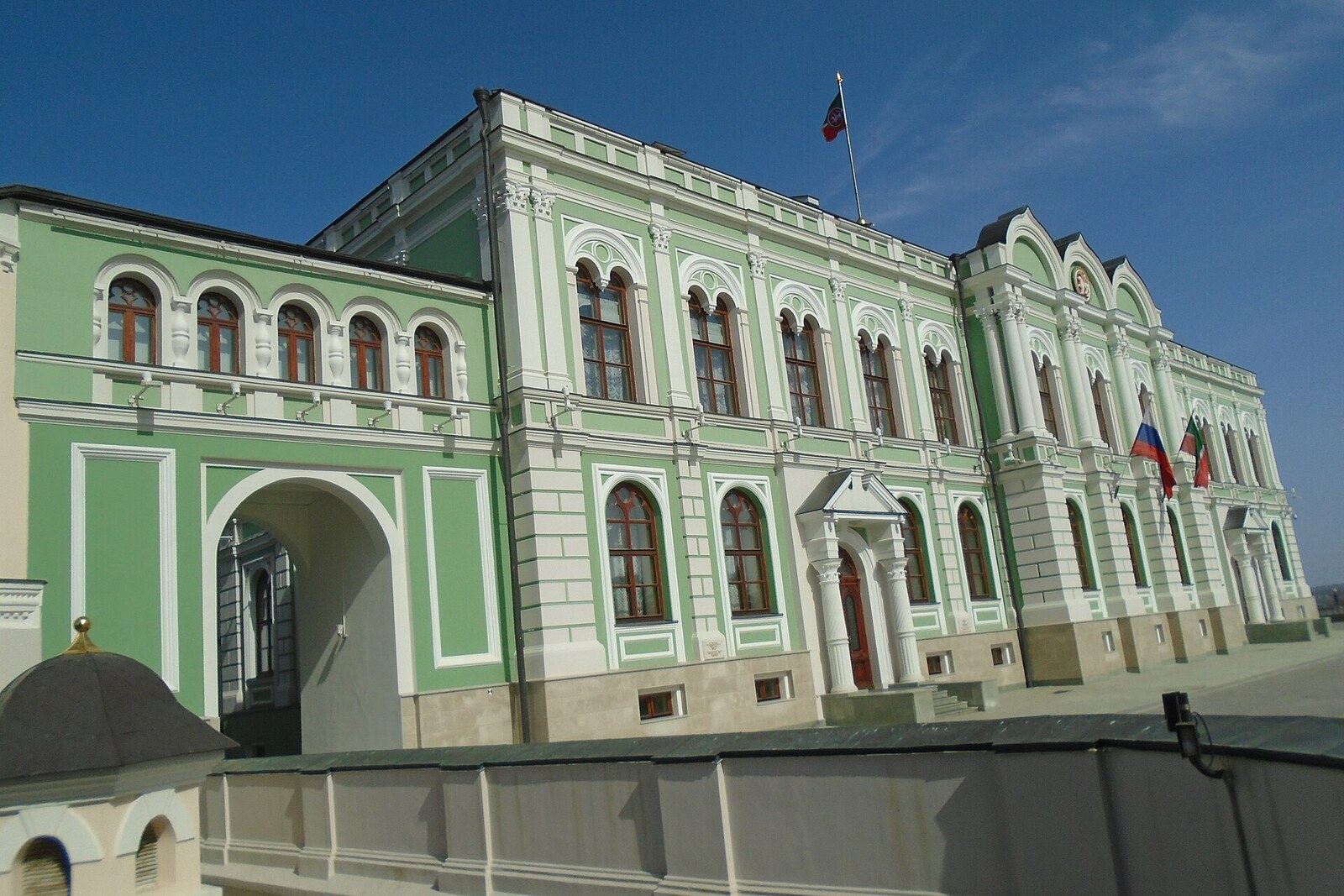
Look around first
What to notice
- Upper row of large windows
- Lower floor
- Small mezzanine windows
- Palace fence
The story of the place
Behind the palace fence are the living quarters and workrooms of the governorate authorities: the military governor lived downstairs, while people descended to his chancellery in the basement. The upper row of large windows lights a suite of rooms with a bedroom, study, reception rooms, drawing rooms, and hall; the floor above it, marked by small mezzanine windows, was intended for servants. The palace still serves as the official residence of the head of Tatarstan.
On August twentieth, eighteen thirty-six, Emperor Nikolai I inspected the northern edge of the Kazan Kremlin. Here stood the dilapidated house of the fortress's senior commandant and the ruins of the Khan's Court. Nikolai personally designated this site for a new building: “a military governor's house with an imperial apartment.”
The military governor was the appointed head of the governorate and commander of the troops stationed there. He lived in state-provided quarters, received petitioners, signed orders, and ran the chancellery. With the post, he received this house, and after retiring, he had to vacate it. Nikolai added a separate floor for himself and his family to the governor's quarters. The emperor's journeys around the country served as inspections: local officials showed institutions, reports, troops, and urban improvements, while the sovereign needed rooms where he could rest, receive officials, and hold a formal dinner.
So the palace acquired an arrangement that cannot be guessed from the outside. The governor's rooms were downstairs, while his chancellery operated in the basement. Above them were seventeen imperial rooms: a bedroom, a study, reception rooms, drawing rooms, and a large hall. Still higher, behind small mezzanine windows, lived valets, chambermaids, and other servants who prepared the rooms for rare visits. The governor occupied the palace permanently, but the main floor waited for a man who might appear for only a few hours.
The building was completed in eighteen forty-eight. Nikolai I never visited the apartment intended for him. His son carried out his order.
On August twenty-seventh, eighteen seventy-one, Aleksandr II arrived in Kazan via the Volga as emperor. Kazan Governor Nikolai Skaryatin, a former combat officer and now an official whose professional reputation depended on the sovereign's assessment, had to present the city in perfect order. After a service in the Annunciation Cathedral, Aleksandr went to the palace. Here he rested, received the heads of institutions and representatives of the city's estates, and then set out to inspect a gymnasium, a monastery, a school, and a military hospital. After reviewing the troops, the emperor returned here for a formal dinner. That same evening, he declared his gratitude to Skaryatin for the order, cleanliness, and improvements in Kazan, then sailed farther down the Volga.
Today, behind the fence is the official residence of the head of Tatarstan. Behind the upper row of large windows, Aleksandr II received Kazan officials; one floor below, Skaryatin lived and conducted the affairs of the governorate.
Useful on site
The palace is an active official residence; there is no regular tourist access.
Checked: date not specified. Check the official source before visiting.View the palace only from the publicly accessible area, and do not go beyond the barriers: this is an active residence.