 Guide On Map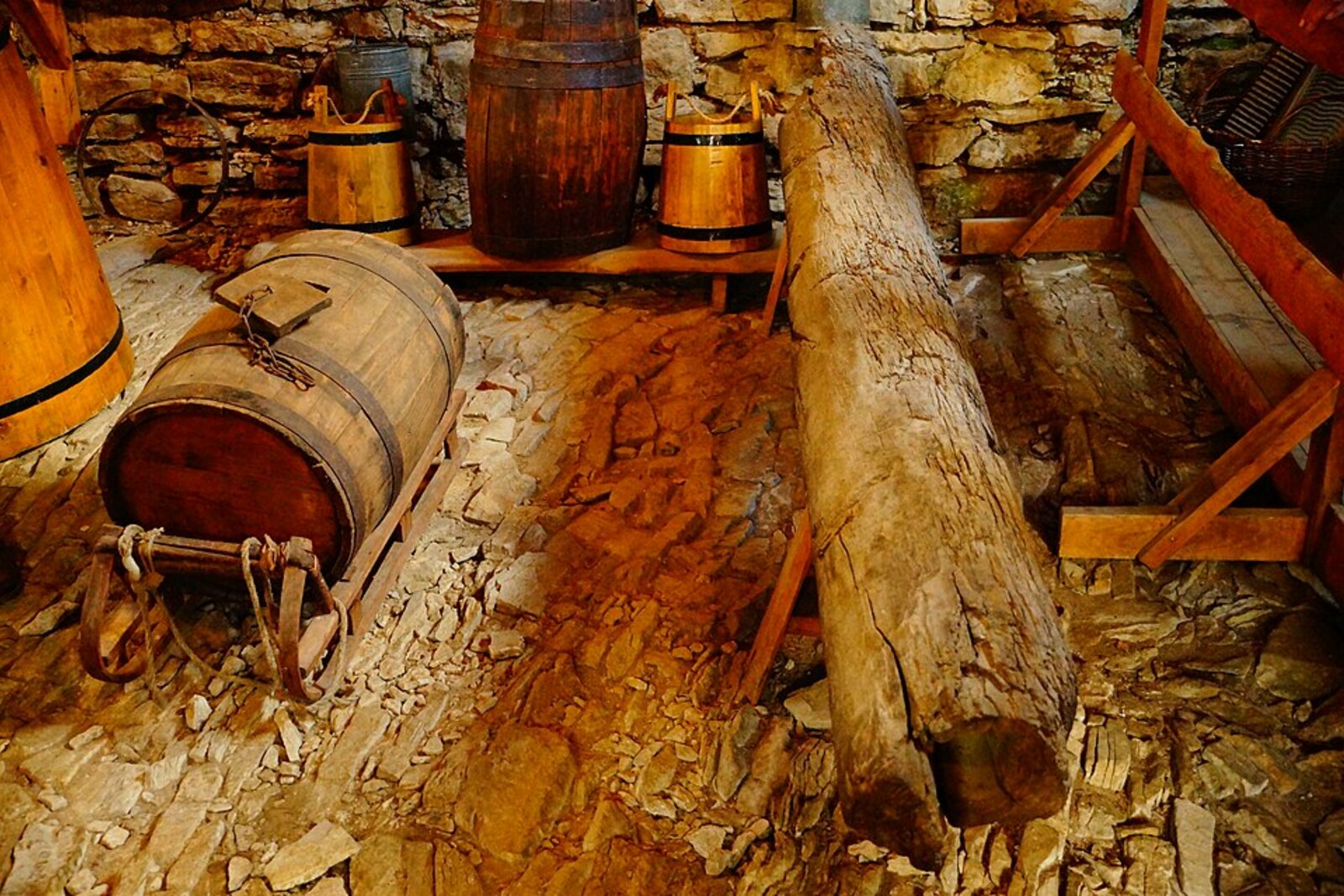
Look around first
What to notice
- Rubble-stone walls
- Wooden flume
- Washing troughs
- Bored log
The story of the place
Rubble-stone walls surround one of the town’s four washhouses, where water left over after filling the basins in the squares was directed. It entered the building through a long wooden flume, filled the washing troughs through openings, and after rinsing ran down the sloping stone floor into a drain. Four women could use the troughs at once, while the others waited on benches; there was a charge for washing, and hot water was bought separately. The name comes from the old word port, which meant clothing.
In the early nineteenth century, people in Yelabuga had to travel for water. The wealthy sent horse-drawn carts to a spring outside town, residents of moderate means took water from the Toyma River, and the poor drew it from the Buga Stream. Sand came into the bucket along with the water, so it had to be left to settle at home. The city did not have enough wells, and after a cholera epidemic the question of clean water became especially urgent.
In eighteen thirty-three, Ivan Vasilyevich Shishkin took up the matter. A grain merchant and the elected head of the city duma, he had been pressing for a water supply to be built. He found no support among provincial officials or the townspeople. Shishkin then invested all his ready capital in the work: one thousand six hundred rubles earned through the grain trade.
He had no completed design. Shishkin found a spring in a ravine above the town and decided to let the water run by gravity. He hired craftsmen from Ryazan who knew how to bore wooden pipes for well pumps. They hollowed out the cores of pine logs and joined the resulting pipes together in a trench. July downpours repeatedly washed away the earth and carried off logs that had already been laid. Shishkin continued the construction until the spring water reached the basins in the town squares. Later, branches of the water supply were run along Pokrovskaya Street and Kazanskaya Street to fifty-two houses.
The water continuously filled the town basins, and its surplus was directed to four public washhouses. Two were wooden, and two were built of rubble stone. One of the stone washhouses stands here. It was called a portomoinya: the old word port meant clothing.
Water entered the building through a long wooden flume and filled the washing troughs through openings. After rinsing, it ran down the sloping stone floor into a drain. Four women could use the troughs at once, while the others waited on benches. There was a charge for washing, and hot water was bought separately. A cashier took the money, a cleaner looked after the building, and a stoker kept the stove going so that the water in the pipes would not freeze.
The portomoinya operated until nineteen ninety-one. A museum is now open inside, and the exhibition contains a fragment of Shishkin’s water supply: a bored log through which water from the ravine outside town reached this washhouse.
Useful on site
The museum is usually open Tuesday–Sunday 09:00–18:00; Monday is a day off. Access to the lower part of the ravine depends on the weather and the condition of the surface.
Checked: date not specified. Check the official source before visiting.Descend into the ravine only on stable ground. In mud, ice, or severe washouts, inspect the upper section and do not go down to the water.