 Guide On Map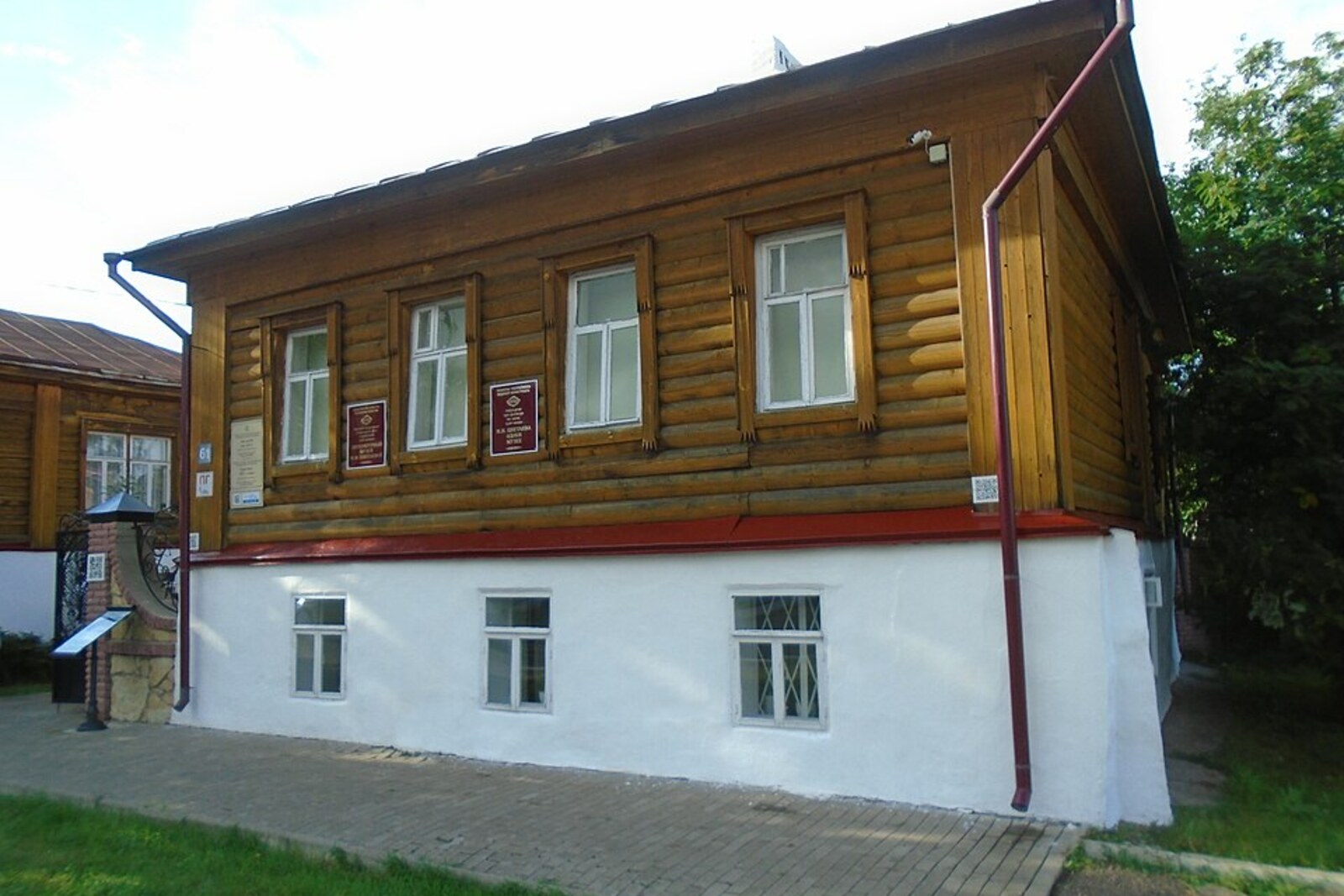
Look around first
What to notice
- Two-story house
- Editions published during the poet's lifetime
- Cameo
- Silver teaspoons
The story of the place
The literary museum occupies two floors of a former residential house on Kazanskaya Street. The rooms contain books published during the poet's lifetime, letters, photographs, a cameo, teaspoons, and an envelope containing a lock of hair. After the building was cleared, there was no authentic furniture here, nor an archive accessible to researchers. Documents were sought in private collections, while furnishings from the period were gathered from old houses in Yelabuga and from dumps. The exhibition was devoted to the poet's literary work and her entire life.
This two-story house on Kazanskaya Street became a fallback address. Marina Tsvetaeva never lived here. In August nineteen forty-one, the evacuated poet arrived in Yelabuga with her sixteen-year-old son Georgy, tried to find work, and died ten days later. The house where those days passed was nearby and remained private housing.
In nineteen ninety, the banker Leonid Onushko decided to buy that house and establish a museum there. He invited Inna Limonova, a poet from Naberezhnye Chelny, to become director of the as-yet nonexistent institution; she was to create the exhibition from scratch. Limonova admitted that she knew nothing about museum work, had not seriously studied Tsvetaeva's writing at the time, and agreed more out of surprise.
The next morning, they went to the owner of Tsvetaeva's house. For the two rooms, the vegetable garden, and the sheds, she demanded several apartments and cottages for her relatives. The bank did not have such funds. Onushko ordered them to look nearby for a building that was cheaper and more spacious. A month later, they bought this house, about two hundred meters from the original destination.
Limonova was left with partly ruined rooms piled with the former owners' belongings. She recalled that fifteen truckloads of trash were hauled away; her grown children helped, receiving a nominal wage for the work. Once the building was cleared, they had to decide what would fill the museum. Tsvetaeva's archive was closed to researchers until two thousand, and there could be no authentic furniture belonging to the poet here. Limonova searched for documents in private collections, traveled to see specialists, and filmed Yelabuga residents who had met Tsvetaeva. Furniture from the poet's time was collected from old houses, even found at dumps, washed, and sent out for repair.
About a year later, the first exhibition appeared. Soon Onushko announced that the museum now had to support itself. Admission remained free, but seven employees already had to be paid. Limonova opened an art salon, organized tours of Yelabuga, and accepted donations. Visiting admirers of Tsvetaeva were fed and given a place to spend the night if they could not afford a hotel; for a late-arriving guest, staff would open the museum even late in the evening. That is how the former residential house became a place people traveled to for Tsvetaeva, even before a full-fledged memorial complex appeared in the city.
After Limonova left, the institution stood closed for some time. In nineteen ninety-seven, it was transferred to the city, then incorporated into the Yelabuga State Museum-Reserve. In nineteen oh three, staff completely repaired the building, assembled a new exhibition, and acquired editions published during Tsvetaeva's lifetime and her personal belongings. There was still not enough money for the roof: builders they knew agreed to do it on credit, and the missing sum was found only after the opening.
When the Memorial House finally appeared nearby, staff divided the roles of the two museums. Tsvetaeva's Yelabuga days remained with the authentic address, while here, in nineteen twelve, they created an account of Tsvetaeva's entire life and literary work. The halls contain books published during her lifetime, letters, photographs, a cameo given by her father, silver teaspoons, a dish she bought in Germany, writing paper, and an envelope containing a lock of hair.
The house on Kazanskaya Street retained the role it had acquired because the purchase did not go through: it was not the place of Tsvetaeva's final days, but it was here that objects and books brought to Yelabuga from different parts of her life were placed.
Useful on site
Tuesday–Sunday 09:00–18:00; Monday is a day off. Changes are possible on public holidays.
Checked: date not specified. Check the official source before visiting.Do not begin your visit with the end of the biography: move through the exhibition in sequence, from her family and early work to emigration, the archive, and her return.