 Guide On Map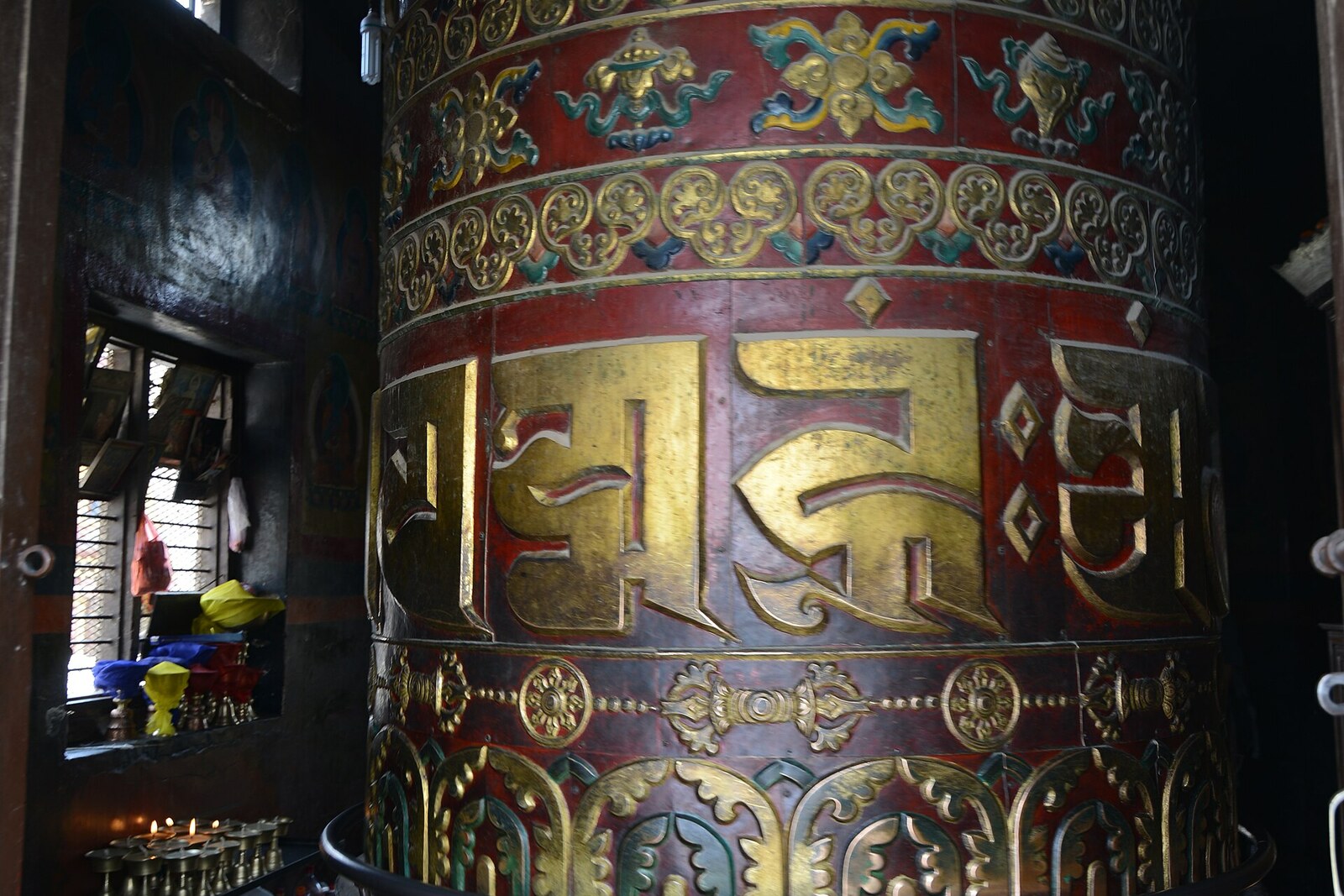
Look around first
What to notice
- Multistory temple building
- Statue of Padmasambhava (Guru Rinpoche)
- Statue of Amitabha
- Statue of Avalokiteshvara
The story of the place
At first, there was no monastery here in the usual sense. Taipo Shing (Tephi Sim), the first Chiniya Lama (Chinese Lama) and custodian of Boudhanath Stupa, built a large temple hall by the stupa. Local Tamang lamas needed it: previously, duties at the shrine had been divided among people and sanctuaries, but this community had no premises of its own for shared rituals. Old descriptions therefore call the structure precisely a lhakhang—a house of sacred images—not a residence where many monks live permanently.
Taipo Shing also led Gyang Guthi, a hereditary religious endowment that maintained the stupa and held festivals. Behind his decisions stood a very earthly economy. The endowment received crops and dues from lands in Melamchi and near Kopan; this income paid for repairs, offerings, and the work of the lamas. The temple hall became the place where the custodian of the stupa met with his Tamang students, and from which the custodian and his students carried out their duties at Boudhanath Stupa.
Taipo Shing's son and grandson continued this system. His grandson, Punya Vajra, the third Chiniya Lama (Chinese Lama), led the community for most of the twentieth century. After the land reform of nineteen sixty-one, the endowment lost a significant part of its former holdings, and with them its customary income. When Punya Vajra died in nineteen eighty-two, it was no longer possible to appoint one person with the same range of duties. Management passed to a committee of his descendants and the families of Tamang students. This explains the building's second name, Tamang Gompa: it points not to an architectural style, but to the people who preserved their share of caring for the stupa here.
The name Guru Lhakhang refers to Padmasambhava (Guru Rinpoche), an Indian tantric teacher of the eighth century. The Nyingma tradition, the oldest school of Tibetan Buddhism, regards him as the teacher who established its teachings in Tibet. That is why a huge statue of him occupies the main part of the hall; beside it are images of Amitabha Buddha and Avalokiteshvara, the bodhisattva, a Buddhist saintly helper.
Taipo Shing's old hall has not survived in its original form. The present building was rebuilt in two thousand six–two thousand seven and consecrated again for Nyingma rituals. But its former connection with Gyang Guthi remained. On ordinary days, lamas pray here, and on Buddha Jayanti the committee opens the relics in its keeping for veneration. The modern multistory temple building stands on the site of the chapel that the first Chiniya Lama (Chinese Lama) built for his Tamang students; the descendants of those students still unlock its main sacred objects.
Useful on site
The gompa is open for most of the day; it is best to come in the morning or toward evening. Prayer times may restrict access.
Checked: June 17, 2026. Check the official source before visiting.If the door is open, enter quietly and follow local guidance about shoes and photography. During a service, limit yourself to viewing from outside.