 Guide On Map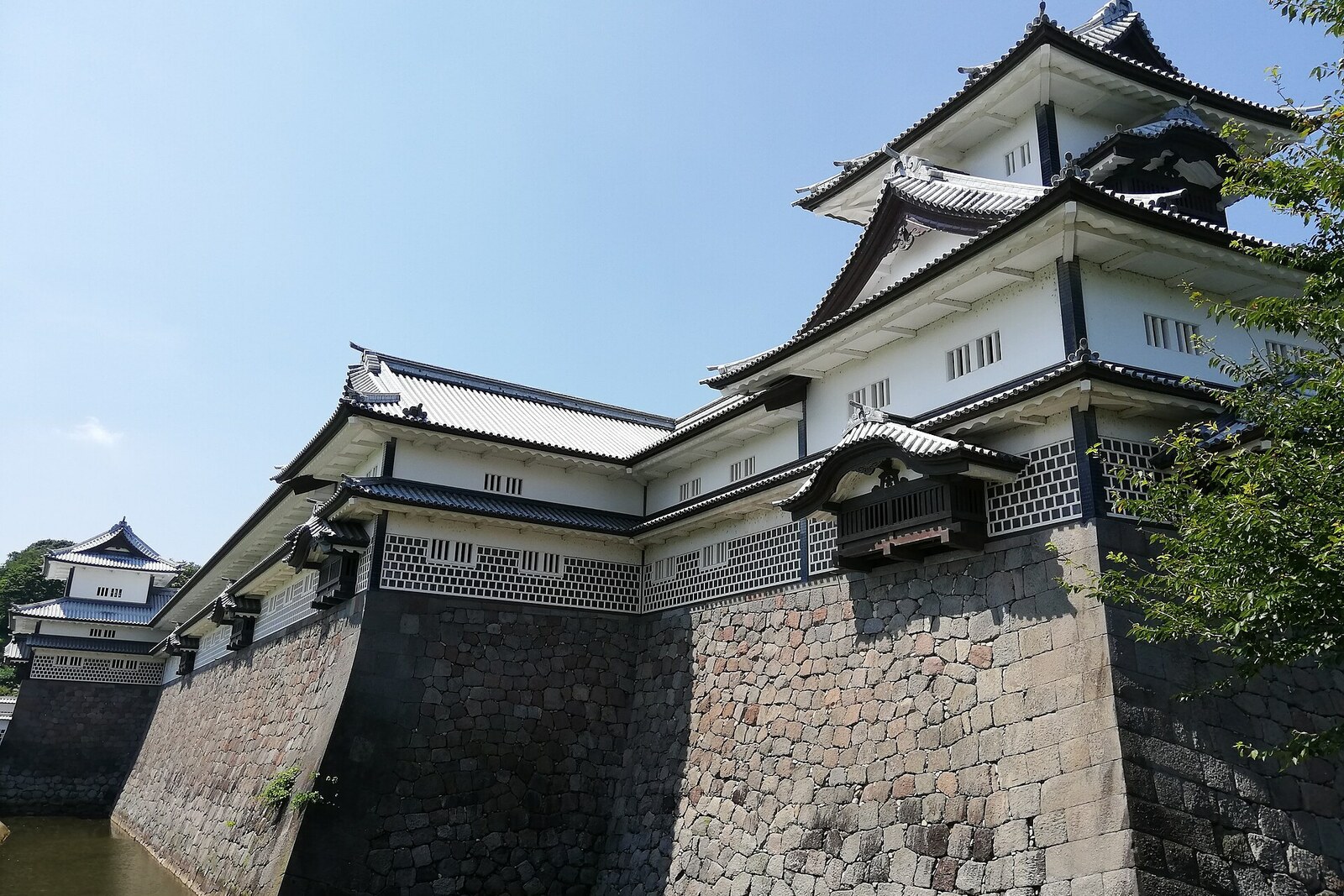
Look around first
What to notice
- Hishi Yagura
- Gojikken Nagaya
- Hashizume-mon Gate
- White roofs
The story of the place
Beyond the white roofs runs Gojikken Nagaya, the long storehouse on the way to Ninomaru, the main palace of Kaga's rulers. In peacetime, supplies were kept here, while in an attack the building became a fortified position: the gates were watched from it, and stones were dropped on those forcing their way into the courtyard. Hishi Yagura and Hashizume-mon Gate completed this line, protecting the rooms where the rulers lived, received vassals, and decided the affairs of Kaga Domain. The palace walls have vanished, while the present white buildings were brought back from drawings, photographs, and archaeological evidence.
In January eighteen oh eight, the Ninomaru palace and the defensive chain of buildings protecting it burned down: Hishi Yagura, Gojikken Nagaya, the long storehouse, and Hashizume-mon Gate. Maeda Narinaga, the hereditary ruler of Kaga, needed to bring together anew within one courtyard his own residence, the domain administration, and rooms for ceremonies. The treasury was already short of money.
The palace occupied the site behind the long white storehouse. It had more than sixty rooms. In the front section, vassals conducted business; envoys were received there and New Year ceremonies were held. Farther in were Narinaga's own rooms, while a separate half was occupied by the women of the family and female attendants. This was the domain's main working address, not the ruler's country residence.
Nearly nine tenths of the cost of reconstruction was covered with money and materials contributed by Kaga's vassals and residents. When the overseers were about to finish construction while leaving the formal and service sections incomplete, Narinaga objected: after such contributions, the missing funds had to be found. By eighteen ten, the builders had completed the front halls as well. The new palace included a grand ceremonial hall and two Noh theater stages.
The same defensive chain was restored in front of the palace. From Hishi Yagura, several gates could be watched at once. Gojikken Nagaya served as a storehouse, but in an attack it became a long fortified position with openings for dropping stones. At Hashizume-mon Gate stood a turret from which the defense was meant to be directed if an enemy broke into the neighboring courtyard. The white buildings blocked the approach to the rooms where Narinaga lived, received vassals, and handled the affairs of Kaga Domain.
In eighteen sixty-nine, Maeda Yoshiyasu, the fourteenth and last ruler of Kaga, handed the emperor the land and lists of subjects, then left Ninomaru. The military turned the former palace into barracks; the great reception hall was adapted for drill exercises. In eighteen eighty-one, a new fire began through military carelessness. It destroyed the palace, the towers, Gojikken Nagaya, and Hashizume-mon Gate. After that, the palace was no longer rebuilt on its former site.
The present towers and storehouse were constructed in two thousand one from old photographs, drawings, and archaeological evidence. They reproduce the appearance of the buildings completed after the fire of eighteen oh eight. Behind them stood the Ninomaru palace itself; reconstruction of its front section began in two thousand twenty-five. Nothing remains here of the former palace walls—only documents about the construction, funded mainly by Kaga's vassals and residents, and the reconstructed line of buildings that protected their investment.
Useful on site
Park 7:00–18:00 from March 1 to October 15; 8:00–17:00 from October 16 through the end of February; grounds are free. Paid buildings 9:00–16:30, entry until 16:00, adult ticket 320 yen.
Checked: date not specified. Check the official source before visiting.The grounds are large, so focus on the gate, the nagaya, and the palace site. View the reconstructed buildings together with the old masonry and traces of lost structures; interior access may be separate.