 Guide On Map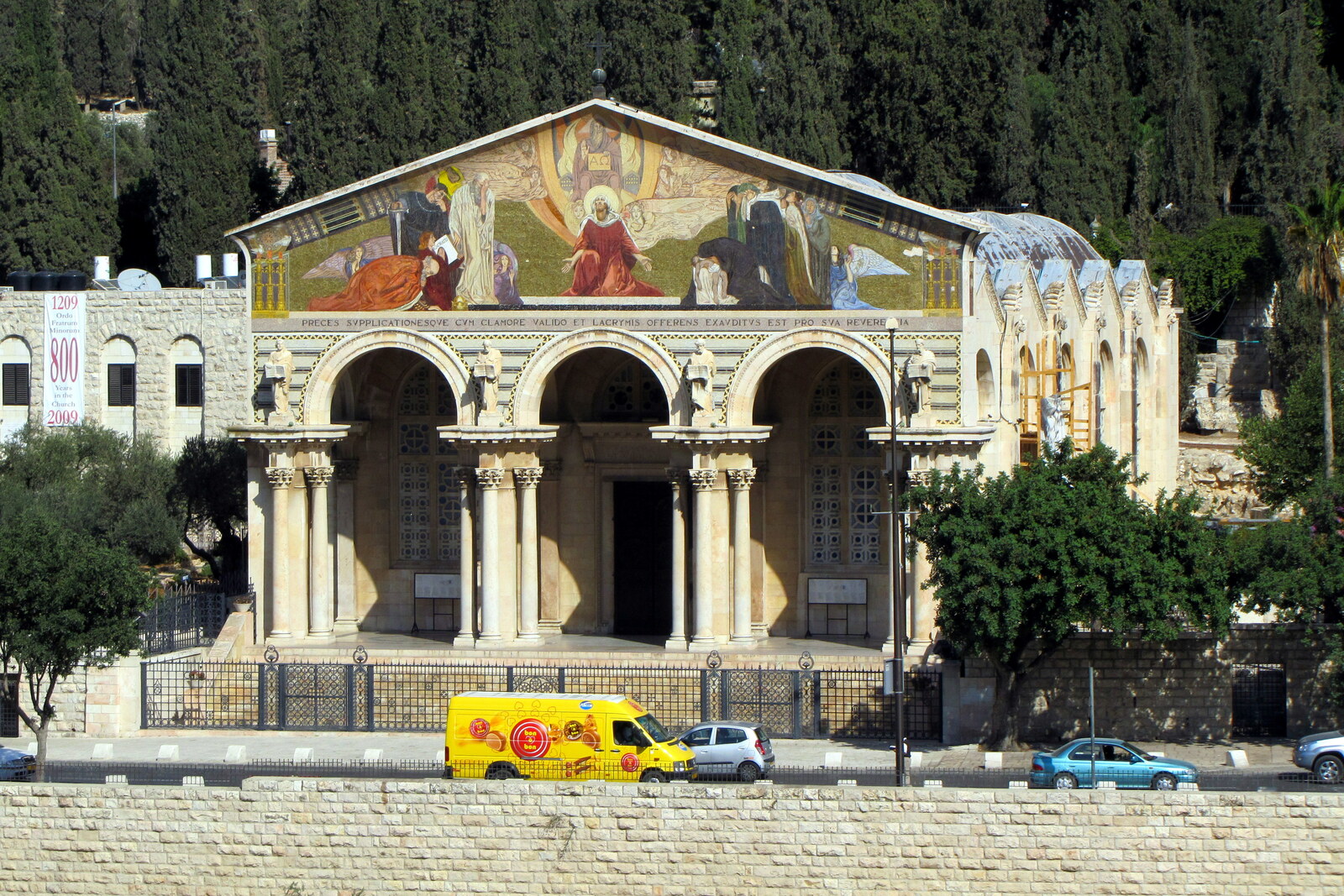
Look around first
What to notice
- Exposed rock before the altar
- Metal fence around the rock
- Stone of the Apostles behind the basilica
The story of the place
A broad expanse of bedrock was left exposed in the basilica floor near the altar. It was preserved by the churches that stood here in Byzantine times and in the Middle Ages as well; now people approach the rock for prayer and kneeling. Behind the church, another rock protrudes from the ground, which later tradition associated with the sleeping disciples.
Before the main altar, a broad outcrop of bedrock has been left exposed. The rock was not covered with marble: it is surrounded by a low fence of iron and silver, woven in the likeness of a crown of thorns. People pray here, kneel, and touch the rock. It is called the Rock of Agony.
The evangelists do not specify an exact rock. Matthew and Mark name Gethsemane, while the association of the prayer with this rock belongs to a centuries-old Christian tradition. The basilica's name refers to what happened before the already recounted scene of the arrest.
Jesus, a teacher awaiting imminent death, takes Peter, Iakov, and John with him—the three closest disciples, from whom he wants one thing: that they keep watch beside him. He leaves the others some distance away, goes off himself, and asks the Father to spare him the cup. The cup means the coming suffering and execution. The request ends with his agreement to accept what cannot be avoided.
Especially much is at stake for Peter. Before coming to Gethsemane, he had insisted that he would not deny his teacher, even if he had to die beside him. Now much less is required of him: not to fall asleep during this prayer. When Jesus returns, he finds Peter and the others asleep.
In Matthew's account, this cycle is repeated three times: Jesus goes off to pray, returns, and once again receives no human support. After the third prayer, he wakes the disciples and says that the hour has come. The request for a different outcome changed nothing: Jesus was crucified. Peter, who had promised to die beside him, said three times that same night that he did not know him.
Thus, the word “agony” here denotes a person's struggle before death: fear, a request to be spared, and the decision to go on. Prayer vigils are held at the exposed rock—they continue the watchfulness that the closest disciples could not manage then.
The rock was kept exposed in the Byzantine and medieval churches that stood here as well. Behind the present Basilica of the Agony is another outcrop, the so-called Stone of the Apostles, where later tradition placed the sleeping Peter, Iakov, and John. The Gospel left no exact coordinates. Inside, the place of prayer is marked; outside, the place of sleep.
Useful on site
Temporarily 7:30—14:00; last entry ten minutes before closing
Checked: June 28, 2026. Check the official source before visiting.When you enter, let your eyes adjust to the darkness and walk around those praying along the edge. During a service, look around the space without talking or using flash photography.