 Guide On Map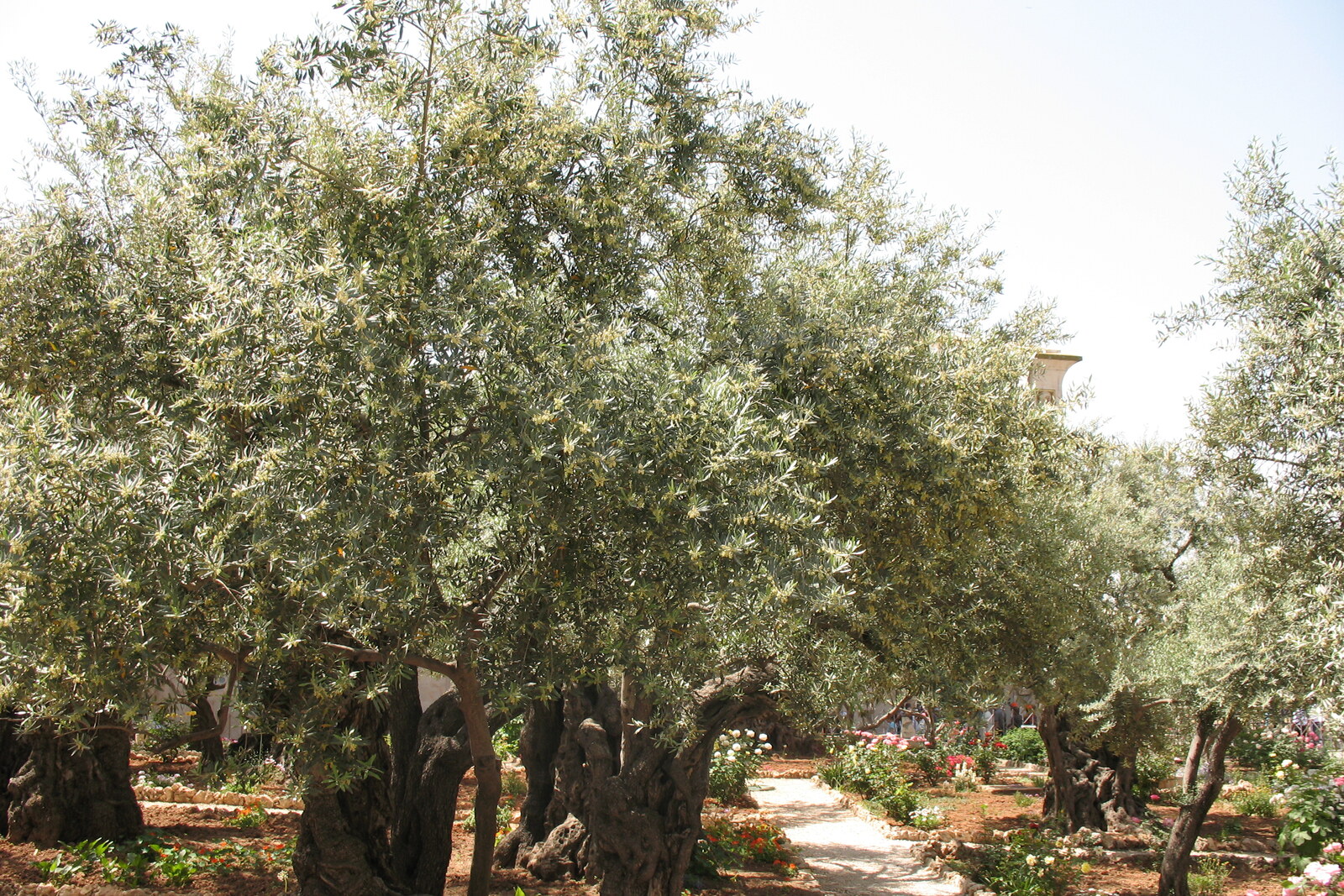
Look around first
What to notice
- Eight old olive trees
- Gnarled olive trunks
- The garden fence
The story of the place
The garden’s name preserves the activity for which this plot was maintained: oil was pressed from olives. In the first century, at the foot of the Mount of Olives, beyond the Kidron Valley, there lay an agricultural holding beyond the built-up city; olives were probably grown there and oil made. Beyond the fence stand eight olive trees with gnarled trunks, but they are not two thousand years old: the wood of three trees was dated, and their trunks began to grow in the twelfth century. All eight have the same genetic profile, so gardeners in the Crusader period probably planted cuttings from one revered olive.
Before the night of the arrest, Judas Iscariot came here with Jesus as one of the twelve disciples. The Gospel of John explains why he found his teacher without fail: Jesus often gathered here with his followers. When Judas agreed to betray him, the place of their friendly meetings became an address he could use immediately.
Gethsemane means “oil press.” In the first century, at the foot of the Mount of Olives, beyond the Kidron Valley, there was a cultivated plot, probably connected with growing olives and making oil. It was an agricultural holding beyond the built-up city, not a garden for strolling. After the Passover meal, Jesus, a Galilean preacher, came here to pray with the disciples. He sought seclusion, yet did not intend to hide from those pursuing him.
According to the Gospel accounts, the chief priests and elders wanted to seize Jesus secretly. They feared an arrest among the festival crowd: people might start a disturbance. Judas offered to lead the guards to a place where, at night, they could manage without witnesses. The evangelist Matthew names his payment—thirty silver coins.
Mark and Matthew say that Judas had arranged a sign in advance: they were to arrest the one he kissed. In Gethsemane, Judas approached Jesus, called him teacher, and carried out the agreement. John tells the scene differently: in his version, Jesus himself goes out to meet the detachment and identifies himself, and there is no kiss. In every account, Judas’s role is the same: he knows the familiar meeting place and leads armed men there.
One of the disciples tried to defend Jesus with a sword. John identifies him as Peter: he wanted to stop the arrest and cut off the right ear of the high priest’s slave. Jesus told Peter to put away the weapon; Luke adds that he healed the wounded man. The resistance ceased. Jesus was bound and led away, and the disciples scattered. After the interrogations, he was handed over to the Roman prefect Pontius Pilate and crucified.
Matthew also follows Judas’s fate to its end. Seeing that Jesus had been condemned, Judas tried to return the thirty silver coins. The chief priests refused to take them. Judas threw the money into the temple and hanged himself. Acts of the Apostles preserves another version of his death, so the exact circumstances cannot be reconstructed.
The present fence does not mark the proven boundary of that plot. Since the fourth century, Christians have associated the betrayal and arrest with this part of Gethsemane, especially with the nearby cave. No object from the first-century agricultural holding remains inside the garden that can confidently be associated with Jesus or Judas.
The eight old olive trees were not witnesses to the arrest either. For three trees, the wood could be dated: their trunks began to grow in the twelfth century. A study of all eight showed the same genetic profile—they were propagated from one tree. Probably, gardeners in the Crusader period planted cuttings from a revered olive when they established the shrine. These medieval trunks stand in a place Judas knew long before he led the guards here.
Useful on site
Garden according to the Franciscan page: daily 9:00—16:45; check current entry conditions on site
Checked: June 28, 2026. Check the official source before visiting.View the trees from the permitted area: do not reach your hands through the fence, pick leaves, or lean against the trunks. During prayer, silence your phone.