 Guide On Map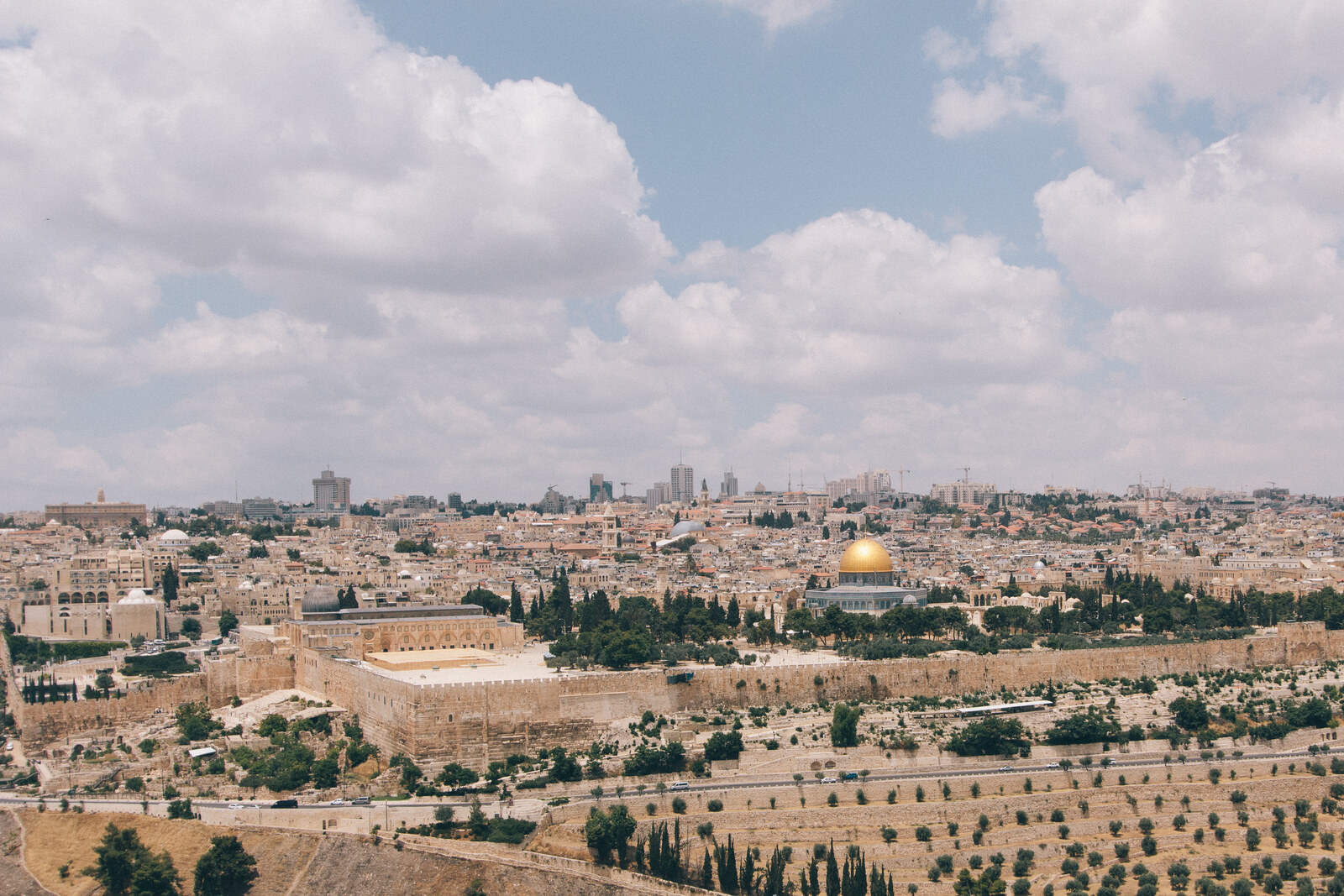
Look around first
What to notice
- Old City
- Temple Mount
- Kidron Valley
The story of the place
According to the biblical account, David, king of Jerusalem, climbed to the summit of the Mount of Olives barefoot, with his head covered. He wanted to preserve his life and his throne, but now he was leaving his own capital: his son Absalom had rebelled and was seeking the royal place.
Absalom began with people who came to the city gates seeking judgment. He met them before the king's officials, listened to their complaints, and assured each one that his case was just, but under David there was no one to hear it. If a person bowed to the king's son, Absalom would lift him up and kiss him. In this way, he gathered supporters for years, then went to Hebron and ordered that he be proclaimed king.
When David was told that the army was going over to his son, he left Jerusalem with his household, courtiers, and six hundred warriors. By remaining in the city, he risked being surrounded and drawing the residents into a battle for the palace. The fugitives crossed the Kidron Valley and began climbing this slope.
At the Kidron Valley, priests brought the Ark of the Covenant out to David, the chief holy object of his people. The king ordered the Ark returned to the city. The priests and their sons returned with it: now they could hear what was happening at the new court and pass news to the fugitives.
On the ascent, David learned another piece of news. Ahithophel, David's former royal adviser, had joined Absalom. He could tell the rebels how to catch up with David. At the summit, David was met by Hushai, his trusted adviser, who wanted to leave with him. Hushai was risking everything his court service gave him, as well as his life: to Absalom, he was a man of the deposed king.
David sent him back. Hushai was to pretend to be a defector, enter Absalom's council, and thwart Ahithophel's plan. The priests remained intermediaries, and their sons messengers. Hushai returned to Jerusalem just as the new claimant to the throne was entering it.
Ahithophel proposed taking twelve thousand men and setting out in immediate pursuit. David was tired, and his companions had not yet managed to make camp; it would have been enough to kill a single king, and the resistance would have collapsed. Hushai objected: David was an experienced warrior, he might be hiding apart from his men, and his fighters were dangerous now. A large army should be assembled, and only then should it set out.
Absalom believed Hushai. While the rebels were gathering, a warning reached David through the priests. During the night he had gained, he moved his people across the Jordan River and had time to gather forces. Ahithophel understood what the delay would lead to, returned home, put his affairs in order, and killed himself.
In the battle that followed, Absalom's army was defeated. Absalom himself became caught by the head in the branches of a tree. Joab, commander of David's army, wanted to end the rebellion and killed the king's son, although David had ordered that he be spared. David regained the throne and returned to Jerusalem, but he greeted victory by weeping for Absalom.
Mount of Olives is the church name for the mountain named after the olives on its slopes. The biblical book places the meeting of David and Hushai at the summit, by a place of worship, but no separate building or precisely identified point has remained from it. David's Jerusalem was much smaller than today's and lay mainly south of the Temple Mount; the walls seen today did not stand before him. What remains is the very fork in the terrain: the city lies to the west, beyond the Kidron Valley, and the descent to the east leads toward the Jordan River. From here, Hushai went back to the city, while David continued his flight beyond the opposite slope.
Useful on site
Open outdoor viewing area; access may change because of security and road conditions
Checked: June 28, 2026. Check the official source before visiting.Do not occupy the edge of the platform for long, and keep your belongings with you; for the story, choose a spot away from groups and the roadway.