 Guide On Map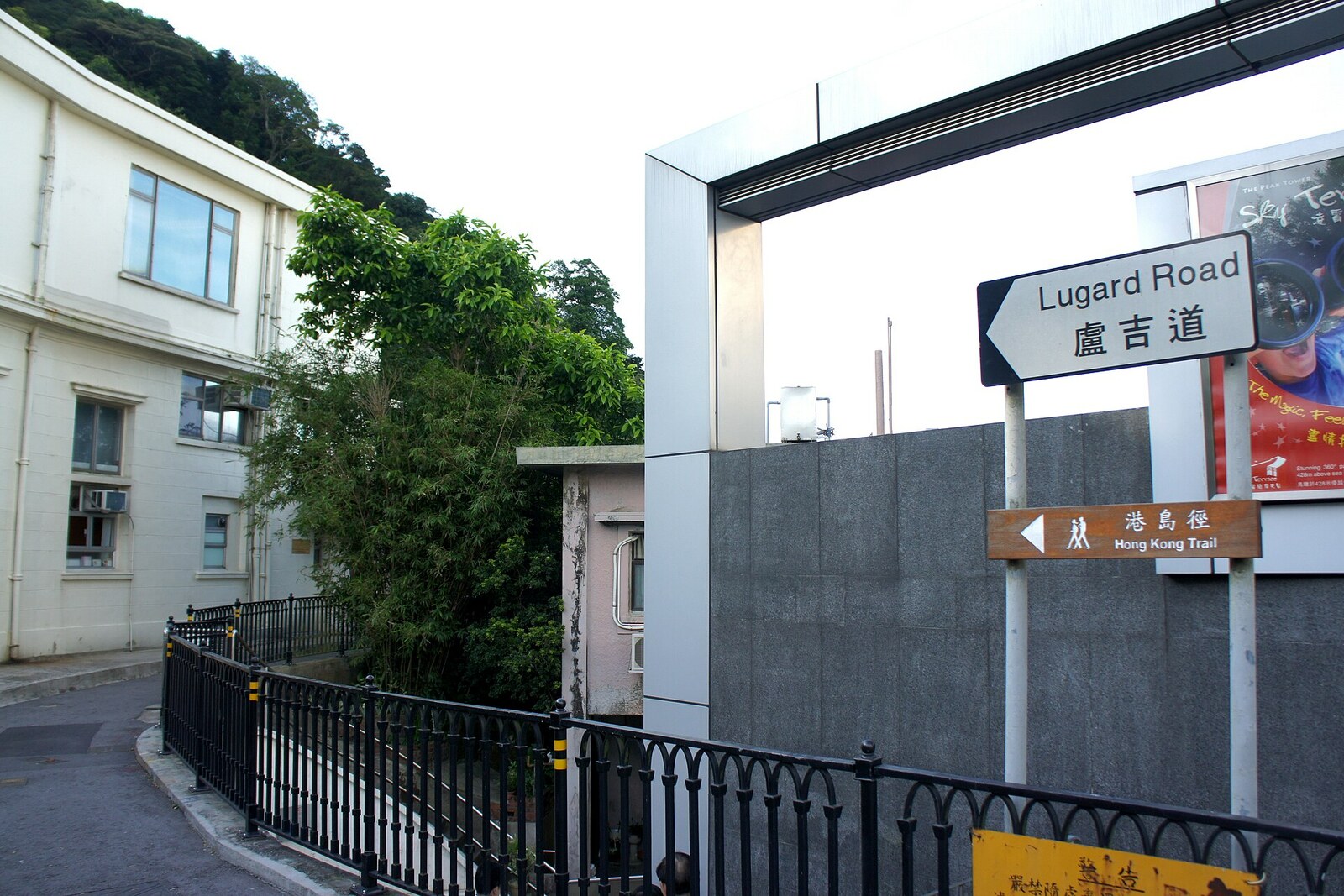
Look around first
What to notice
- Concrete supports
- Buttresses
- Retaining walls
- Outer barrier
The story of the place
On the steepest section of Lugard Road, you are walking across a bridge, although that is almost impossible to see from road level. About four hundred forty meters of the roadway are carried out over the slope on reinforced-concrete beams and eighty-seven concrete supports. This is how the engineers took the promenade through a place where there was barely any room left for an ordinary cut bench.
In nineteen thirteen, the Public Works Department hired road crews to lay out a promenade from the Victoria Gap saddle to High West Gap. No motor road was planned here. The officials stated the purpose plainly: a walk for the panorama of the city and harbour. Workers cut the first section into the slope; by the end of the year, all that remained was to lay the surface and install the barrier.
Beyond that began a rock face. The workers earned their wages by manual labor on the cliff, and some of the materials were brought up from the lower roads in palanquins and small freight carts. Among the boulders were stones weighing up to forty-five tons: they had to be removed before the supports could be installed. Where the rock could be cut, the crews carved out a narrow bench. On the loose slope, they built retaining walls. Above the steepest place, they poured the columns, beams, and deck.
In October nineteen fourteen, the Legislative Council allocated money for the extension and gave the road the name of Frederick Lugard, the fourteenth Governor of Hong Kong. Lugard governed the colony from nineteen oh seven to nineteen twelve, but he neither designed nor commissioned this road: by the time work began, he had already left. The officials honored the former governor in the way customary in the colony—by putting his surname on the map.
The money was not spent then. World War I was underway, the colony's revenues were shrinking, and the new governor, Henry May, was pressing for lower spending. He put the continuation of Lugard Road on the list of deferred works. For several years, the promenade bearing the former governor's name ended just before the most difficult section of rock.
The crews returned here in January nineteen nineteen. The supports, retaining walls, and cut bench took another two years; the final section was completed in March nineteen twenty-one. The entire road was originally supposed to cost fifty-five thousand Hong Kong dollars; the final amount exceeded eighty-eight thousand.
Lugard Road still serves mainly as a promenade and forms part of the Hong Kong Trail. The concrete supports and buttresses remain on the outer side of the roadway. The governor's name remains on the signs; the workers' names are absent from the annual reports.
Useful on site
The circular trail is freely accessible and open around the clock, free of charge.
Checked: June 17, 2026. Check the official source before visiting.The road is narrow in places, so move to a safe edge before stopping and let oncoming people pass. After rain, do not go near the wet edge or the rocks.