 Guide On Map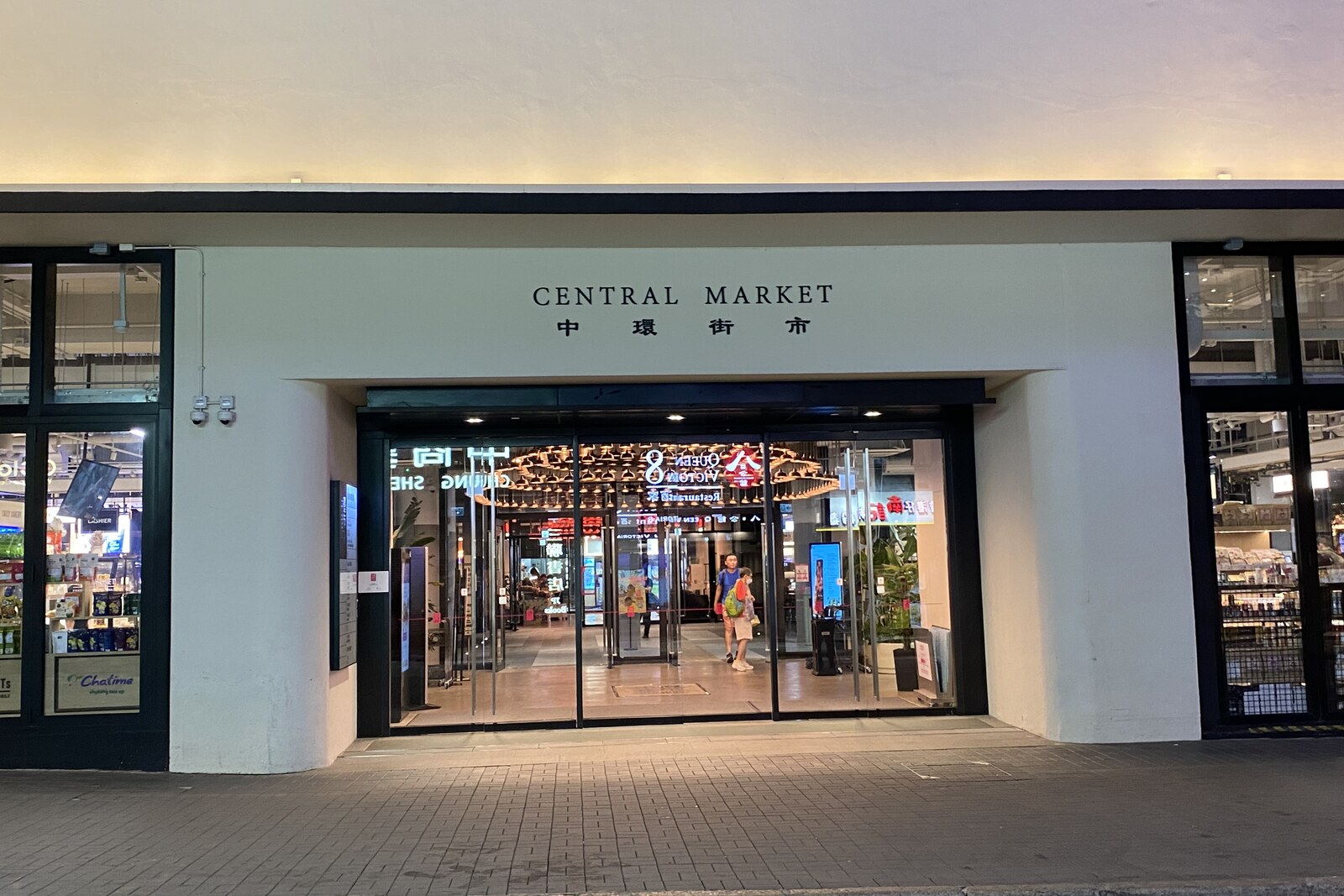
Look around first
What to notice
- Four-story concrete structure
- Interior market spaces
- Passages of the former market
The story of the place
In August eighteen forty-four, Wei Agui took over Central Market. At auction, he obtained the exclusive right to manage it, collect money from vendors, and profit from renting out stalls. In return, Wei undertook to pay the treasury three hundred dollars every month. His father had been the market’s first overseer, lived right on its grounds, and collected fees from traders. The son knew what he was fighting for.
By then, the market had existed for only two years. In the spring of eighteen forty-two, about six hundred Chinese food hawkers walked the streets of young Hong Kong. The colonial secretary, George Malcolm, wanted to clear them from the carriageway and ordered trade to be gathered in one site by Queen's Road. The place was considered central: the main road ran along one side, while the waterfront began on the other. That is where the name, already appearing in the earliest documents, came from: Central, or Middle Market.
Inside, vendors were divided into rows: meat, vegetables and fruit, poultry, salted and fresh fish. There were weighing and money-changing shops. A person arriving from the mainland could rent a space for a day or a month. A fish or vegetable stall cost seventy-five cents a month, a pork stall one dollar, and prepared food was the most expensive: two and a half dollars.
Those rates barely covered the cost of maintaining the market. In eighteen forty-four, Governor John Francis Davis, who needed to increase treasury revenues, replaced direct leasing with a different arrangement. Now one entrepreneur paid for the whole market and set the charges for traders himself. Wei Agui was the first to receive this contract.
A year later, he secured an extension of the lease for another five and a half years, but the terms became tougher. The monthly payment rose to four hundred dollars, and the deposit to two thousand. In addition, Wei had to remove the temporary awnings, build brick pavilions with tiled roofs, pave the passages, and install drains so that the market rows would remain dry and clean. He was also responsible for ensuring that vendors did not display spoiled goods.
The expenses proved greater than Wei could pay. He borrowed money from Chinese entrepreneurs at an extremely high interest rate and fell deeply into debt. When the contract term ended in early eighteen fifty-one, the market was put up for auction again. Chow Agui obtained it. The new tenant invested another one thousand five hundred dollars in rebuilding and continued collecting stall fees in Wei’s place.
Neither the first overseer’s house nor his son’s brick pavilions have survived. They were replaced several times by new buildings. The current four-story structure opened in nineteen thirty-nine, the food market closed in two thousand three, and after redevelopment, cafés, small shops, and spaces for public events were installed here.
The site itself has survived. In eighteen forty-two, there was water beyond its northern wall; after land reclamation, the shoreline moved back several blocks. Where Wei Agui tried to recoup the cost of the brick rows through fees for fish, vegetables, and prepared food, traders are once again renting spaces—only now inside the concrete market of nineteen thirty-nine.
Useful on site
Usually daily 10:00–22:00; individual tenants and events may differ. Checked 2026-06-30.
Checked: June 30, 2026. Check the official source before visiting.Look around the shared spaces; access to individual shops and venues may change independently of the building itself.