 Guide On Map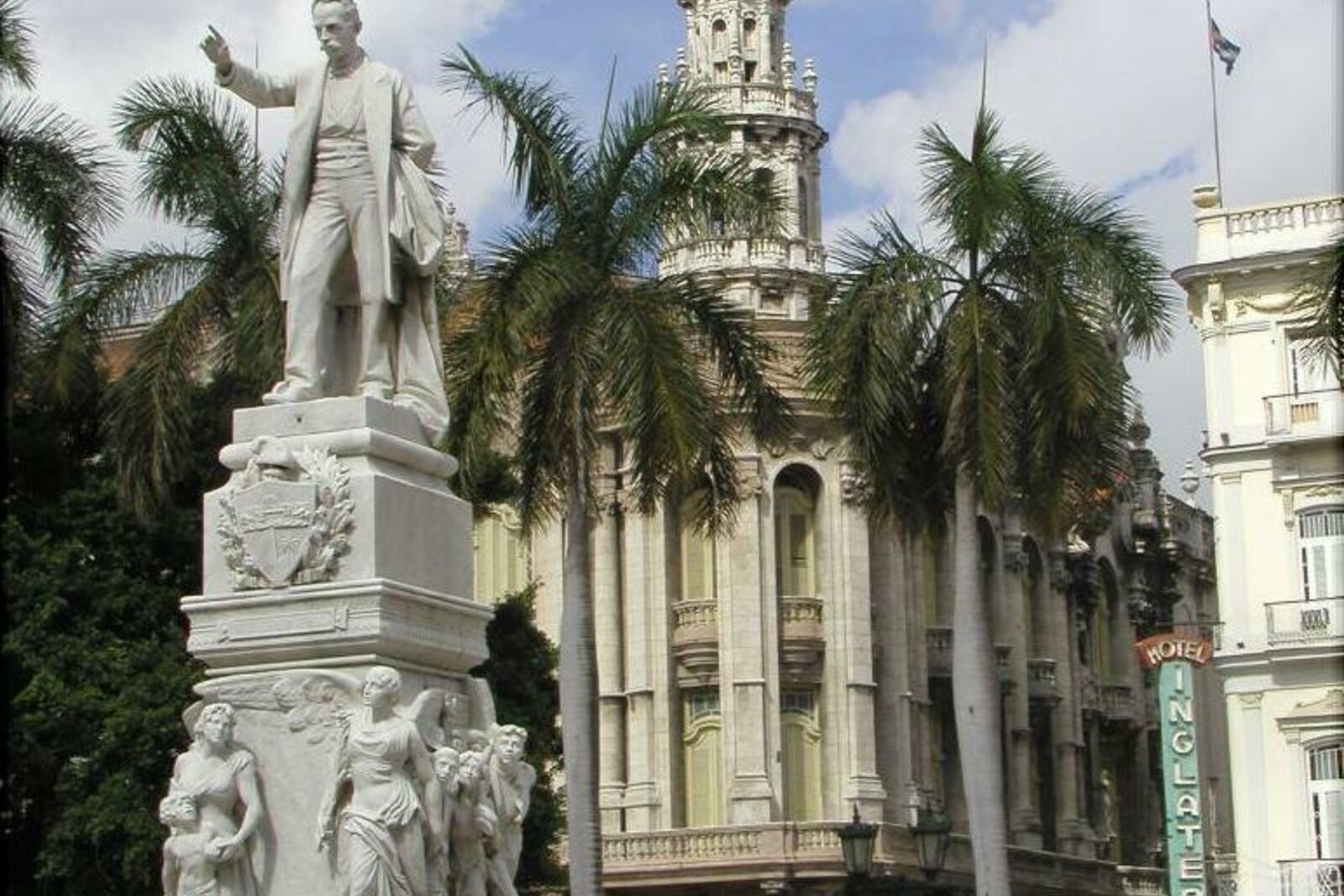
Look around first
What to notice
- Marble figure of Martí
- Raised right hand
- Long frock coat
- Base of the monument
The story of the place
In the last quarter of the nineteenth century, three open spaces at the western edge of old Havana were brought together into one city park. The hotels, theaters, and cafés around it made it a place where people had plenty of reasons to linger and meet. A Spanish queen once stood where the statue is now, and she was later replaced by marble José Martí. He is shown as an orator: a long frock coat, his right hand raised above the pedestal.
On the evening of March eleventh, nineteen forty-nine, three American naval sailors came here while on shore leave. They were drinking at an open-air café opposite El Capitolio, throwing coins to children, when one of them decided to climb onto the monument. The sailor reached the head of the marble figure and put his white sailor cap on it.
Before him stood José Martí—the organizer of Cuba's last war for independence, who died before it ended. In eighteen ninety-nine, the statue of the Spanish Queen Isabella II was removed from this spot. El Fígaro magazine proposed choosing a replacement and, after surveying prominent Cubans, held a vote among the residents. Martí won. Funds were raised by subscription, and in nineteen oh five Cuba's first public monument to him was unveiled here. The sculptor José Villalta de Saavedra depicted Martí speaking: in a long frock coat, with his right hand raised.
By then, Central Park had already served as a civic square for several decades. In eighteen seventy-seven, the city authorities joined three open spaces here along the western edge of old Havana. Hotels, theaters, and cafés appeared around it. When the sailor sat astride Martí's head, witnesses were immediately on hand.
Someone in the crowd shouted that the sailor had urinated from the monument. This was the very version that spread through Havana; photographs indisputably show a man on the statue and a white sailor cap on the marble head. Bottles and glasses from nearby establishments flew at the sailors. Police managed to get them out before the crowd attacked them.
The next day, about two hundred students gathered at the U.S. Embassy in Havana. They broke a window and tried to lower the flag. U.S. Ambassador Robert Butler came to the statue, laid a wreath of yellow dahlias, and publicly apologized for the sailors' actions. Those gathered tore the wreath apart. Cuba's foreign minister accepted the apology, and the ships soon left Havana; the three involved were sent back under arrest.
The statue was washed with high-pressure water. No trace of that evening remains on the marble. Baseball fans now gather at Martí's base: their open debate is called the “Hot Corner.” The white sailor cap is not on the statue's head either—before you is the very José Martí whom Havana's residents chose to replace the Spanish queen.
Useful on site
Around the clock, free passage
Checked: June 19, 2026. Check the official source before visiting.View the monument from the center of the park, without lingering by the roadway. This is an open-air stop: the whole story is tied to the square and the statue, not to visiting an interior.