 Guide On Map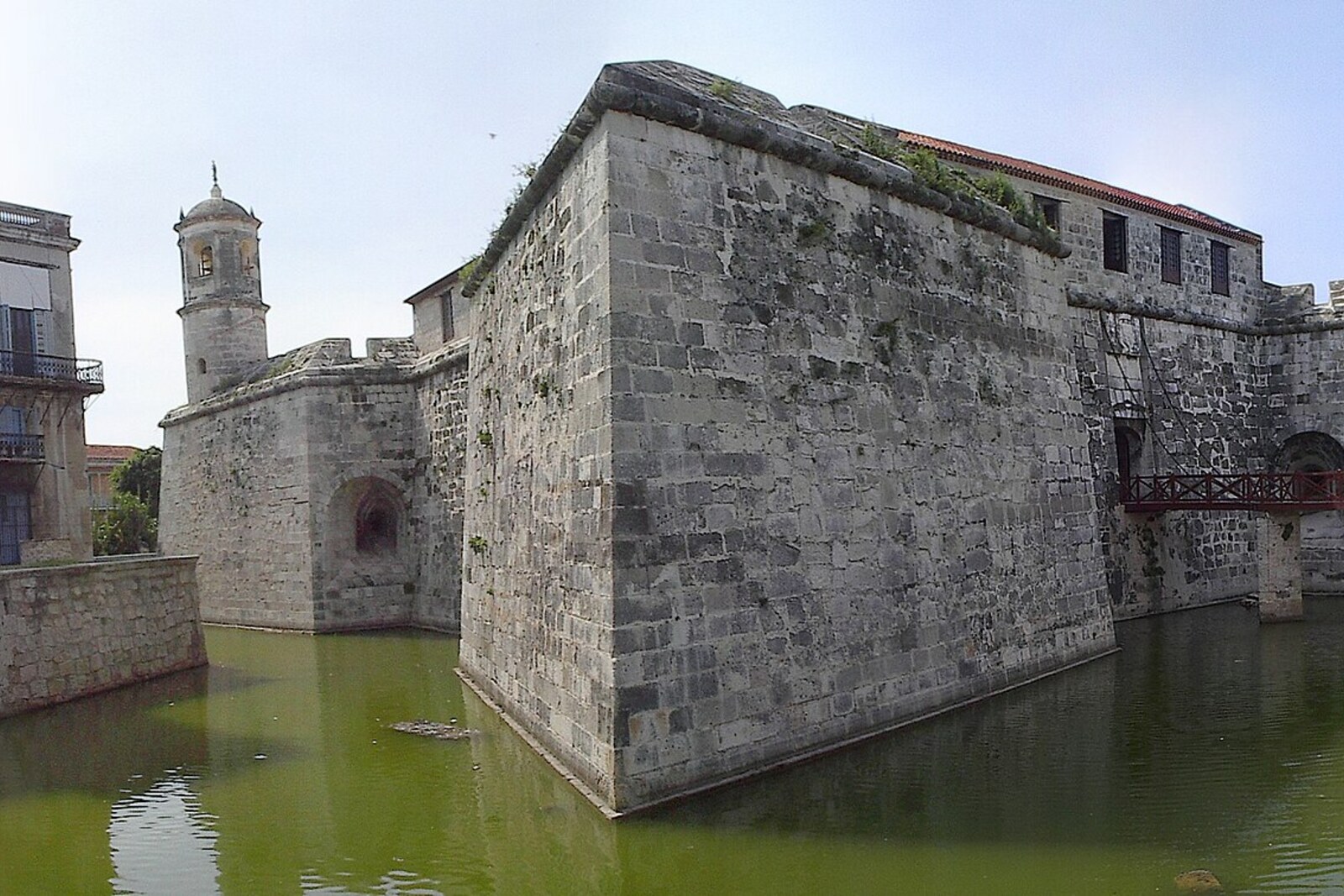
Look around first
What to notice
- The moat of Castillo de la Real Fuerza
- The fortress's corner bastions
- The garden at the center of the square
The story of the place
The garden at the center of the square grew on the former parade ground, where the garrison practiced formation drills and handling weapons. Along the edge of the greenery, the moat and corner bastions of the stone fortress beside the protected bay have survived. The square's name remains from the military exercises, although the parish church and the governor's house, where the city council met, once stood nearby. The harbor sustained the poor city: before crossing the Atlantic Ocean, ships gathered here and needed supplies.
In the summer of fifteen fifty-five, Juan de Lobera barricaded himself inside the sole Fort San Cristóbal de la Habana, in present-day Havana. Lobera was a member of the city council and commander of this fortification; he had to hold the harbor and shelter the residents behind its walls.
The city's main square lay nearby. It was called Plaza de la Iglesia, the Church Square: the parish church and the governor's house, where the council met, stood here. The site was chosen beside a protected bay. Ships gathered there before crossing the Atlantic Ocean, and poor Havana earned money by supplying them.
The French corsair Jacques de Sores came here for plunder and ransom. He had about two hundred fighters; Lobera's small fort could not hold out. The corsairs captured the commander and the townspeople, demanded thirty thousand pesos and a large supply of cassava bread—provisions made from manioc for the crew. The ransom was not paid. De Sores ordered several prisoners hanged, plundered and burned the city. When his ships left, almost nothing remained of Havana. The corsair spared Lobera's life.
Once freed, Lobera went to Spain and submitted petitions to the royal court for new defenses for the harbor. King Philip II of Spain wanted to preserve the port where ships carrying American cargoes gathered. He ordered funds to be allocated, a stonemason and an artilleryman sent, and twenty enslaved Africans transferred from Veracruz for construction work. The next governor also pressed free Black people and mulattoes, as well as the Indigenous people of Guanabacoa, into this work; refusal was punishable by fines and one hundred lashes.
That is how Castillo de la Real Fuerza appeared beside the square—a stone fortress with a moat and four corner bastions. The officials then cleared space in front of it for soldiers. In fifteen eighty-two, they demolished an entire block of houses, including the former governor's house where the city council met. On the cleared ground, the garrison practiced formation drills and handling weapons. Plaza de la Iglesia came to be called Plaza de Armas, the Square of Arms.
Today, the former parade ground is occupied by a garden. Along its edge, the moat and bastions of Castillo de la Real Fuerza still stand, and the square itself bears the name of the military drills that began here after the devastation Juan de Lobera survived.
Useful on site
You can follow the entire story from the square. Treat entry to El Templete, the fortress, and the museum buildings as separate visits, and check on site; by the ceiba tree, do not disturb people who have come to make the traditional circuit.