 Guide On Map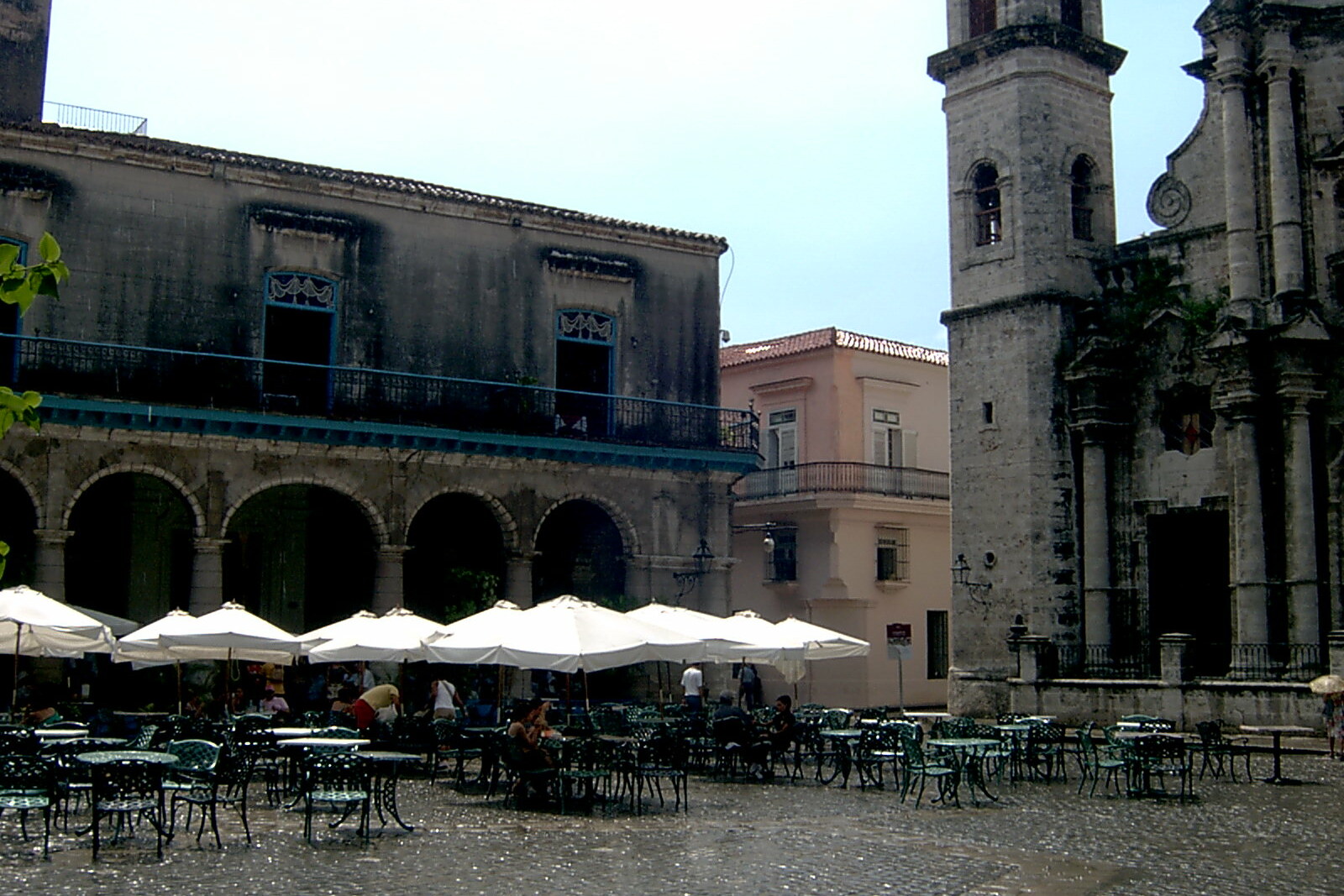
Look around first
What to notice
- Facade of Havana Cathedral
- Two towers of Havana Cathedral
- Stone paving
The story of the place
When this site was still one of the city's few open spaces, a market gathered here and celebrations and their rehearsals were prepared. Sailors sewed sails, twisted rigging, and kept barrels of water for ships. Residents wanted to preserve this place for everyone, but royal permission assigned the site to the Jesuits for a college and a large stone church. The facade of Havana Cathedral, with its two towers, faces directly onto the stone paving where ship supplies once lay beside the trade.
On the night of June fifteenth, seventeen sixty-seven, two detachments of infantry surrounded the Jesuit college that stood here. An unfinished church adjoined it—the core of today's Havana Cathedral. All roads to the harbor were blocked so that no one could leave and warn the city.
The operation was led by Antonio María de Bucareli y Ursúa, Cuba's military governor. He was to carry out King Charles the Third's order in secret: arrest and expel the Jesuits, and transfer their property to the treasury. The king's advisers suspected the order of disloyalty and attributed to it a role in the recent unrest in Madrid, although they could not prove the accusation. The Jesuits answered to their leadership in Rome, controlled considerable funds, and taught the sons of influential families. Bucareli feared they would find defenders.
At about three in the morning, soldiers entered the college. The community was gathered in the rector's room—there was no separate hall for such meetings in the building. Bucareli read the decree to Andrés de la Fuente, the rector responsible for the college's people and property. Officials then sealed the library, accounts, and personal letters. Each priest could keep only a prayer book, tobacco, and chocolate.
This clearly shows their position. The college owned sugar mills, cattle ranches, and urban real estate; the combined income went toward teaching, construction, and supporting the community. The Jesuits themselves took a vow of poverty and had almost no personal property. After their arrest, they were to live on a pension set by the king—one hundred pesos a year, paid from the funds of that same confiscated order.
Thirty-six hours later, the priests were taken from here in six carriages and put aboard a ship bound for Spain. The rector asked Bucareli to tell the king that the community had not resisted: he wanted to spare his people at least the charge of rebellion. They never returned to Havana. After Spain, the exiles were sent onward to Italian lands.
The Jesuits lost the plot they had pursued for more than half a century. In seventeen hundred, Bishop Diego Evelino de Compostela, who wanted to open their mission and school in Havana, paid ten thousand pesos for land by Plaza de la Ciénaga. At first, a chapel was erected here from wooden posts beneath a roof of palm leaves.
After Compostela's death, the Jesuits decided to replace the chapel with a large college and a stone church. The city attorney Luis González de Carvajal objected. Plaza de Armas had already been assigned to the garrison, and this site remained the main open space for residents of most of the city. Celebrations and their rehearsals were held here, and a market gathered; sailors sewed sails, twisted rigging, and kept barrels of water for ships. Carvajal sought to preserve the site for public use and the defense of the harbor.
The Jesuits nevertheless received royal permission: first for a college and, in seventeen twenty-seven, specifically for this site. The money for its foundation came from the Havana priest Gregorio Díaz Ángel, who bequeathed all his property to the order. The church's first stonework was laid in seventeen forty-eight. Nineteen years later, the college was already operating, but the church remained unfinished—the state in which Bucareli's soldiers found it.
After the expulsion of their builders, the buildings took on another purpose. The college was handed over to the bishopric and turned into a seminary. By then, the old parish church by Plaza de Armas was threatening to collapse, so on December ninth, seventeen seventy-seven, the parish was moved to the former Jesuit church.
In the late seventeen eighties, Havana received its own bishopric. The first bishop of Havana, Felipe José de Trespalacios, paid from his own income and diocesan funds to complete and remodel the church. It became Havana Cathedral not because of its size: a cathedral is a church containing the bishop's cathedra, his official seat of ministry. After this cathedra appeared, Plaza de la Ciénaga began to be called Plaza de la Catedral.
Today's Havana Cathedral contains that very unfinished church from which the Jesuits were taken to the port. Their college became a seminary, the church became the cathedra of other clergy, and the square's former name remained only in old city records.
Useful on site
First, view Havana Cathedral as a whole from the opposite side of the square. Enter only when access is open and not during a closed service; the frescoes and church interiors are not necessary for understanding this stop.