 Guide On Map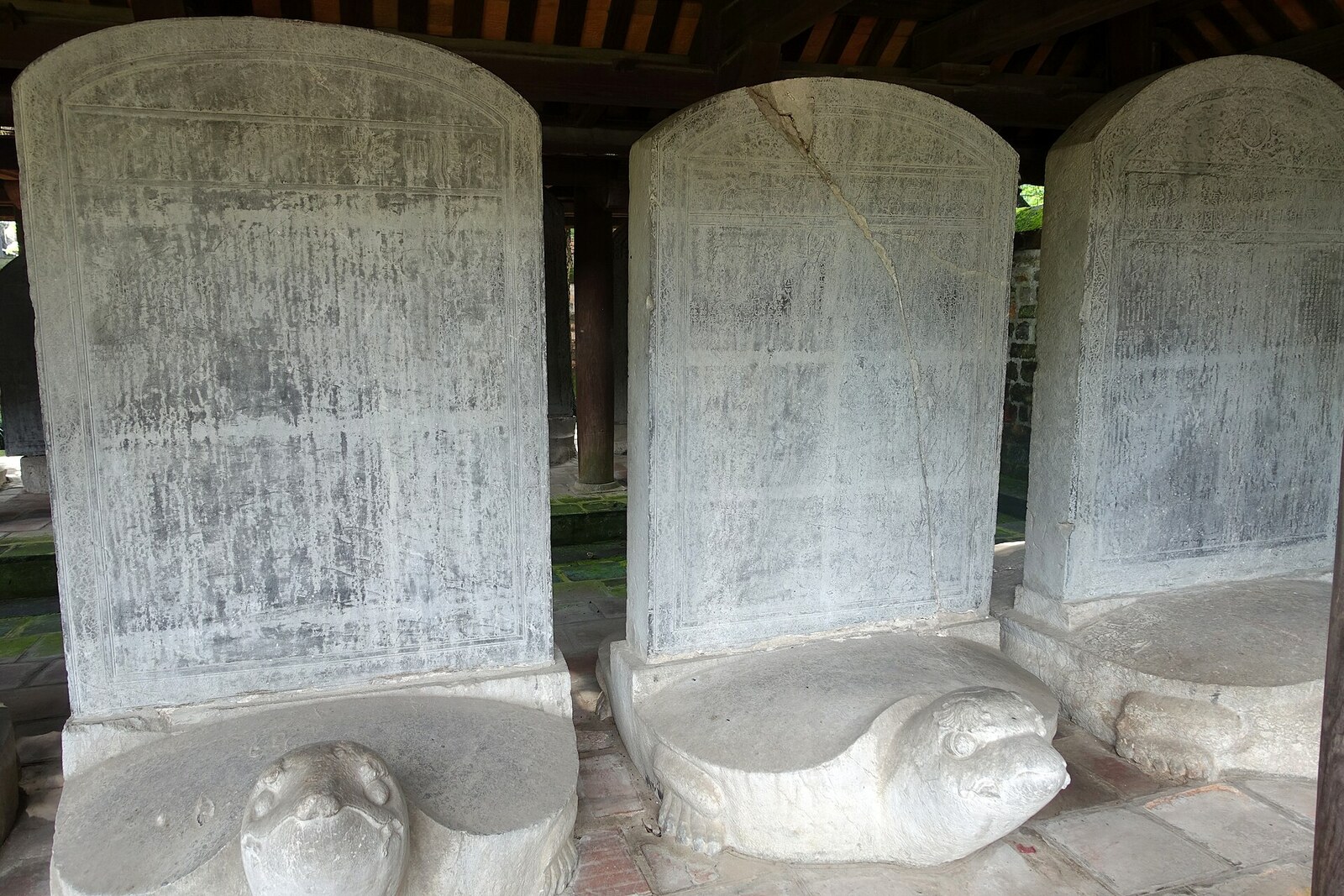
Look around first
What to notice
- The square well
- Two rows of stone turtles
- Stone stelae
- Tiled pavilions
The story of the place
The stelae were placed at the Temple of Literature beside the Imperial Academy, the country's main school, where future officials were trained. Court scholars carved into each slab information about one examination, its organizers, those who received degrees, and the places they came from. Under tiled pavilions, stone turtles bear eighty-two surviving stelae, while the square Well of Heavenly Clarity lies between the two rows. Ceremonial robes and journeys on granted horses ended after the ceremony; the inscription remained.
Here stand stone stelae bearing the names of laureates of the court examinations. Than Nhan Trung came to the Le dynasty's main examination when he was probably already over fifty. He sought a post in government service: for a man who had spent years studying Confucian books, the examination remained the only path to office and high social standing. A later biographical account attributes the delay to poverty: as a boy, Than Nhan Trung listened to lessons from outside and traced characters on the ground with a stick, while his teacher gave him money for the journey to the examiners.
In fourteen sixty-nine, twenty-two out of several thousand applicants passed. Than Nhan Trung took the highest place at the first stage, but received only the third category in the final palace examination. That was enough: he was admitted to the Court Academy, assigned to draft decrees, and later made head of the Imperial Academy, the country's main school. A man who had remained outside this system for decades came to lead it.
Fifteen years later, Emperor Le Thanh Tong decided to turn examination results into a permanent record. He ordered the first ten stelae to be erected at the Temple of Literature and assigned court scholars to compose the inscriptions. Than Nhan Trung wrote the text for the earliest of them.
This slab described the examination of fourteen forty-two. Four hundred fifty candidates appeared, and thirty-three received degrees. Under court rules, their names were announced before the assembled crowd, displayed on a golden board, the winners were given ceremonial robes, a feast was held, and they were sent home riding horses granted to them. The stone record appeared only forty-two years later. By then, the first laureate, Nguyen Truc, had already been dead for ten years; the festive procession had ended long ago, and only now was his name carved for future generations.
Than Nhan Trung began the inscription with the words that talented and virtuous people are the vital force of the state. He then explained the stone's purpose more strictly. The names were meant to encourage future candidates to study, and the laureates themselves to measure their actions against the renown they had already received. The stone publicly stated who had been admitted to service; from then on, each person named risked disgracing a name that could no longer be carried away or concealed.
The stelae were placed precisely at the Temple of Literature, beside the Imperial Academy, because this was the main center for training future officials. Between the two rows lies the square pond of Thien Quang Well—“the Well of Heavenly Clarity.” One stone turtle bears the record of one examination: its circumstances, the names of its organizers and laureates, and the places they came from.
Today, eighty-two surviving stelae stand around Thien Quang Well. They list thirteen hundred four people who passed eighty-two court examinations from fourteen forty-two to seventeen seventy-nine. On the first slab, beside thirty-three names, remain the words of a man who himself needed more than half a century to enter such a list.
Useful on site
The ticketed area of the Temple of Literature–Imperial Academy; check the hours and ticket on the day of your visit, as the official website was under reconstruction when checked.
Checked: June 28, 2026. Check the official source before visiting.Do not touch the turtles' heads: a popular ritual for good luck has already damaged the stone. To make out the details, give your eyes time to adjust to the carving.