 Guide On Map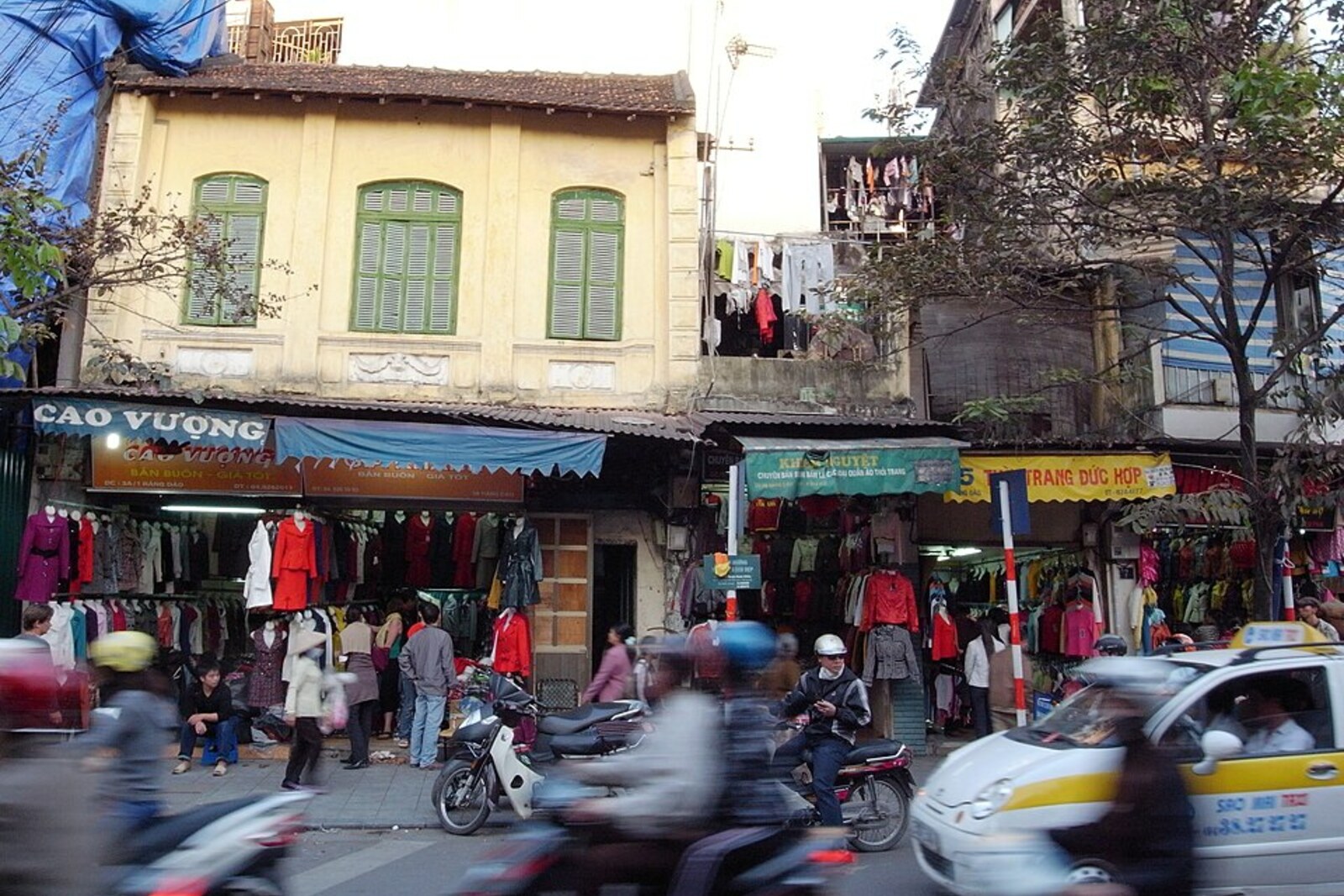
Look around first
What to notice
- Hang Gai Street sign
- Hang Dao Street sign
- Silk in the shop windows
- Entrance to Hoa Loc Communal House at No. 90A
The story of the place
Here, Hang Gai Street runs into the square, while Hang Dao Street continues the commercial route northward. The word “hang” in both names means a row of goods. “Dao” is the red-pink color of fabric, the shade of a flowering peach.
From the fifteenth century, dyers from Dan Loan Village settled on what is now Hang Dao Street. They lived on commissions for dyeing fabric and on the silk trade. Their advantage was the ability to produce not only the usual brown and black, but also red, pink, green, and purple. The formulas for mixing dyes supported entire families; some craftsmen remained in the village, while others opened shops in the capital.
At the turn of the seventeenth and eighteenth centuries, Dan Loan merchants established their own Hoa Loc Market here. Representatives of the Le, Pham, Vu, and Dao clans provided money, ceded land, and collected additional donations. They needed a permanent place where their fellow villagers could sell dyed fabric, settle common affairs, and protect their deals.
Cua Dong Market also traded in fabrics, and its merchants began a lawsuit against the new competitors. The official settling the dispute divided the range of goods: Hoa Loc Market was assigned the dyeing and sale of pink cloth, while Cua Dong was left fabrics in other colors. For the people of Dan Loan, the decision meant permanent customers and a separate trading territory. They took over Hang Dao Street, grew wealthy from dyeing, and passed their shops on to later generations. The color of the goods permitted to them became fixed in the street’s name.
At the end of the nineteenth century, imported chemical dyes ruined the old craft. Dan Loan families changed occupations: instead of dyeing, they began selling the dyes themselves and finished fabrics. One company they created, Dan Phong, sent its own ship to Hong Kong and Japan for goods. The dyers’ street became a street of major silk merchants, then yielded some of its shops to sellers of factory-made clothing.
Silk in today’s shop windows extends around this corner onto Hang Gai Street as well, although its name arose from a different commodity. Hemp and jute fiber, cables, ropes, and hammocks were sold here; the street was therefore also called Hang Thung Street—a row of ropes. At the beginning of the twentieth century, rope makers and turners yielded their premises to merchants with greater working capital. Hemp traders moved to Bat Dan Street, and their shops were taken over by printers and silk sellers.
Farther along Hang Dao Street, at house number ninety A, Hoa Loc Communal House remains. It contains four stone stelae; the oldest, from seventeen oh six, lists the clans that contributed to the market and reports that these people lived by trade and were renowned for their dyeing craft. There are no dye vats here anymore. From the division of goods that they won, only the stele and the word “dao” on the street sign remain.
Useful on site
An ordinary city street; access depends on traffic, commerce, and weekend pedestrian-zone closures.
Checked: June 29, 2026. Check the official source before visiting.Do not block entrances or unfold merchandise without the seller’s invitation. Treat the house on Hang Ngang Street as a separate site: the possibility of entering it cannot be considered guaranteed.