 Guide On Map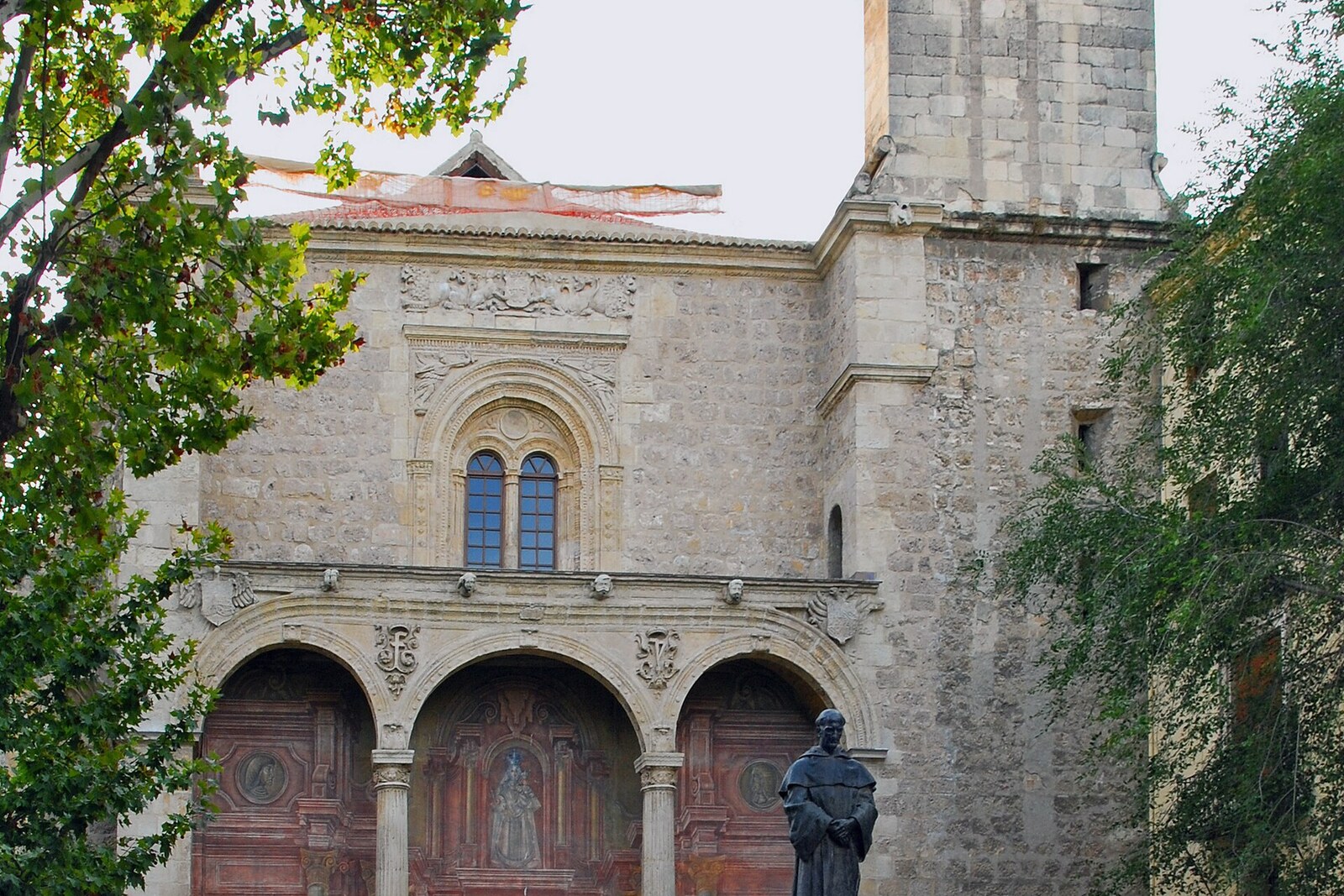
Look around first
What to notice
- Church facade
- Square in front of the church
- Altarpieces in the interior
- Surviving monastery buildings behind the church
The story of the place
On August thirty-first, eighteen thirty-five, government officials came here. They were met by Juan Morón, then prior of the Royal Monastery of Santa Cruz la Real, a Dominican monastery. He led the commission through the church and identified the contents of every chapel: whose statue it was, which altarpiece it was, which vessel was needed for the service. The officials recorded this in order to separate works worthy of a museum from items that could be sold.
Morón showed them the monastery itself. Here he lived with the other brothers; here the Dominicans received novices and maintained an advanced theological school. The community was supported by landed estates and income granted to the monastery at its foundation. Now the state was abolishing monastic orders, taking their property, and intending to use the proceeds to pay off the national debt. After the inventory, Morón and the other Dominicans were to leave.
By then, the monastery occupied a huge part of Realejo. Ferdinand and Isabella I of Castile founded it in the spring of fourteen ninety-two and gave the monks the former gardens and country estates of the Nasrid dynasty. The religious house was named Santa Cruz la Real—the Royal Holy Cross. Construction of the church began twenty years later. People called it Santo Domingo: the monks belonged to the Order of Preachers, founded by the Castilian priest Dominic de Guzmán. The word “Dominicans” also derives from his name.
After the brothers were expelled, every part of the complex found new owners. The monastery halls housed a chemistry department, a library, an art school, a lycée, and the first provincial museum. Other buildings were sold. The novitiate and the small courtyard were demolished; streets were laid out through the gardens, and building plots were created. The front monastery courtyard was opened to the townspeople—this is how the space of today’s square came into being.
The church escaped this fate thanks to parishioners from the nearby Santa Escolástica Church. Their church was cramped and dilapidated, and the Archdiocese of Granada proposed moving the parish into the vacated Dominican church. In February eighteen forty, the government approved the transfer. Statues, altarpieces, vestments, and liturgical vessels were brought here from Santa Escolástica; the old building was soon sold and demolished. The move saved Santo Domingo from sale and demolition, but it mixed the furnishings of two churches: some of the objects inside had been made for the Dominicans, while others arrived from the vanished parish.
The Dominicans returned here only in nineteen fifty-one. Behind the church, they again occupied the surviving part of the monastery, where a university residence is now located. Officially, the church before you remains Santa Escolástica Parish, while in everyday speech it is Santo Domingo. The first name came here with the parishioners and altars of the demolished church; the second remained from the monastery that once filled the surrounding streets.
Useful on site
Active church; access inside depends on services and the current parish schedule. Check the Camarín de la Virgen del Rosario separately before visiting.
Checked: June 28, 2026. Check the official source before visiting.This is an active church: visit the interior only when the entrance is open, speak quietly, and do not disturb the service. Special rooms may require a separate visit.