 Guide On Map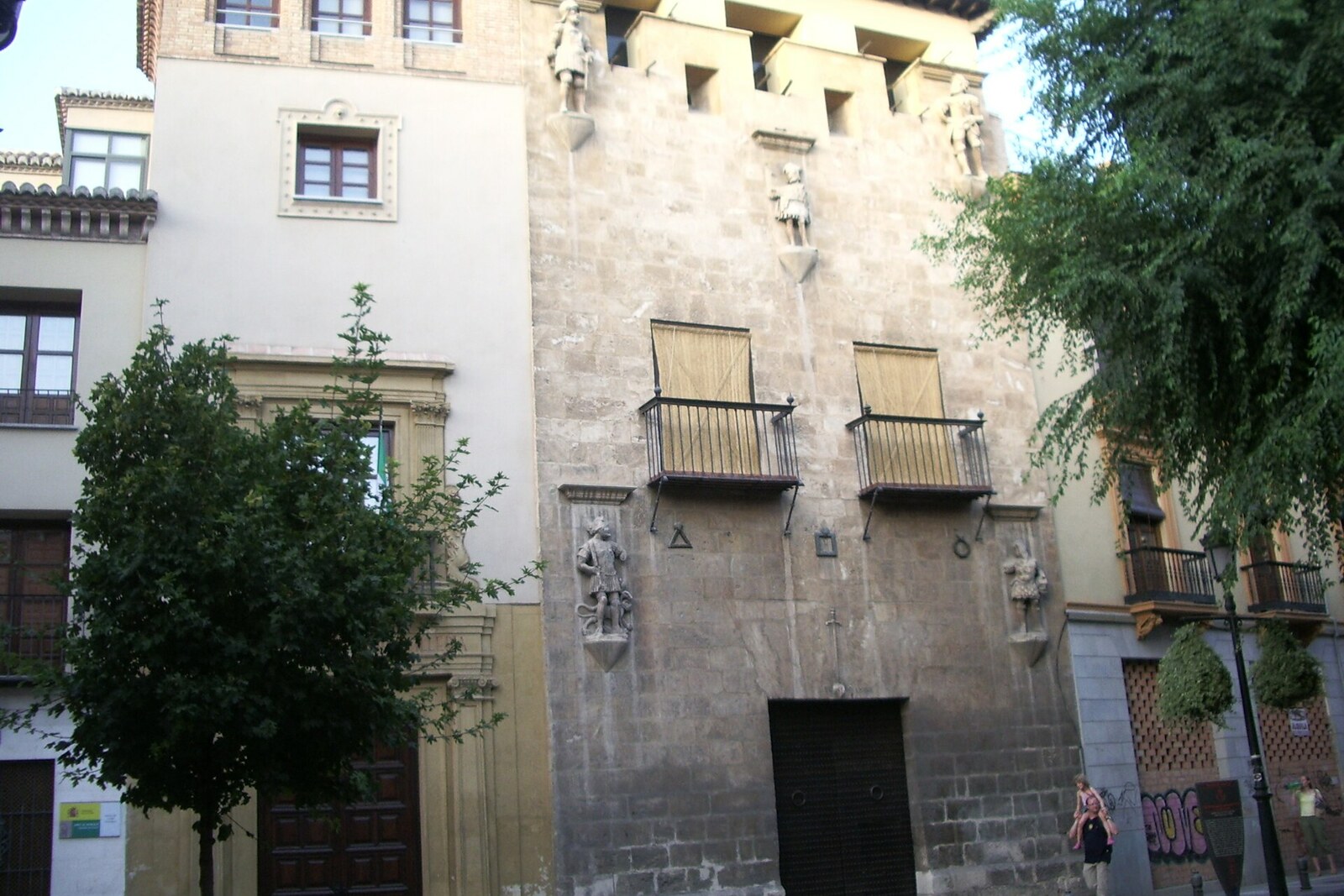
Look around first
What to notice
- Iron gun barrels above the battlements
- Stone figures of heroes
- Coats of arms of Rengifo and Granada Venegas
- The carved ceiling of the Golden Room
The story of the place
Weapon barrels darken beneath the tower's stone crown, while carved classical warriors and family emblems run along the facade below. This plot was once occupied by scattered houses and service buildings; later, they were combined into an urban residence with a tower and a ceremonial hall. A literary academy gathered in the hall beneath its gilded carved ceiling, and visitors to the city museum now pass through it.
Short iron gun barrels protrude between the tower's battlements. Such heavy muskets were called tiros; that is how the palace acquired its popular name, Casa de los Tiros—the House of Gunshots. The barrels do not prove that a battle took place here. Gil Vázquez Rengifo gave his urban residence its military appearance. He had taken part in the conquest of Granada and sought to secure a lasting place for his family among the new nobility.
Rengifo came from Ávila and made his career in service to the crown. He became Granada's chief standard-bearer, joined the city council, received a commandery in the Order of Santiago, and then the administration of the Generalife. These offices and the estates attached to them gave him an income. Royal favor belonged to him personally; his children would still have to hold on to what he had achieved.
By fifteen twenty-six, Rengifo had assembled several houses and outbuildings on this plot. That same year, Emperor Charles V arrived in Granada with his court for seven months. Over the following decades, the owner built a tower-palace and turned its facade into a public presentation of himself before that court.
Jason, Hercules, Hector, and Theseus appeared in stone: warriors who restored thrones, defeated monsters, and defended cities. Mercury stood among them with the Rengifo coat of arms. Above the entrance, the motto “The Heart Commands” was carved, and muskets were displayed above the battlements. The veteran of the Granada War presented himself as an educated courtier, able to handle both weapons and books.
He arranged the continuation through marriage. In fifteen thirty-five, Rengifo's daughter and heiress María Rengifo married Pedro de Granada Venegas. Pedro belonged to a family descended from Nasrid nobility that had converted to Christianity, and he sought full recognition at the Christian court. He received the residence, kinship ties with an old royal warrior, and hereditary administration of the Generalife. In the main salon, the coats of arms of Rengifo and Granada Venegas were placed side by side.
This salon is called the Golden Room. Here, “cuadra” means a square room, and gold covers the carved wooden ceiling with dozens of heroes and rulers. María and Pedro's son, and then their grandson, gathered a literary academy in the room. The grandson became the first of the Marquises of Campotéjar. The muskets on the roof proclaimed the family's military past, while beneath them the owners discussed poetry and scholarly writings.
After several generations, the direct male line died out, and the palace passed to relatives living in Italy. In eighteen twenty-six, King Ferdinand VII demanded that the Generalife be returned to the crown. The legal dispute with the Marquises of Campotéjar stretched on for almost a century. The court ruled in favor of the state, but the parties reached a final agreement only in nineteen twenty-one.
Together with the Generalife, the Marquis transferred Casa de los Tiros on one condition: the house had to contain Granada's library, archive, and museum. The scholar Francisco de Paula Valladar signed the project and began collecting documents, but died five years before the opening. The art historian Antonio Gallego y Burín continued his work; on November first, nineteen twenty-nine, visitors were admitted here.
In the Golden Room, the coats of arms of Rengifo and Granada Venegas still stand together. Beneath the carved heroes, the family academy no longer gathers: museum visitors now pass through here, in a museum created under the last owner's condition and from the project of a director who did not live to see its opening.
Useful on site
Museo Casa de los Tiros: 16 June-15 September Tue-Sun/holidays 09:00-15:00; 16 September-15 June Tue-Sat 09:00-21:00, Sun/holidays 09:00-15:00; Mon closed, except certain pre-holiday Mondays.
Checked: June 28, 2026. Check the official source before visiting.The facade makes a stop on its own. Plan a visit to the museum rooms separately, and only when access is available.