 Guide On Map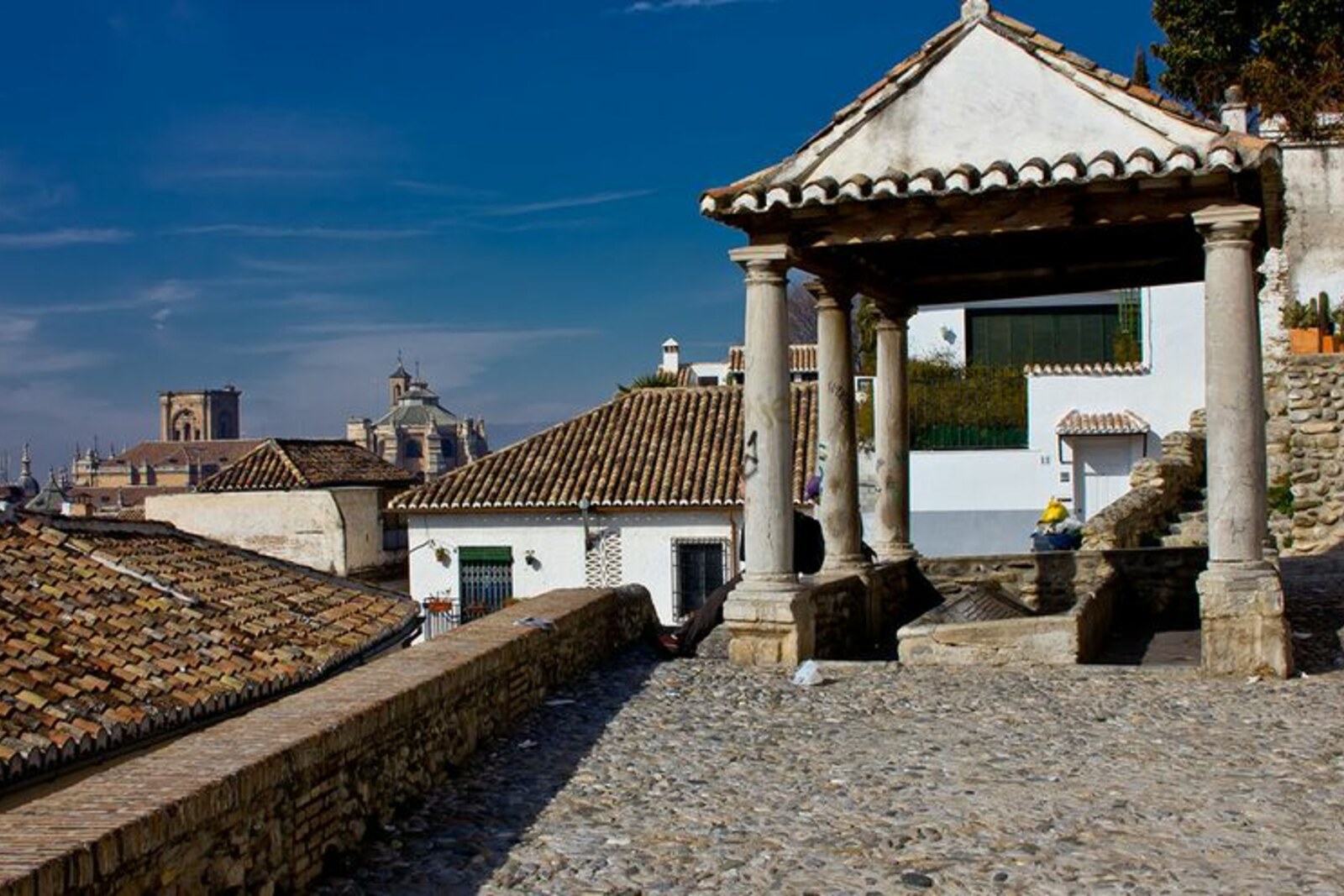
Look around first
What to notice
- Six stone columns
- Tiled roof
- Long basin
- Sloping washing slabs
The story of the place
The washerwomen of Realejo washed other people’s laundry here, from private homes, inns, and hospitals; for single women and widows, this work often supported their children. Six old columns hold up a tiled roof over the public washhouse, with its long basin and sloping stone sides. Water was supplied here by the Acequia Real de la Alhambra, which drew it from the Darro River, and a public water standpipe stood nearby. When running water and washing machines came into homes, work at the basin ended, but the washhouse itself remained, and the square bears the name of gates dismantled long ago.
Beneath the tiled roof stand six stone columns, and between them stretches a basin with sloping slabs. In eighteen sixty-two, the city architect José Contreras proposed creating several such washhouses in Granada’s poor outlying neighborhoods. The municipal file recorded the reason without embellishment: residents had no water in their homes, while the city cemetery held columns from dismantled buildings.
For Realejo, a site was chosen beside a public water standpipe. Water could be brought here from the Acequia Real de la Alhambra, which drew it from the Darro River. Contreras used six columns stored at the cemetery and placed a roof over the basin. It is believed that the stone had previously served in the now-lost Church of Santa Escolástica, but there is no documentary confirmation of this.
Under this roof worked the washerwomen of Realejo—women from less well-off families for whom washing other people’s laundry provided an income. They took clothes from private homes, inns, and hospitals. Granada’s documents do not say how much was paid here per item or per day; it is known that this was one of the most poorly paid forms of women’s work, and that single women and widows often supported themselves and their children with this money. Old photographs show them almost hidden between the basin and the low parapet. The floor was then lower than it is today: this made it easier to lean over the slabs and drain away dirty water.
Water remained a matter of accounting and dispute. In eighteen seventy-five, Lino del Villar, property manager for the Marquises of Campotéjar, demanded the return of part of the flow leaving a private pipe at Casa de los Tiros for the public washhouse. City officials consulted the lists of canal users. The municipality did indeed have four shares of water recorded in its name, but someone had enlarged the intake opening, and the washhouse began drawing more than it was entitled to. The complaint was found justified. The washhouse itself was not closed: later, the city repaired its cistern, pipes, and subsided basin, and the women continued working here.
People stopped using the basin only in the mid-nineteen sixties, when running water and washing machines came into homes. Puerta del Sol is the name of the city gates that once stood nearby: their eastern entrance faced the sun. The gates were dismantled soon after the washhouse was built. What remains of them is the name of the square, and what remains of the women’s workplace is the basin, roof, and six columns of Granada’s last surviving public washhouse.
Useful on site
The placeta is open as a city square; the lavadero is marked as temporarily dismantled in a recent Ayuntamiento PDF, so do not count on a guaranteed view of the structure.
Checked: June 28, 2026. Check the official source before visiting.View the structure from the accessible part of the square, and do not go beyond temporary barriers if they are in place.