 Guide On Map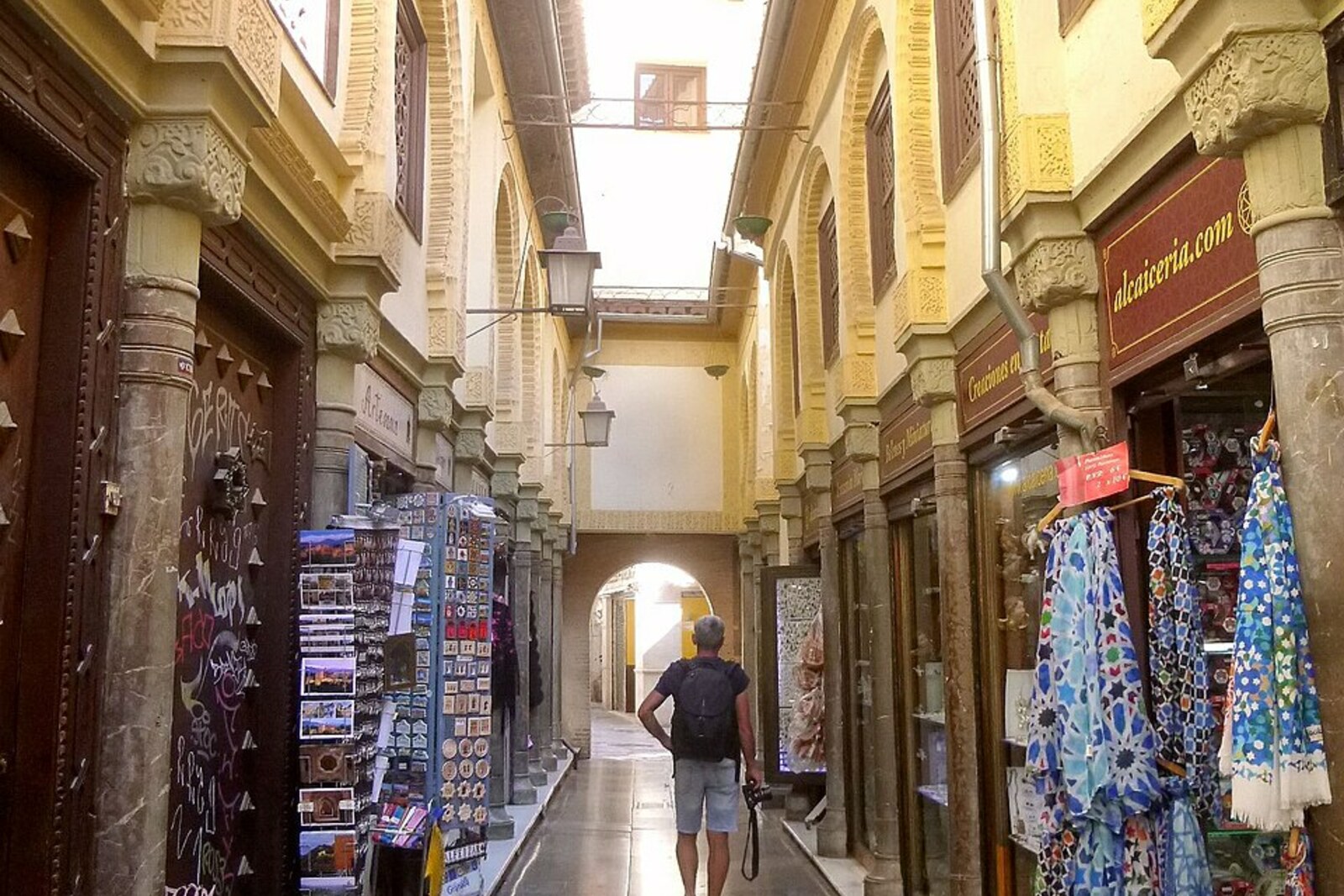
Look around first
What to notice
- The shops of the present-day market
- Neo-Moorish facades
The story of the place
In February sixteen oh eight, thirty leading silk merchants of Granada closed their offices and stopped buying raw material in the Alcaicería. They sought the ruin of Juan Bautista de Gedeja—the de facto holder of the silk-tax farm.
A tax farmer promised the treasury a sum agreed in advance, collected the duties himself, and expected to profit from the difference. Gedeja demanded that the merchants record every batch of silk in special ledgers, then added another real per pound to the sales tax. He sent those who refused to pay to prison, and their property was inventoried. Guards were posted at the dye works and the customs house.
The dispute could reach such proportions precisely here. After the conquest of Granada, Isabella I of Castile and Ferdinand II of Aragon preserved the existing system of silk trade: raw material from across the kingdom could be sold only in the Alcaicerías of Granada, Málaga, and Almería. Here, skeins were weighed, stamped, sold to merchants, and immediately taxed. The Arabic word “al-qaysariyya” meant an imperial market. The story that the name was given in honor of the Byzantine emperor Justinian I, who allowed Arabs to trade in silk, remains a traditional explanation, not an established event.
The merchants knew Gedeja's weak point: without daily transactions, he could not pay the money he had promised the treasury. They stopped trading and halted orders to weavers. Around five hundred looms and two hundred silk-spinning machines fell idle in the city. More than five thousand people earned their living from making cloth; some craftsmen left for neighboring towns where tax concessions were in force.
Gedeja ordered the ringleaders arrested. The merchants were released on bail, imprisoned again, and sent to the court prison, yet they continued their lawsuits and offered the treasury more than the tax farmer paid. In July, King Philip III terminated the previous contract and transferred tax collection to the merchants themselves. They formed a “university”—the term then used for an official association—and received the tax farm for ten years. Gedeja lost the collection rights, and the merchants recovered their property and were released from prison. By the final year of the contract, their association had itself gone bankrupt, and the treasury once again put its own officials in charge of silk.
The shops the merchants locked in sixteen oh eight are no longer here: a fire in eighteen forty-three destroyed the old Alcaicería, and the city's architects built a smaller Neo-Moorish market in its place. Today's Placeta de la Seda—Silk Square—preserves the name of the commodity whose trade those thirty merchants managed to stop.
Useful on site
Shops usually operate 10:00–20:00 with a siesta break; the area is open around the clock.
Checked: June 17, 2026. Check the official source before visiting.The passages are narrow and remain a working commercial space. To listen, choose a wider spot by a wall, do not block the shops, and keep your belongings with you.