 Guide On Map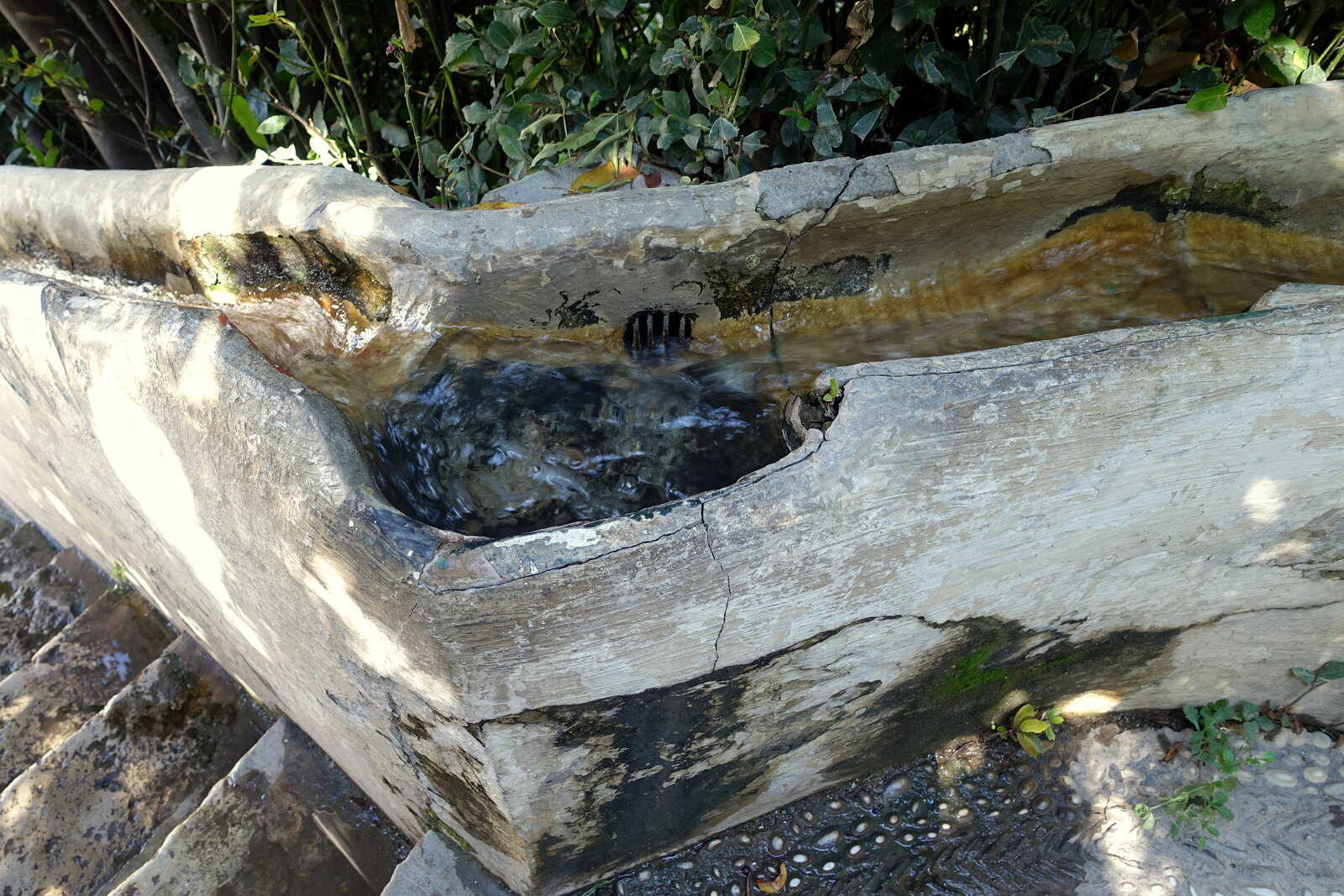
Look around first
What to notice
- Four flights of stairs
- Side channels made of inverted roof tiles
- Circular basins on the landings
The story of the place
Four flights of stairs lead through the Generalife gardens, and water constantly runs beside the steps through side channels. Nasrid builders made the stairway beside the upper branch of the Royal Canal, which enters the estate above the main channel: the difference in elevation allowed the water to flow without a pump. Three circular landings with basins and the channels along the parapets remained part of the working irrigation network that supplied the lower gardens. Today the flow runs through inverted roof tiles along the edges of the steps, while the narrow channels leading away from the basins have been lost.
In fifteen twenty-six, the Venetian ambassador Andrea Navagero recorded how guests were doused here. He was following the court of Charles V because he was negotiating with the emperor on Venice's behalf, and he arrived in Granada together with the court. Those in charge of the water above could separately open the sluices of the side channels and the recesses on the landings. When they opened everything at once and increased the pressure, the water flooded the steps and drenched those climbing up. Navagero explicitly calls this games and jokes.
A working irrigation network was used for this entertainment. Nasrid builders placed the stairway where the upper branch of the Royal Canal—Acequia del Tercio—entered the Generalife about twelve meters above the main channel. No pump was needed. The water flowed down four flights, passed through three circular landings, and then reached the lower gardens. The channels along the parapets served as open water conduits; when needed, part of the flow was directed onto the steps.
More than forty years later, the structure came under threat. After the Morisco revolt and their expulsion from the Kingdom of Granada, the people who cleaned the channels, repaired the lead pipes, and maintained the gardens were taken away from here. Moriscos were the baptized descendants of the Muslim population. Testimony from fifteen seventy-one says that water was being lost, trees were drying out, and soldiers were breaking through garden walls, stealing fruit, and cutting branches. According to witnesses, the workers hired to replace those expelled did not know how to handle local irrigation and damaged the plantings even more.
Alonso de Granada Venegas, the steward of the Generalife, sought permission to bring the specialists back. His family itself came from Granada's Christian-converted nobility and received the office of steward as a hereditary holding for service to the king during the revolt. In return, the Venegases undertook to spend one hundred ducats on the estate every year. Alonso was now responsible for a property whose sources of income—the gardens and vegetable plots—were deteriorating, yet maintaining it remained his duty.
He gathered testimony and explained to the Crown how many people were needed: eighteen gardeners and vegetable growers, four specialists in channels and pipes, two gatekeepers, and one house warden. In fifteen seventy-eight, the king allowed Moriscos to be brought to the Generalife together with their wives and children. Each person had to be recognized as experienced in their trade and uninvolved in the revolt; Alonso was to answer for them before the officials. For these families, work with water became the basis for remaining in Granada.
Two years later, Alonso made a separate contract with the tile maker Antonio Tenorio specifically for this stairway. Within fifteen days, the craftsman was to make thirty interlocking channels—green on the outside and white inside—and four basins modeled on those already standing here. Then the lead pipes were repaired, the stairway floor was completely relaid, the channels on the parapets were replaced, and the supports for the vine canopies were restored.
Today water runs constantly through two side channels made of inverted roof tiles. The circular basins on the landings have survived, but the narrow channels leading away from them are lost; Tenorio's green-and-white sections have also been replaced many times. The stairway can no longer be turned into a water trap with a single movement of a sluice: of the game described by Navagero, the flow along the edges of the steps and the name Water Stairway remain.
Useful on site
Part of the Generalife; access depends on the current route and its state of preservation.
Checked: June 28, 2026. Check the official source before visiting.The steps may be wet, so climb without rushing and do not lean on the water channels as though they were ordinary dry handrails.