 Guide On Map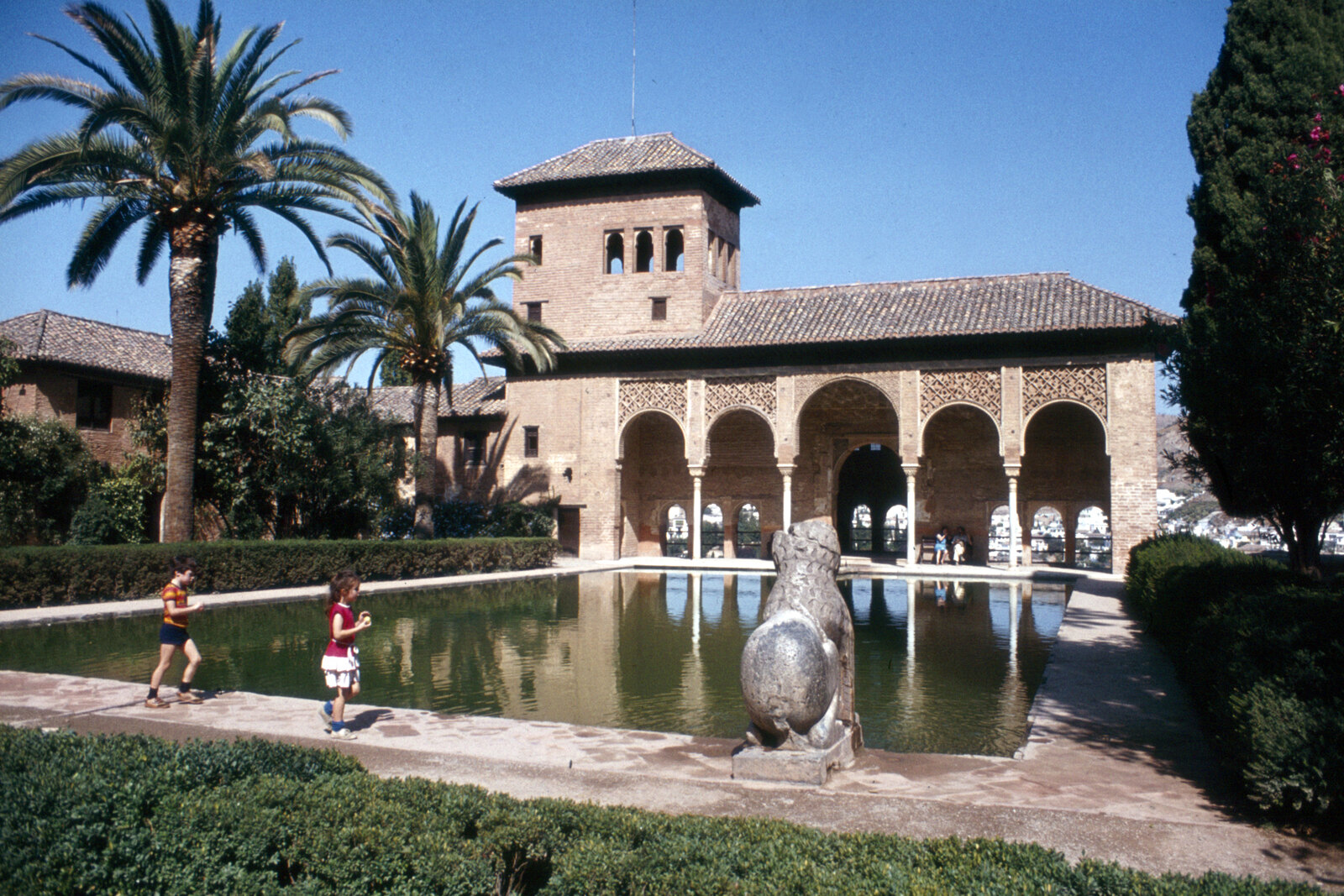
Look around first
What to notice
- Five-arched portico
- Long pool
- Tower above the main hall
- Wooden replica dome
The story of the place
Five arches beside a long pool gave this section its name. “Partal” comes from an Arabic word meaning “portico.” Behind the gallery stood the palace's main hall, and above it rose a tower with a room open to the Darro River valley. From its layout and decoration, researchers date the palace to the time of Emir Muhammad III, who established his residence here at the beginning of the fourteenth century.
By the end of the nineteenth century, Partal Palace scarcely resembled a palace. After the conquest of Granada, it was passed to private owners, who adapted the old rooms for housing, walled up the arches, and covered the medieval decoration. To the state, it remained someone else's house inside the Alhambra.
In eighteen eighty-five, Arthur von Gwinner, a German banker then working in Madrid, bought the house, garden, and adjoining plots. His banking income allowed him to acquire the part of the Alhambra that could still be sold to a private individual. Gwinner soon returned to Germany, and Spanish officials began seeking the transfer of Partal Palace to the state.
Gwinner agreed to part with the entire property, but demanded to keep one part of the house. In the tower's upper room was an early fourteenth-century carved wooden dome. On March twelfth, eighteen ninety-one, the banker transferred Partal Palace to the state on condition that he could remove this ceiling and take it to Berlin.
Before it was dismantled, the dome was carefully drawn. In eighteen ninety-two, its panels were packed for transport and then assembled in Gwinner's Berlin house. The original ceiling of the Nasrid palace became the ceiling of his private room. The Spanish state received Partal Palace; restorers reopened the walled-up gallery, uncovered the old decoration, and restored the pool before the portico.
The later fate of the removed dome depended on the banker's family. In nineteen forty-two, his heirs dismantled it and hid it in crates on a country estate. The Berlin house was soon destroyed by bombing and fire. The dome survived almost intact, although eleven of its forty-one elements were lost. In nineteen seventy-eight, Berlin's Museum of Islamic Art acquired the surviving parts from Gwinner's descendants.
In the nineteen sixties, Spanish craftsmen made a replacement for the tower from the old drawings. The wooden dome in its upper room is a copy. The original, which Gwinner received for all of Partal Palace, is kept in Berlin; the portico, pool, and palace remained in Granada.
Useful on site
Part of the complex; visitor flow and access may change.
Checked: June 28, 2026. Check the official source before visiting.Do not limit yourself to a photograph by the water: change your position several times along the pool and compare the building itself with its reflection. Do not go beyond the barriers.