 Guide On Map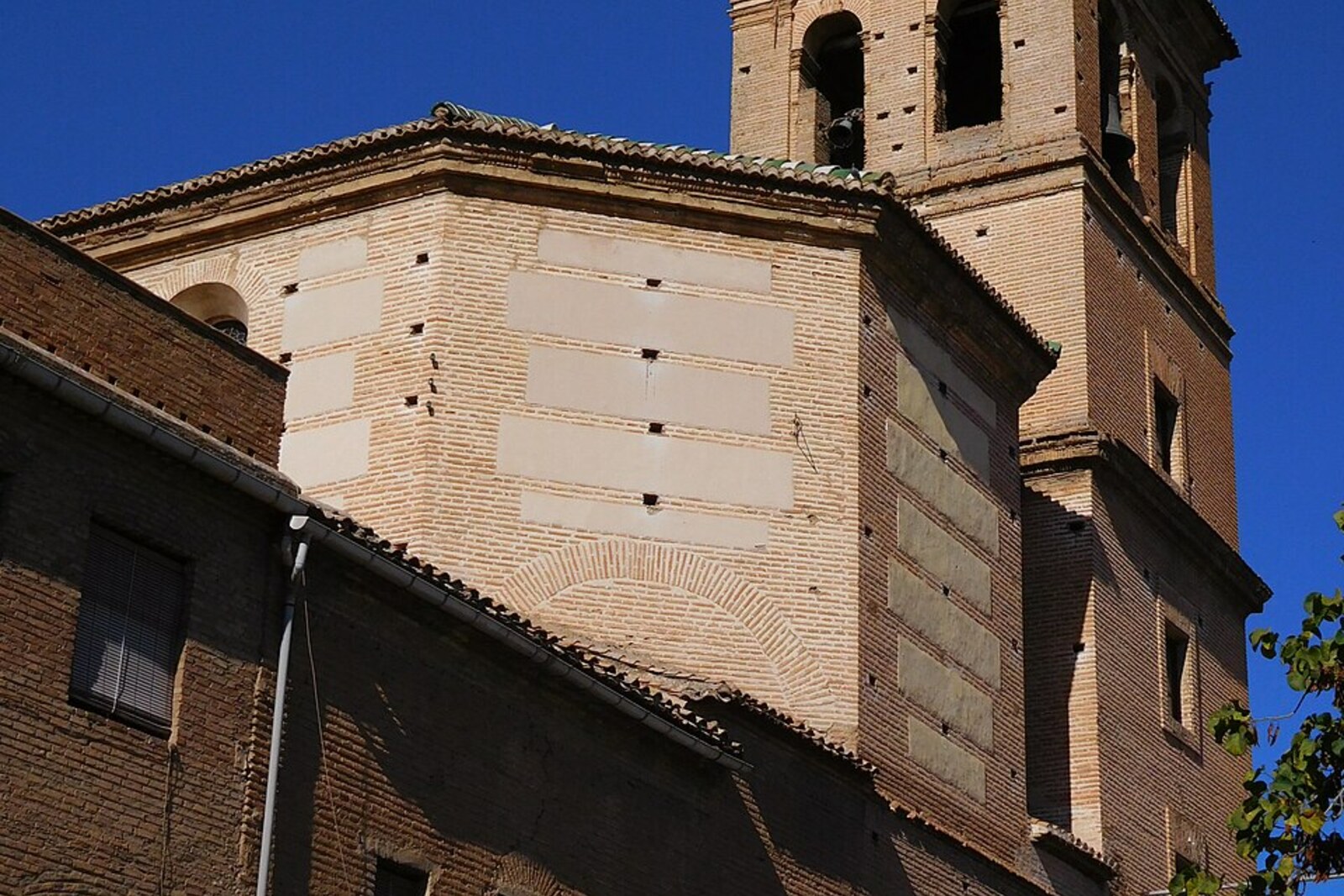
Look around first
What to notice
- Church façade
- Ablutions courtyard
- Atrium galleries
The story of the place
Behind the façade of the Church of El Salvador survives a trace of the building that once began Albaicín's public life: the ablutions courtyard with its galleries. The quarter's main mosque was surrounded by the workshops of weavers, dyers, potters, and silk merchants; its eighty-six columns supported a large prayer hall. The mosque then became a church, and by the end of the sixteenth century the former hall was dismantled and a church built more modestly than planned. The courtyard survived this replacement, and part of its galleries was restored in the mid-twentieth century.
At the end of December fourteen ninety-nine, Íñigo López de Mendoza, Count of Tendilla, ordered his wife and two young children to leave the protected Alhambra. He served as its commander and was responsible for Granada's security. Now he had to persuade the armed residents of Albaicín to disperse without an assault. The count housed his family among them, in a house beside the main mosque—the very one on whose site the Church of El Salvador stands. His wife and children became hostages to his word: if the townspeople laid down their arms, there would be no general reprisals.
When Granada surrendered to the Catholic Monarchs, the treaty preserved the Muslims' faith and mosques. Such residents were called Mudéjars—Muslims under Christian rule. Weavers, dyers, potters, and silk merchants worked around the mosque here; the quarter lived by its crafts, and the mosque was its main public building.
Granada's first archbishop, Hernando de Talavera, wanted to convert Muslims through preaching and instruction. Francisco Jiménez de Cisneros, the Archbishop of Toledo and the queen's confessor, who had arrived in the city, sought rapid mass baptisms. In December, his men tried to detain a woman suspected of returning to Islam. She cried out that they wanted to make her a Christian in violation of the treaty. The gathered residents killed a royal official, blocked the streets of Albaicín, and surrounded Cisneros's residence.
Talavera entered the quarter unarmed. Tendilla came after him and left his family here. After negotiations, the residents laid down their arms; a Muslim judge handed over the killers of the official, four were executed, and the rest returned to their workshops and shops. An assault was avoided, but the former terms were not restored: the amnesty was tied to accepting baptism.
Albaicín's main mosque was handed over for Christian worship between January fifth and eleventh, fifteen hundred. By January twelfth, documents already record baptisms of the quarter's residents here. Four days later, Cisneros reported in a letter that all the city's mosques had become churches, and personally added this one's new name: San Salvador. “Salvador” means the Savior—Christ.
Baptized Muslims and their descendants came to be called Moriscos. The following year, a parish and a college of canons—priests charged with instructing the new Christians—were established here. The mosque itself continued to serve as a church building for several more decades. After the Morisco uprising and the expulsion of most of them in fifteen seventy-one, the parish lost a significant share of its parishioners and income. The new church had to be built more modestly than planned, and by the end of the century the former prayer hall was dismantled.
Today, the Church of El Salvador remains an active Catholic church. Sources do not identify more precisely the house where Tendilla housed his wife and children. Of the mosque with eighty-six columns, the ablutions courtyard survives, having become the church atrium; part of its galleries was restored in the nineteen fifties. It was beside this very courtyard that the count left his family as hostages, and a few weeks later the residents of Albaicín were baptized inside the former mosque.
Useful on site
An active church; tourist access depends on the parish schedule and services.
Checked: June 29, 2026. Check the official source before visiting.Access to the interior and courtyard depends on church life; do not enter during a closed service, and do not expect to see everything from the street. If the doors are closed, focus on the building's mass and the space around it.