 Guide On Map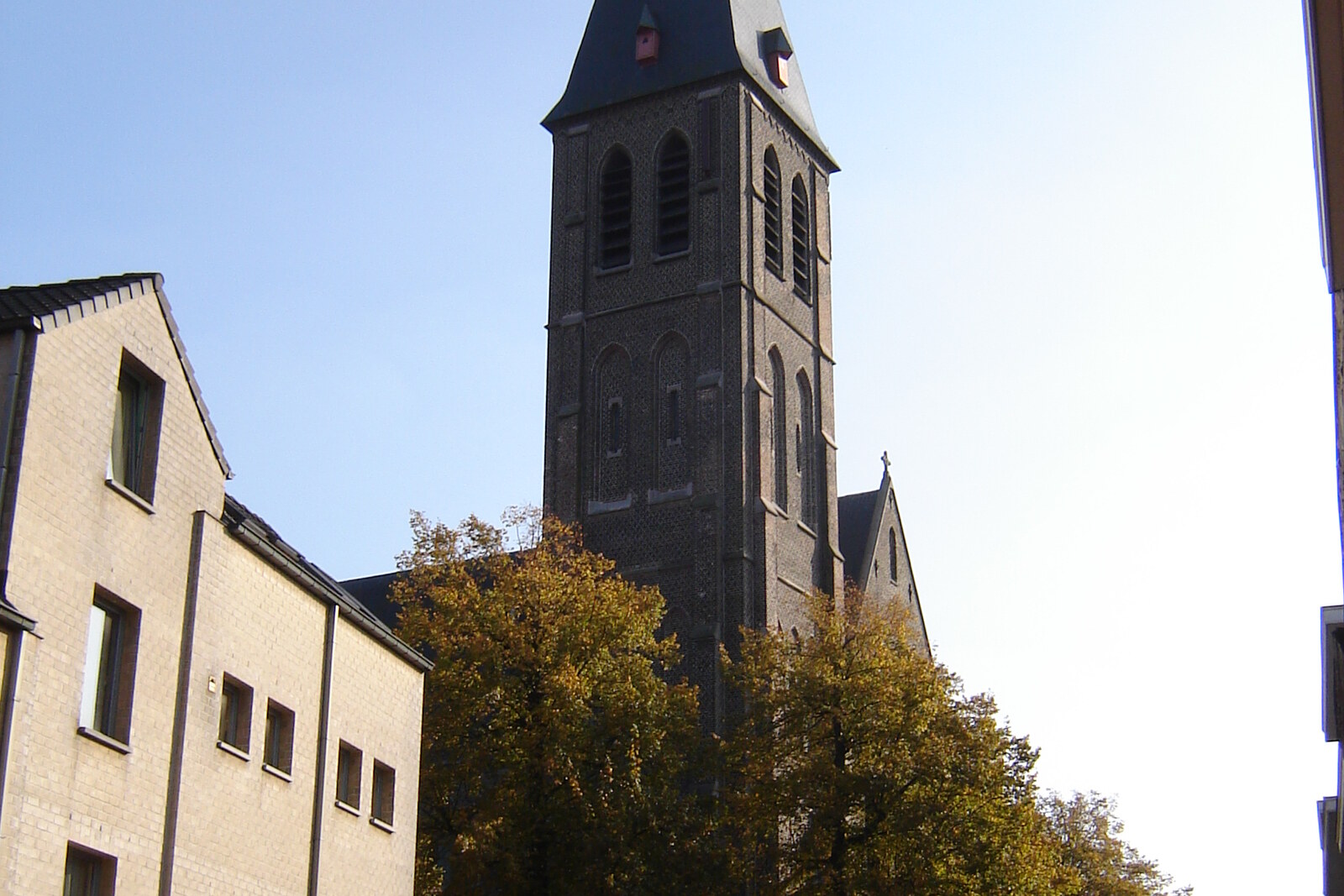
Look around first
What to notice
- Red-brick facade
- Nave
- Pulpit from the former chapel
The story of the place
A working-class district grew around the old monastic site, with cargo docks, a cattle market, a slaughterhouse, and a railway; the former refectory could no longer hold its parishioners. The red-brick facade and spacious nave appeared here in eighteen eighty, but inside, a pulpit from the chapel in that old refectory has survived. Concerts and lectures now sound above the site of the venerated well: regular services ceased in twenty seventeen.
In ten eleven, the monks of Saint Bavo's Abbey received a poor pilgrim named Macharius. He called himself a former Archbishop of Antioch, came, as he said, from Armenia, and wanted to continue westward. He had neither entourage nor means; on the road, he depended on monastic hospitality.
Macharius left the abbey but fell ill nearby. He was carried back, and for the next five months he lived with the monks. On April tenth, ten twelve, the pilgrim died during an epidemic that later texts called the plague.
The story of his earlier life cannot be verified. The author of the first vita, written soon after Macharius's death, openly admitted that he knew nothing about Macharius's travels before Ghent. Stories of an eastern archbishop, torture, and miraculous escapes appeared later and belong to legend. The pilgrim's death in the abbey, however, and the monks' actions afterward are documented much better.
Abbot Erembold led the monastery, which competed with another major Ghent abbey—Saint Peter's Abbey. Relics drew pilgrims and, with them, donations. Erembold ordered Macharius to be ceremonially buried in the monastic church and the miracles attributed to him to be recorded. The vita added that before his death, the pilgrim predicted the end of the epidemic. Thus, a man who died of an infectious disease came to be venerated as a protector against it.
In ten sixty-seven, Abbot Siger secured the ceremonial raising of Macharius's remains from the grave in the presence of two bishops. This established the local cult. Sick people came to his relics, and water from a well associated with him was considered healing. Later, the remains were moved to Saint Bavo's Cathedral, where they remain today.
After the abbey disappeared, local residents continued to pray beside its ruins. From eighteen thirty-five onward, the former monastic refectory served as the parish church. When a new district grew up around the docks, cattle market, slaughterhouse, and railway stations, it no longer had room for the parishioners. In eighteen eighty, construction began on the present red-brick church, preserving the name of the man who died here almost nine centuries earlier.
The new church occupied the site where Macharius's venerated well had once stood. The well itself was first replaced by a pump, and in eighteen ninety-eight its stone covering was moved to the abbey garden. Inside the church remains a pulpit made for the former chapel in the monastic refectory.
Since twenty seventeen, regular masses have no longer been celebrated here. Concerts, lectures, and exhibitions are held in the nave. Macharius's relics are kept in the cathedral, the covering of his well stands in the abbey garden, and above the former well is a church bearing his name.
Useful on site
The exterior can always be viewed; access to the interior depends on the calendar of events and open days.
Checked: June 30, 2026. Check the official source before visiting.The church is used as a cultural venue, so entry may depend on the event taking place. Plan attendance at a concert or other program separately; from outside, the scale of the parish building is easy to see.