 Guide On Map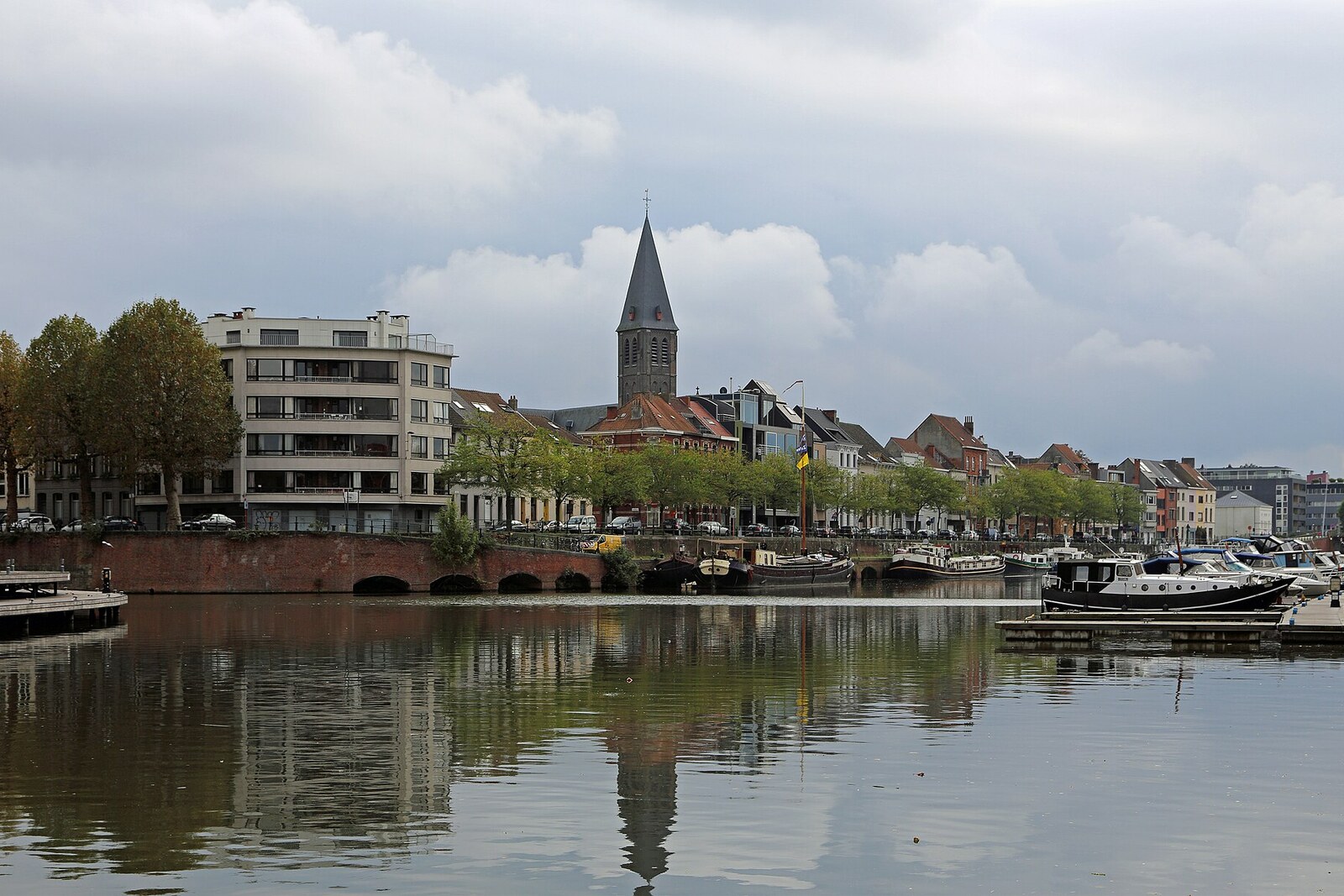
Look around first
What to notice
- The confluence of the Lys and the Scheldt
- Floating pontoons
- Guest boats
The story of the place
At the confluence of the Lys and the Scheldt, floating berths rest on the water, where small guest boats pull in. They were installed in two thousand five for short stays: boat owners moor here for several nights and step ashore directly into the city. The water around the pontoons seems calm, but this is precisely where the two rivers come together in a single river junction.
Around six thirty, Amandus came here—an Aquitanian missionary whom the Frankish king Dagobert I had tasked with converting the inhabitants of Ganda to Christianity. Royal support gave him resources and companions, but it did not protect him from the Gandans themselves, the inhabitants of Ganda. A life of the saint compiled in the following century recounts that the inhabitants beat the preacher and threw him into a river several times, most likely the Scheldt. The author of the life did not name the exact stretch of shore.
Amandus continued preaching. According to the same life, attitudes toward him changed after a miracle: the missionary supposedly brought a hanged man back to life. This is church tradition, not a verifiable fact. The outcome, however, is known: at the place where the Lys flows into the Scheldt, Amandus founded a church and gathered a community.
One of his followers was Bavo, a wealthy landowner from Hesbaye. His estate provided his livelihood; his choice cost him that familiar prosperity. Bavo gave away his property and spent the rest of his life as a hermit. After his death, his remains were moved to the church of Ganda. Pilgrims with gifts were drawn to them, a monastic community formed around the church, and it later became Saint Bavo's Abbey.
A large monastic estate needed a place where produce from its holdings could be brought in and goods could be sent onward. Two river routes met here. Merchants, carriers, and craftspeople settled nearby, and shortly after the middle of the ninth century, a written source recorded the expression “Portus Ganda.” At that time, the word “portus” meant a trading settlement, while “Ganda” meant a river mouth or confluence. The name Ghent also came from this name.
The present pontoons appeared in two thousand five. This is a guest harbor: boats moor for several nights, and their owners step ashore directly into the city. The name “Portus Ganda” preserves both the occupation of the first inhabitants—trade by the water—and the reason they gathered precisely here: the Lys flows into the Scheldt by the berths of the modern harbor.
Useful on site
Open urban space by the marina; private boats and service gangways are not part of the route.
Checked: June 30, 2026. Check the official source before visiting.Stop where you can see not just one expanse of water, but the actual meeting of the rivers; you do not need to go out onto the pontoons to do this.