 Guide On Map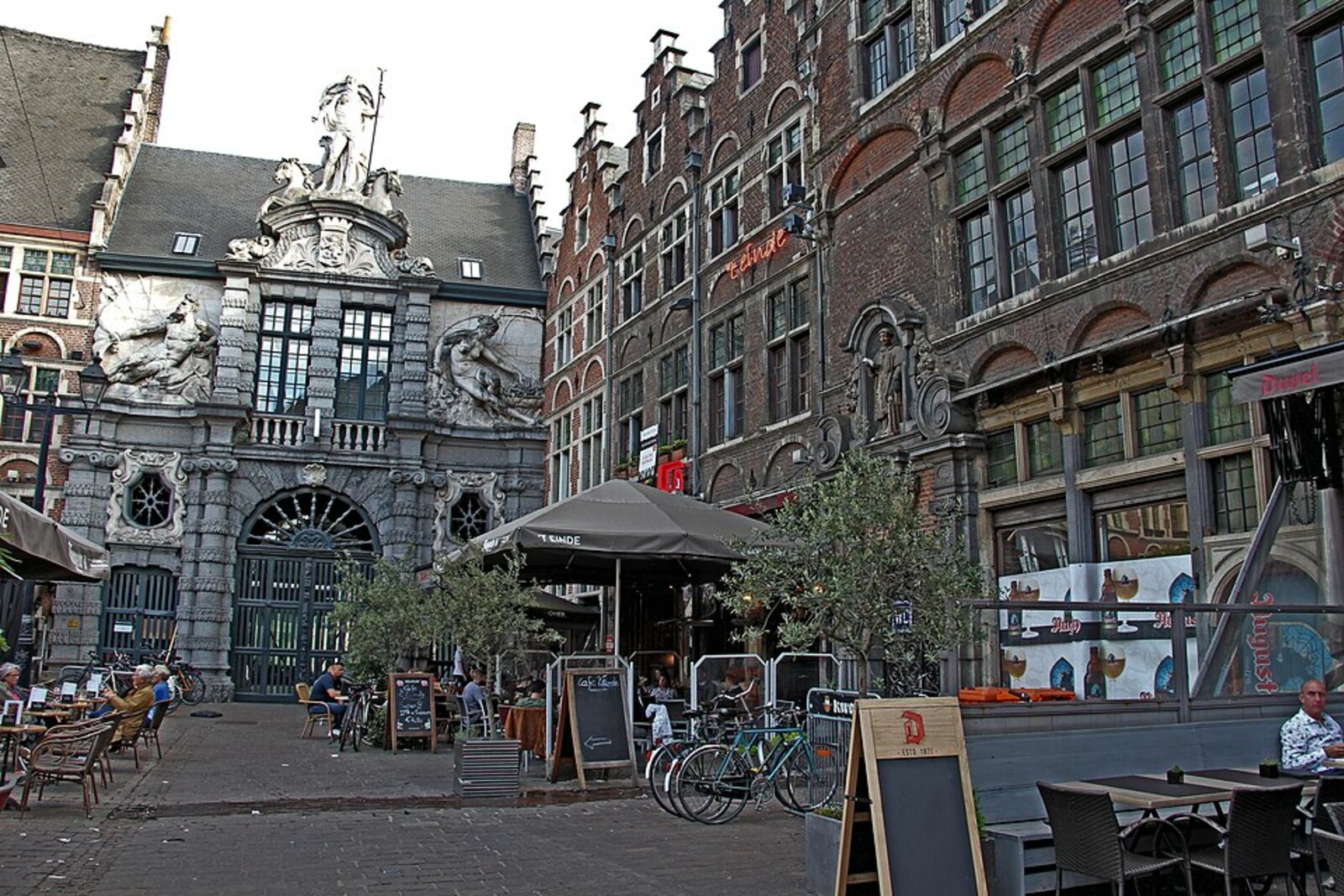
Look around first
What to notice
- Baroque gates with Neptune
- Glass roof
- Covered market buildings
The story of the place
Once, an auctioneer called out lots from a small booth, while buyers gathered around him: this was how fish was sold here at auction. The Baroque gates with Neptune separated this trade from the square and indicated that their own rules applied inside. The market was moved to the confluence of the Lieve Canal and the Lys, where the city bought three houses from the church chapter; goods were delivered here by water. The covered buildings with their glass roof outlasted the fish counters: a tourist office and event halls now operate beyond the gates.
In February eighteen eighty, a street song about the new covered market was making the rounds in Ghent. Its author made women fish vendors the main characters. They had previously worked in the open air; in winter, not even a pot of smoldering coals placed under their skirts could save them. In the song, the vendors were freezing stiff, while bream and eels froze in their tubs. These verses use comic exaggeration, but they name the risk accurately: perishable goods were sold here, and people lived on their daily takings.
The fish trade moved here from the square now called Groentenmarkt. City councilors bought three houses at the confluence of the Lieve Canal and the Lys from the chapter of the Church of Saint Pharaildis. On June seventh, sixteen ninety, the sellers took up their new places—just across the bridge from the former market and beside the waterway used to deliver the goods.
The word “market” somewhat simplifies matters here. Fish was sold at auction. An auctioneer announced the lots from a small booth, and buyers gathered around. The best goods were intended for traders inside the market; a separate sale of river fish and part of the delivered sea fish was held for the townspeople. The Baroque gates with Neptune showed that beyond them trade began under established rules, rather than a row of chance street stalls.
On the night of December eighth to ninth, eighteen seventy-two, a fire destroyed the room above the entrance and badly damaged the gates. The women fish vendors found themselves back in the open square. City councilors decided to restore the facade and build a large covered hall. Work began in eighteen seventy-five and lasted almost eight years.
When the market opened, the same street song reported the outcome: the women received places beneath a glass roof, and each had to keep to her own counter. The roof now protected the goods, and market regulations protected order.
Fish was sold here until the early nineteen sixties. Today, a tourist office and event halls operate beyond the gates. The auctioneer’s booth and the fish counters have disappeared; the covered buildings for which the rebuilding was undertaken after the fire remain.
Useful on site
Access to the courtyard and gates is free. The building contains a food market and a tourist office; opening hours depend on the tenants.
Checked: date not specified. Check the official source before visiting.The sculptural group is clearly visible from the square. View the tombstone only when access inside is open; do not try to enter closed rooms for its sake.