 Guide On Map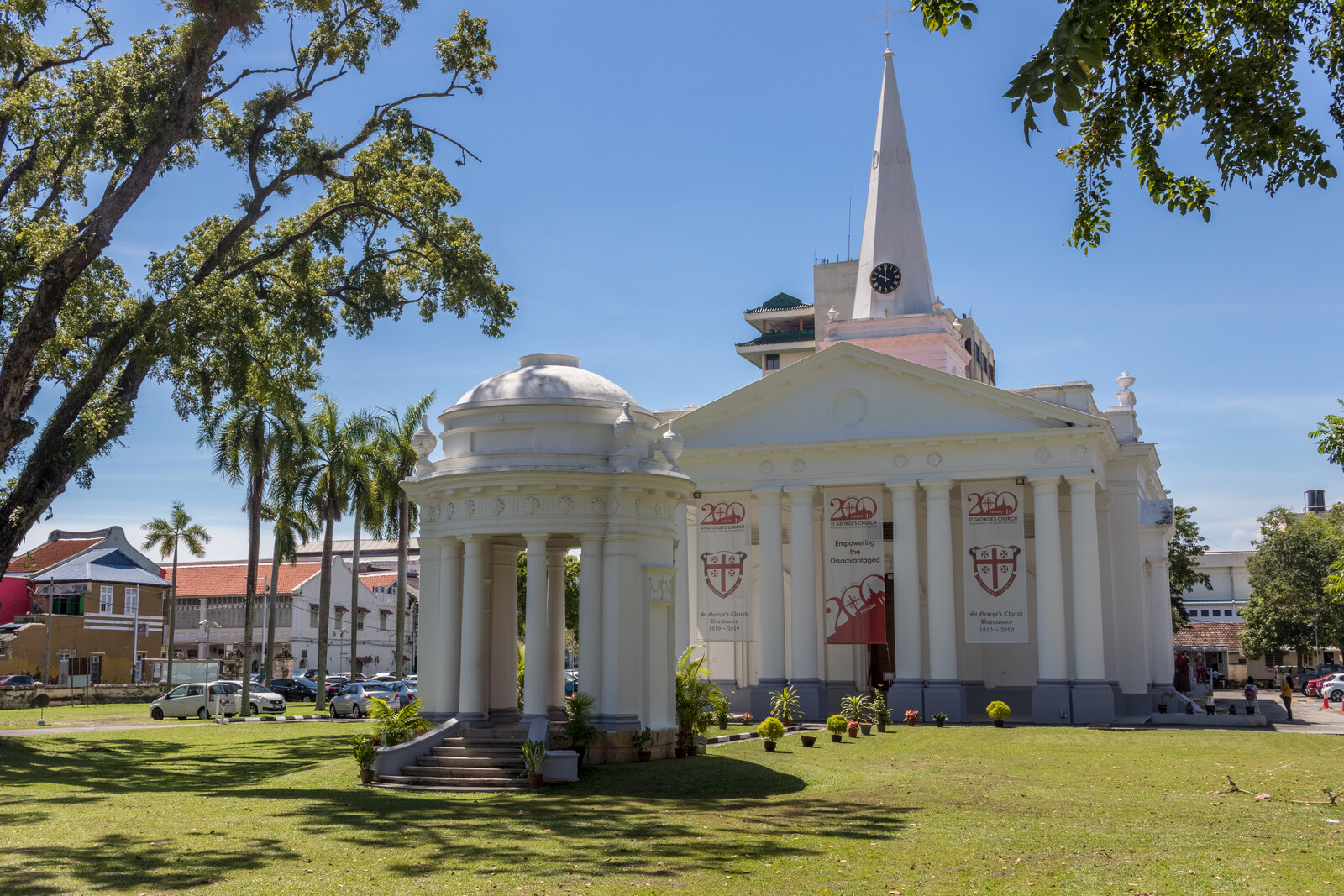
Look around first
What to notice
- The white portico with columns
- The chipped baptismal font
- The organ pipes in the northeastern corner
The story of the place
The white columns of the portico lead into St. George's Church; inside, its past can be read through objects from different periods. The chipped font belonged to the prewar church and is again used for baptisms. In the northeastern part stands a new mechanical organ with two manuals, a pedal, and seventeen stops; all its pipes were made anew.
The white church with its portico was built here for the Anglican community of the East India Company. Its employees had previously held services in the governor's house, and then in the courthouse. The Company paid for the new church in full; it opened in eighteen eighteen and was consecrated a year later. It is the oldest church in Southeast Asia originally built for Anglican worship.
George in its name is an early Christian martyr revered as the patron saint of England. For an English church in a port city belonging to the Company, the name was a direct indication of the community the building was meant for. Later, St George's Day helped that community reclaim the church from ruins.
In December nineteen forty-one, during a Japanese air raid, a bomb pierced the roof above the west gallery and brought down part of it. Looters came next. They carried off the pulpit, the altar rail, the pews, and the brass lectern; they tore marble memorial plaques from the walls and lifted the floor slabs. The organ was taken apart; the remains of its pipes ended up in nearby streets.
After the war, J. P. Soutar, the prewar director of the church choir and a member of the parish committee, began writing to British organ builders. Most replied that they would not be able to take on the order for another several years. The only firm willing to begin earlier quoted about thirty thousand local dollars, while restoring the entire building was then estimated at roughly sixty thousand. The parish could not afford a new pipe organ.
On St George's Day, parishioners held a service right among the damaged walls and opened a fundraising drive. The government undertook to pay for repairs to the building itself. Banks, trading houses, and private donors raised money for pews, the pulpit, and other furnishings. Services resumed here in nineteen forty-eight, but without the former organ.
One object returned almost at once. Employees of the public works department found the baptismal font nearby in a heap of rubble. It had acquired a chip but remained intact; it was put back and used for baptisms again.
A pipe organ appeared here only in two thousand seventeen, more than seventy years after the looting. A private donor paid for it, and builders made a completely new mechanical instrument with two manuals, a pedal, and seventeen stops. The chipped font belonged to the prewar church. All the organ pipes in the northeastern corner were made anew.
Useful on site
The church can always be viewed from outside. Entry depends on services, parish activity, and whether the doors are currently open; do not plan this stop as a guaranteed interior visit.
Checked: July 1, 2026. Check the official source before visiting.Look around the courtyard quietly; if a service is underway inside or entry is restricted, you can do most of this stop from outside.