 Guide On Map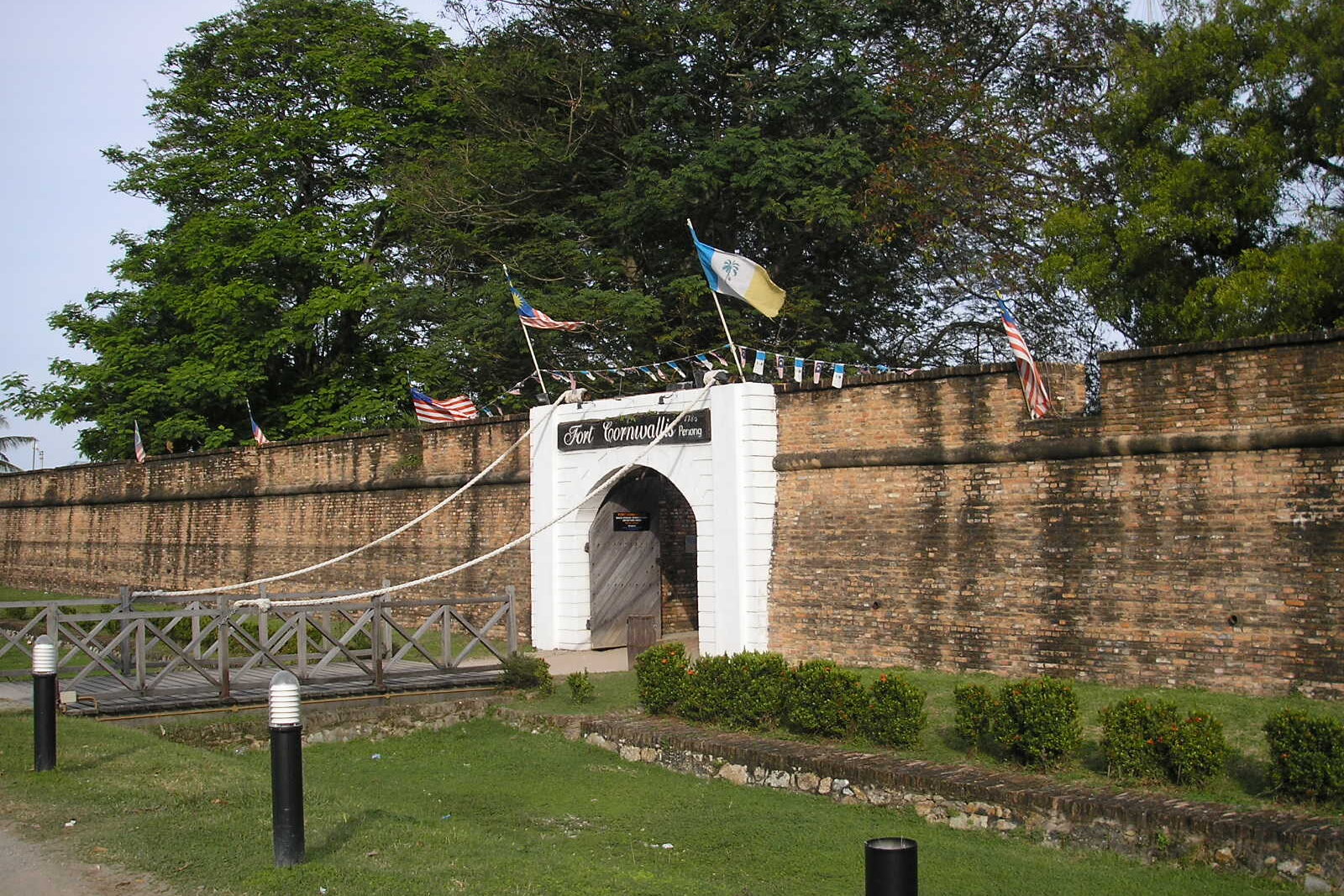
Look around first
What to notice
- Old brick masonry
- Restored western wall
- Moat with a granite foundation and brick edge
The story of the place
On the headland by the harbor, there was first an enclosure made of nibong palm trunks. Later it was replaced by brick parapets and stone batteries; behind them stood powder magazines, warehouses, a garrison, and British offices. From the sea, the fortification was surrounded by a moat with drawbridges, and heavy guns faced the harbor. The original fabric of the fort can still be made out in the old brick masonry.
In eighteen oh four, Colonel Robert Townsend Farquhar, the new governor of British Penang, was preparing to repel a French attack. Britain was at war with Napoleon, and the East India Company port stood on the sea route between India and China. Farquhar needed a fort that could protect ships and warehouses right here, on the headland at the entrance to the harbor.
A fortification already stood on the site, founded by Francis Light in seventeen eighty-six. The first enclosure was built from nibong palm trunks. Light named it after Charles Cornwallis, then Governor-General of Bengal, who oversaw the Company's possessions in India. Cornwallis himself did not serve in Penang: his surname marked whom the new British post answered to.
The palm walls had deteriorated, and Farquhar ordered them replaced with brick and stone. The Company brought prisoners from India and forced them to build parapets, ammunition stores, outer batteries, and a moat with drawbridges. For these people, the construction work was part of their punishment after being transported across the sea. Farquhar left Penang the following year; work continued under his successors and was completed in eighteen ten, at a cost of about eighty thousand dollars of the time.
Four years later, the fortifications and the batteries extending toward the sea held seventy-seven guns, with another forty-five kept in reserve. The heaviest guns were placed beyond the moat on the harbor side. Not one of them ever fired at an enemy. The French never came here, and the artillerymen fired mainly during salutes. Inside stood the garrison, powder magazines, warehouses, and offices of the British administration.
After the last regiments left in eighteen eighty-one, the premises were given to Sikh and European police officers. Officials then prepared the fort for demolition several times. In nineteen twenty-two, the moat was filled in to make dismantling easier, and about ten years later the western wall was destroyed, opening the courtyard toward the Padang.
The remaining walls were preserved by Shenton Thomas, governor of the Straits Settlements—the British colony that included Penang. In nineteen thirty-six, he canceled further demolition. The western wall standing today was rebuilt only in the early twenty-first century. The surviving old masonry shows what Thomas did not allow to be dismantled next; the restored moat runs where archaeologists found its granite foundation and brick edge.
Useful on site
Paid heritage site. On the date checked, the published hours and rates differed among current sources, and restoration areas could change; check the ticket office and signs at the entrance on the day of your visit.
Checked: July 1, 2026. Check the official source before visiting.From outside, you can read the form and defensive design; the chapel and Seri Rambai can be seen only with access inside.