 Guide On Map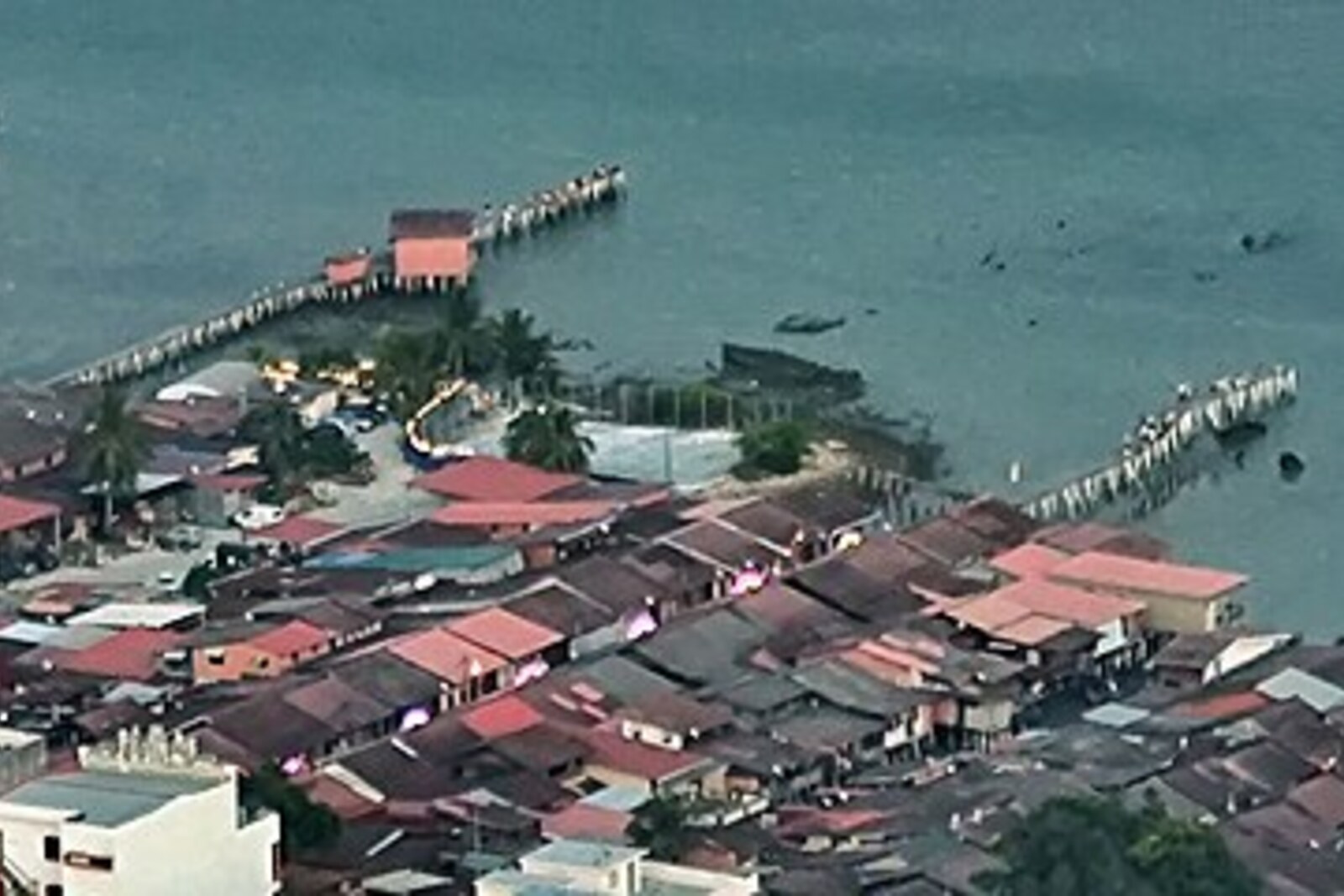
Look around first
What to notice
- Wooden walkway
- Residential homes
- Kim Aun San Si Temple
The story of the place
Kim Aun San Si Temple was built as a shared shrine for the families whose homes stand here over the water. Its name is translated as “Temple of the Golden Saddle Mountain”; Baosheng, the deity of health, was chosen as its patron, and his image was brought from a village in Fujian. From the temple doors, the wooden walkway runs between homes over the water. An earlier jetty stood farther north, and its site is now occupied by the ferry terminal.
The name of this jetty is the surname of the families who built it. The Lees came from Duishancun, a poor village in the south of China's Fujian province. In Penang, the men hired themselves out as port day laborers, then became boatmen. Large vessels anchored offshore, and the Lees carried sailors from the ships to shore and back. Each boat supported a family, so they had to compete with boatmen from neighboring clans for passengers.
The first Lee Jetty stood farther north, where the ferry terminal now stands. In the early nineteen sixties, the residents were required to leave so it could be built. The families did not disperse across the city: they chose the present site, drove in new piles, laid a wooden walkway, and rebuilt a residential row over the water.
The move did not spare the boatmen their old competition. Quarrels over carrying sailors regularly flared up between the jetties. Then mediators from several clans agreed on rules for working. No written charter was drawn up—the participants adopted a gentlemen's agreement, after which clashes became less frequent.
In nineteen seventy-two, the Lee families founded Kim Aun San Si Temple on the new jetty, a name translated as “Temple of the Golden Saddle Mountain.” They chose Baosheng, the deity of health, as its chief patron; the residents had brought his image from their home village in Fujian. Thus, a shared shrine of the relocated clan appeared beside the homes.
The first Lee Jetty disappeared beneath the ferry terminal. The present wooden walkway between the homes and the temple is the second jetty, built in its place by the same families.
Useful on site
Residential shared walkway with no confirmed official hours. Checked 2026-06-29: access to temple and residential areas depends on open gates and local restrictions.
Checked: June 29, 2026. Check the official source before visiting.Do not try to look for the former jetty site within the transport area. Here, it is enough to walk through the accessible shared section and keep your distance from house doors.