 Guide On Map
Clan Jetties of Weld Quay
From the port waterfront to Yeoh Jetty and Hean Boo Thean Temple

Guide On Map on your phone
Open the walk like a regular app
It takes about 10 seconds to install. No app store needed.
The whole path
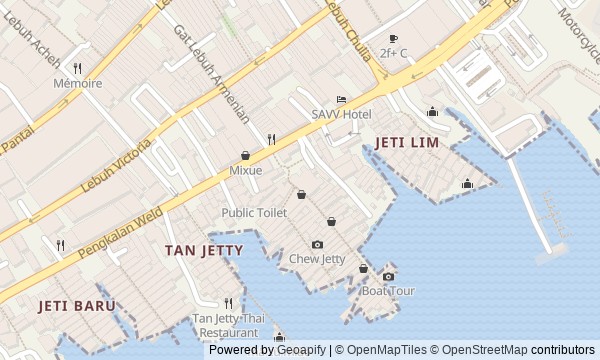
Route map
About the walk
You will walk along Weld Quay, from the road, warehouses, and piers to wooden walkways, homes, and a temple by today's water's edge. First, you will see why these settlements appeared here in the first place. Then you will turn off the port street onto family jetties, where a workplace gradually became a home.
This is George Town beyond the grand facades: boatmen, dockworkers, market stalls, and shared shrines. There will be boards beneath your feet, stilts beneath the houses, and water ahead.
Along the way, questions will arise. How could a teenage boatman go out to sea every day without knowing how to swim? Why did a working boat remain beside a home market stall? Where did the first Lee Jetty disappear to? The story will unfold through human choices and changing trades, without turning into a general lecture.
By the end, you will recognize in every deck of George Town a former pier, a family street, and the trace of a shoreline that people moved themselves.
Why this order
Weld Quay first explains where the new port shore and the work that brought the Clan Jetties into being came from. The next stop narrows the larger story to the fate of one boatman from the Lim families. At neighboring Chew Jetty, you will see what happened to the same trade when visitors arrived instead of cargo. After the Chew market row, Tan Jetty returns to the original layout of the settlements: boat berths, shelters, and the first homes. Lee Jetty then shows a different turn: rather than expanding the old site, the clan had to build a residential row anew. The final walk to Yeoh Jetty continues the story of the moved shoreline: the former walkway now stands above land, and communal building concludes at a temple by the new waterline.
Those who want to see port-side George Town beyond the facades of the center Those interested in human stories of work, relocation, and family life Those who enjoy short walks and places by the water
Those looking above all for a walk through colonial architecture Those uninterested in the history of port work and family communities Those who do not enjoy routes through residential neighborhoods
Before you go
The jetties remain residential streets: stay on the shared walkways, do not enter side passages, and do not photograph people, open doors, windows, or home altars without clear permission. Do not block a narrow passage for a photo, and give way to residents carrying groceries, carts, or work equipment. In temples, follow signs and watch what worshippers do; entry is not guaranteed, but the facades and layout of the jetties can be clearly understood from outside. After rain, choose shoes with good grip and do not lean on random railings.
When to go
Morning is the quietest time to walk, while there are fewer visitors on the decks; soft evening light shows the water and reflections near the southern temple best. Allow more time after rain. On major temple festival days, the usual pace is impossible: walkways fill with processions and spectators, and organizers may direct movement.
Backup plan
If the wood is wet, the walkway is crowded, or part of a jetty is closed by residents, do not try to get around the obstacle through residential side paths. View the entrance, the line of stilts, and the temple section from an accessible shared area, then return to Weld Quay and continue to the next stop. If needed, shorten the walk after Tan Jetty or Lee Jetty: the first 4 stops already reveal the jetties' origins, the war, port work, and festival life. The southern finale can be walked separately in dry weather, so you can take your time with the reclaimed land, surviving canal, and Hean Boo Thean Temple.
Route conditions
Surface. Paved — 1.8 km (data covers 95% of the route)
Facilities. Toilets — 6
Elevation. Ascent — 5 m; descent — 11 m
OpenStreetMap extract of June 18, 2026: database data, not a check on the ground. Data © OpenStreetMap contributors, ODbL licence
Walk plan
Open in maps ↗- 1
Weld Quay
Here it will become clear what work the new port shoreline created and who settled near the jetties. - 2
Lim Jetty
The life of a local boatman reveals the port trade from within—from teenage work to the disappearance of working boats. - 3
Chew Clan Jetty (Zhou)
The front rooms of the houses show how the families replaced the port work they lost. - 4
Tan Clan Jetty
The story of the working shelters will explain how a sampan mooring became a family residential row. - 5
Lee Jetty (Lee)
This stop will show how the families moved their homes and shrine after losing their first jetty. - 6
Yeoh Clan Jetty and Hean Boo Thean Temple
The finale will link the altered shoreline with the temple the community built through pooled contributions.
Route features
Everything you need stays in the browser
Progress, saves and your trip plan are stored on this device.
Add Guide On Map to your home screen so the walk opens outside the browser.
How we handle sources, maps and corrections: our editorial standards