 Guide On Map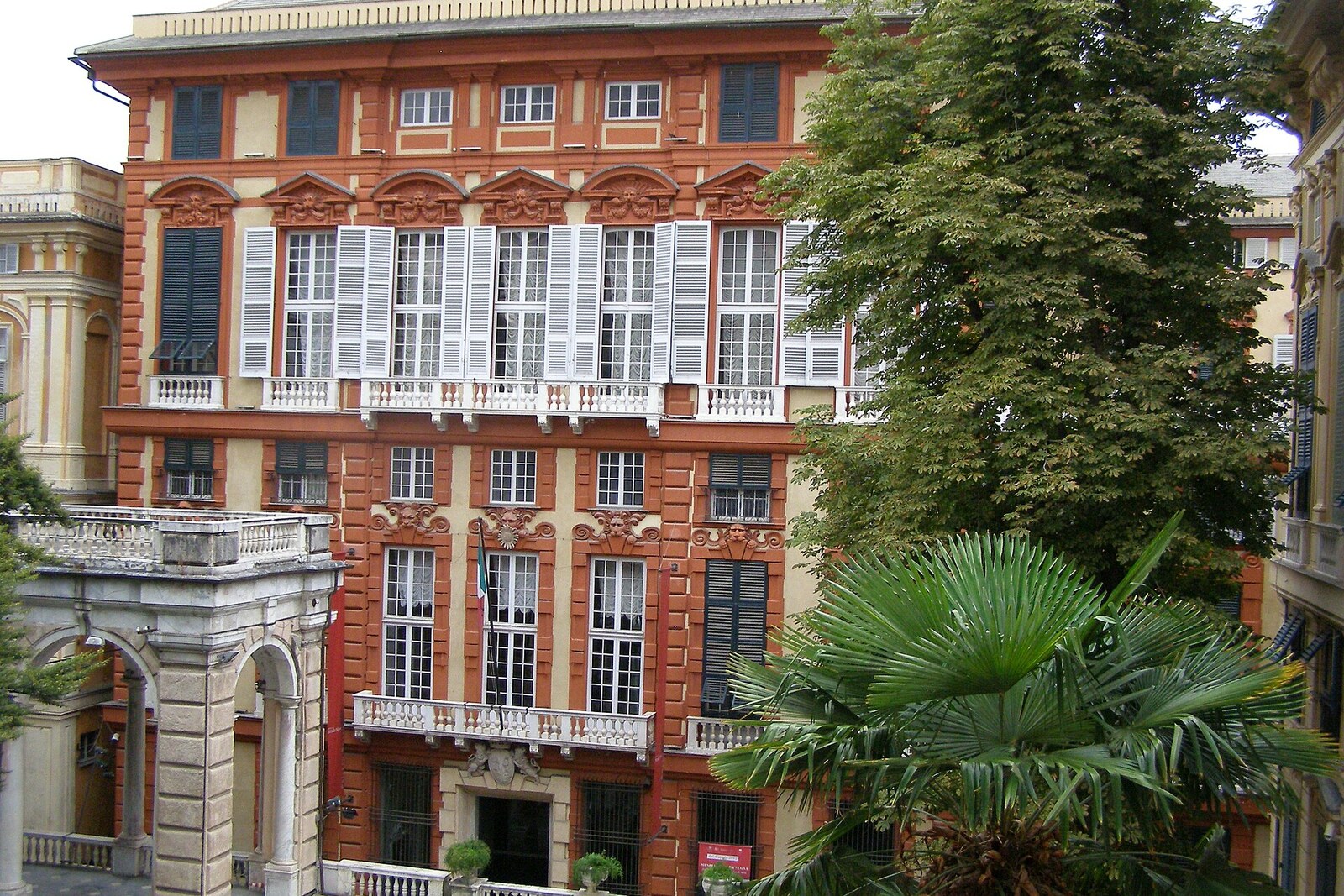
Look around first
What to notice
- Red facade
- Projecting stone blocks
- Two ceremonial floors
The story of the place
Behind the red facade are two full ceremonial floors. From sixteen seventy-one to sixteen seventy-seven, the brothers Ridolfo Maria Brignole-Sale and Giovanni Francesco Brignole-Sale built a shared residence and assigned a separate floor to each. The projecting stone blocks of the facade were later painted a deep red—hence the familiar name Palazzo Rosso.
In seventeen sixty, the palace had to be divided between brothers again. Its owner, Giovanni Francesco II Brignole-Sale, a former doge—the elected two-year head of the Republic of Genoa—died without leaving a direct heir. He bequeathed his enormous fortune to his younger brother, Rodolfo Emilio Brignole-Sale. Another brother, Giuseppe Maria Brignole-Sale, was passed over and demanded that at least the family residence be transferred to him.
Rodolfo was already a senator and a wealthy financier. As early as seventeen thirty-eight, he declared capital of seven hundred nine thousand Genoese lire and ranked twentieth among the republic's wealthiest residents; according to biographers, some of the money came from high-interest loans in France. He was not fighting for a roof over his head. He sought the literal fulfillment of his elder brother's will and was prepared to put his further career at risk.
The civil court initially decided the dispute in Rodolfo's favor. He arrived at Palazzo Rosso with armed men, occupied the palace, and locked himself inside. Pending the proceedings, the Senate of the Republic of Genoa ordered that the building be placed under its administration, but Rodolfo refused to vacate it. For a sitting senator, this was an open challenge to those alongside whom he would have to continue serving.
The court's final ruling left the palace to Rodolfo. Giuseppe Maria Brignole-Sale lost the dispute, yet outrage at the winner's conduct did not prevent Giuseppe Maria Brignole-Sale from becoming doge on November twenty-fifth, seventeen sixty-two. The family commissioned Giovanni Battista Chiappe to paint his formal portrait: Rodolfo is shown full-length, in the clothing of the head of the republic, with a scepter; a crown and a silver bell lie on the table. Palazzo Rosso is now a city museum, and this portrait still belongs to its painting gallery.
Useful on site
20 April–30 September 2026: daily 10:00–19:00; on Mondays, only Palazzo Rosso is open of the three palaces. Last entry one hour before closing.
Checked: date not specified. Check the official source before visiting.The facade offers a brief introduction, but the family portraits and traces of wartime losses are inside the museum. It is best to plan a full visit separately.