 Guide On Map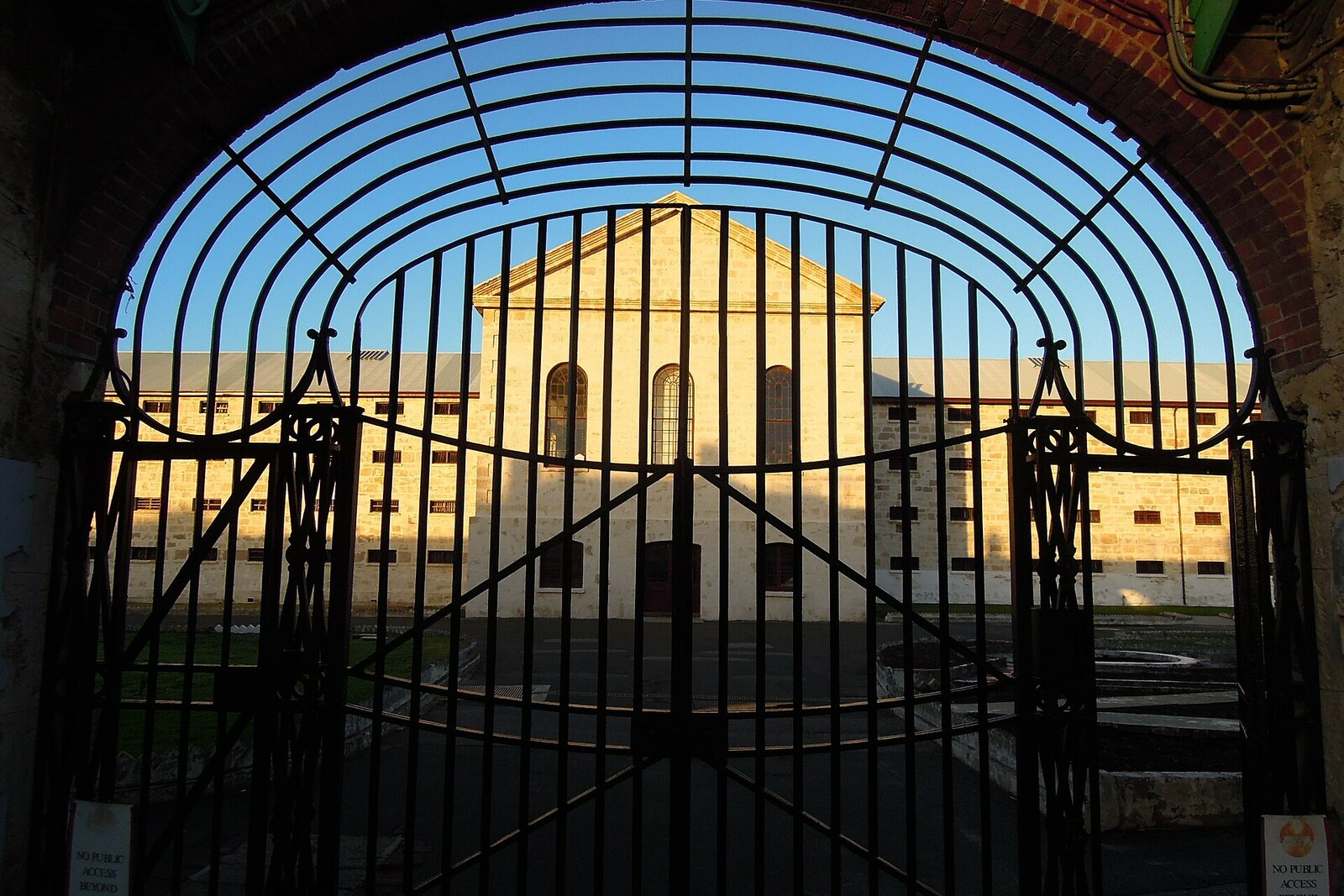
Look around first
What to notice
- Main block
- Outer walls
- Reinforced cell
- Wooden cladding and heavy spikes
The story of the place
A long main block stands on a limestone hill, enclosed by high outer walls. Construction began after British convicts arrived in Fremantle: they broke the building stone from the slope right here. Between eighteen fifty-two and eighteen fifty-nine, they built the block and enclosure from this stone; the cells served mainly as sleeping quarters, because prisoners were taken away for hard labor during the day. Later, the prison received its present name, and the main block operated until nineteen ninety-one before opening to visitors.
Joseph Bolitho Johns (Moondyne Joe) sought freedom. Earlier, he had already received a so-called ticket of leave—permission to live and work outside prison under supervision—and earned a living burning charcoal. In eighteen sixty-five, he was sentenced to ten years of penal servitude for killing another person's ox; Johns himself maintained until the end of his life that he was innocent. He escaped, was caught, escaped again, committed several thefts while at liberty, and received another five years.
George Hampton, temporarily in charge of the colonial convict service, decided to put an end to the escapes. A separate cell was reinforced for Johns in the main block: its stone walls were clad with wooden sleepers, hundreds of heavy spikes were driven in, and the window was covered with bars and metal mesh. There was almost no light or air left inside. The prisoner was put on bread and water.
At the time, this prison was called the Convict Establishment; it received its present name in the same year, eighteen sixty-seven. British convicts began arriving in Fremantle in eighteen fifty. They quarried limestone directly on this hill and, from eighteen fifty-two to eighteen fifty-nine, built the main block and outer walls from it. The cells were intended mainly for sleeping at night: during the day, prisoners were taken out for hard labor.
After two weeks in the reinforced cell, Johns's health began to deteriorate. The prison doctor secured the end of the bread-and-water diet, then insisted that he spend time in the yard every day. Hampton allowed Johns to break stones by the western wall under constant supervision.
The broken stone was supposed to be cleared away every evening, but the guards did not do it. The pile gradually concealed the working prisoner from their view. Behind it, Johns began striking the prison wall with his pickaxe. The local limestone crumbled far more easily than the wood and iron in his cell.
On March seventh, eighteen sixty-seven, at about five in the evening, a guard came to check on Johns. A pickaxe, dressed in the prisoner's shirt, jacket, and trousers, protruded from the ground. Johns himself, wearing only his underwear, had already crawled through a hole in the wall, reached the prison governor's garden, passed through a wicket gate, and disappeared.
He spent almost two years at liberty. In February eighteen sixty-nine, Johns broke into the cellar of Houghton's Vineyard for supplies. Police officers who were nearby on another matter unexpectedly appeared there. Johns rushed for the exit and went straight into their hands.
He was returned to Fremantle. In eighteen seventy-one, the new head of the convict service issued Johns another ticket of leave, and two years later he received a pardon. He never escaped from prison again.
The main block remained an operating prison until nineteen ninety-one and is now open for tours. Inside, Moondyne Joe's reinforced cell survives, with its wooden cladding and heavy spikes. Hampton reinforced everything around the prisoner, and Johns got out through the limestone from which the convicts had built the prison itself.
Useful on site
Daily 09:00–17:00; closed on Good Friday and December 25. Evening programs run on a separate schedule.
Checked: date not specified. Check the official source before visiting.The walk brings you to the entrance complex, but plan visits to the cells and enclosed yards separately. If you want to see the interior, book a suitable prison tour in advance.