 Guide On Map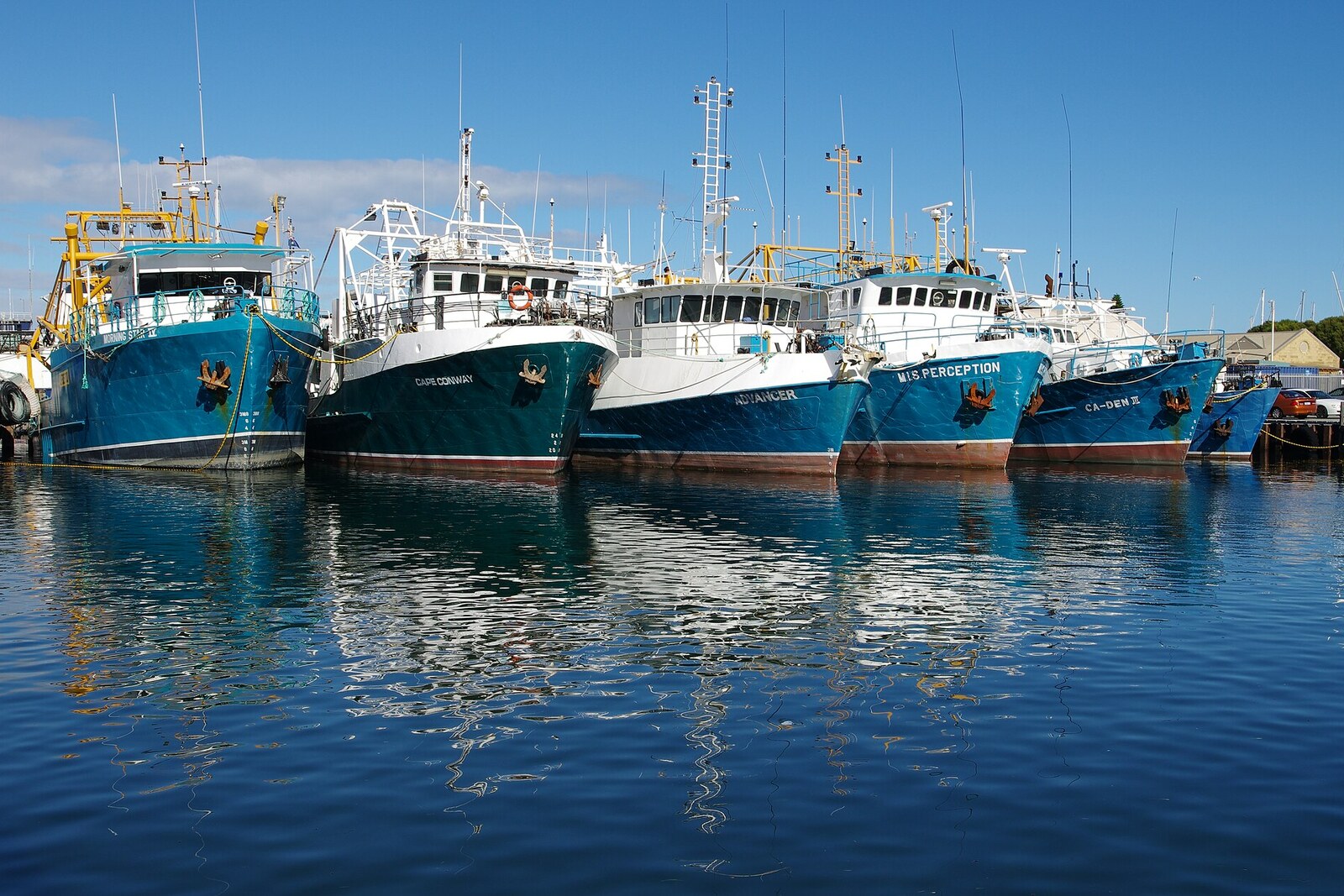
Look around first
What to notice
- Two bronze figures
- Twelve wooden posts
- Fishermen's names on the posts
- Working jetties
The story of the place
Working jetties remain among the recreational boats, where catches are delivered from the vessels. Land here was reclaimed toward the sea, so the harbor extends far beyond the boundaries of the former South Bay. In the postwar years, a larger fleet went after valuable rock lobster; a southern protective breakwater was built for it, along with additional berths and workshops. In earlier times, fishermen from southern Italy lived aboard for years and sent their earnings to their families across the sea.
By the water stands The Jetty memorial: two bronze figures and twelve wooden posts bearing six hundred eight names. They were chosen from fishing licenses issued before nineteen forty-seven. These are the people for whom South Bay had to be turned into Fishing Boat Harbour.
At the end of the nineteenth century, experienced fishermen from the Sicilian town of Capo d'Orlando and the Apulian town of Molfetta began arriving here. They were seeking work, while their families often remained in Italy. The men lived on their boats for years at a time, spent as little as possible, and sent their savings home. Their fishing trade converged right here: South Bay provided shelter, while South Jetty made it possible to unload and sell the catch. There were no refrigerators or suitable storage facilities, so the fish had to be sold before it spoiled.
By the start of the twentieth century, Italians made up almost half of Western Australia's licensed fishermen. In nineteen oh eight, a market and a wooden breakwater were built for them by the jetty. The breakwater soon fell apart, and the boats were again left without a reliable mooring. Fishermen had been promised a stone protective breakwater as early as nineteen oh seven, but builders came here only fourteen years later. The work was completed in nineteen twenty-three, and the following summer officials formally declared these waters Fishing Boat Harbour.
After the Second World War, new families arrived here from Southern Europe. At the same time, demand emerged in the United States for frozen Western Australian rock lobster tails. The fishermen expanded their fleet and went after the more valuable catch; wives and children were now settling in Fremantle rather than waiting for money from across the sea. In nineteen fifty-five, the fishing trade employed more than six hundred fishermen. A southern breakwater, additional jetties, workshops, and receiving stations were built for their boats. Land was reclaimed into the water, so the present harbor is noticeably larger than the former South Bay.
These families marked their own risk with a separate ritual. Since nineteen forty-eight, before the start of the rock lobster season, fishermen and their relatives have walked from St Patrick's Basilica to the harbor and prayed for a good catch and for the boats' return. Two statues are carried in the procession. Madonna dei Martiri belongs to the community of people from Molfetta; Madonna di Capo d'Orlando belongs to the Sicilians. The two groups came from different Italian ports and each preserved its own patroness, but they bless one fleet in one harbor.
Nothing remains here from the first market, breakwater, and jetty. Most places by the water are now occupied by recreational boats, and restaurants operate nearby, but receiving stations still take rock lobster, sardines, octopus, and fish. The old fishermen remain by the present-day boats as six hundred eight names on wooden posts.
Useful on site
The public waterfront is accessible without a ticket; the harbor remains an active working facility.
Checked: date not specified. Check the official source before visiting.Do not enter areas where crews are working, and keep away from fishing gear and unloading. The memorial is best viewed on foot, without blocking access to the jetty.