 Guide On Map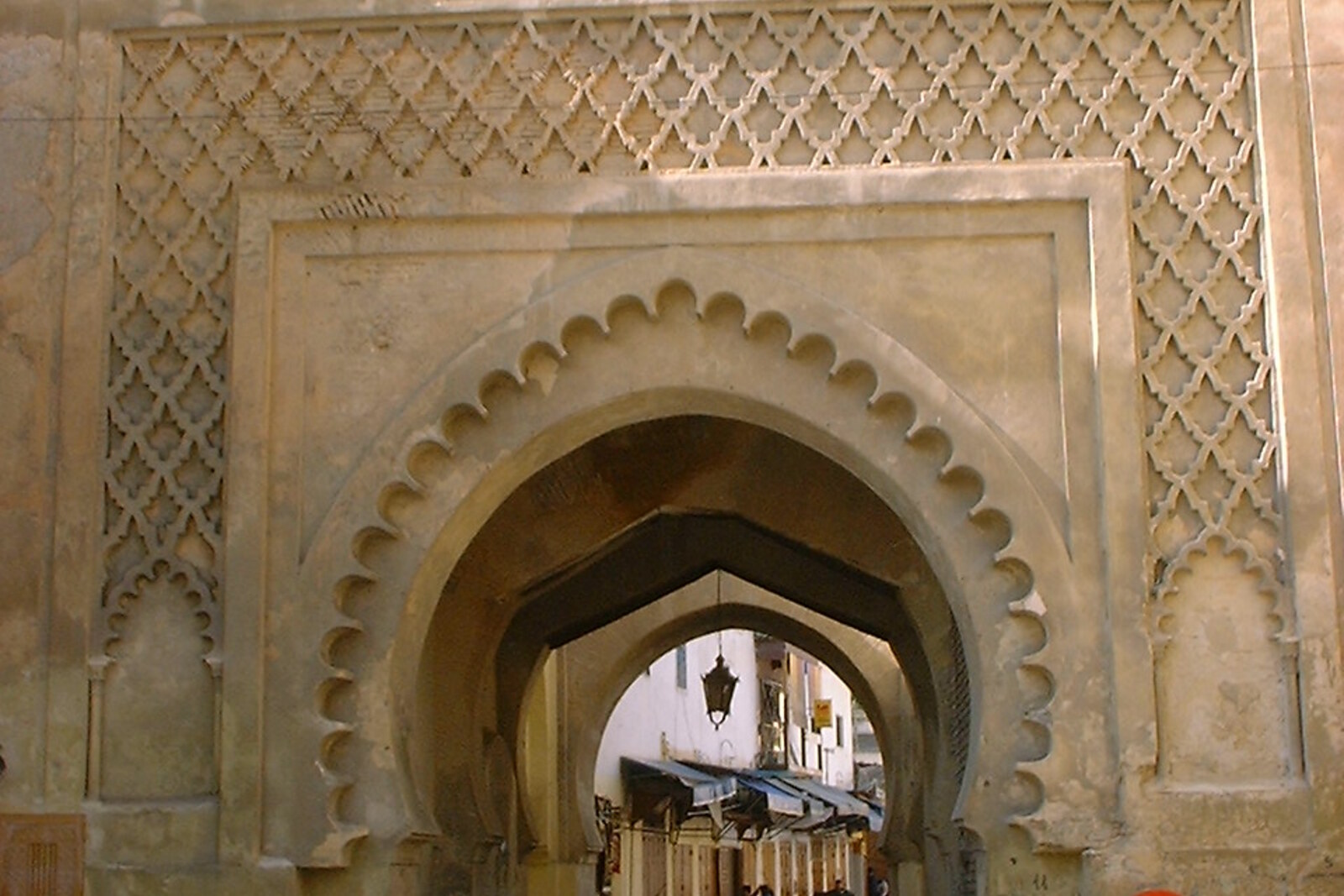
Look around first
What to notice
- The decorated arch on the left
- Two straight passageways
- Towers above the gate
- The main shopping street
The story of the place
Bab Semmarine means “Gate of the Farriers.” Semmarine was the corporation of blacksmiths who forged horseshoes and nailed them to the hooves of horses and mules. Their workshops stood beside the passage: the main shopping street of Fes el-Jdid began here, and riding and pack animals passed through the gate.
Sultan Abu Yusuf Yaqub ordered Fes el-Jdid built in twelve seventy-six as a separate palace city. Bab Semmarine became its southern entrance. Later, the Mellah of Fez appeared to the south, and the gate ended up inside the shared line of fortifications—on the boundary between the quarter and the sultan’s city.
In the summer of sixteen sixty-six, this passage was needed by Moulay al-Rashid, a claimant to the sultan’s title. Fez was then divided between rivals. The military governor al-Duraydi proclaimed himself sultan, held Fes el-Jdid, and wanted to keep the palace city for himself. Al-Rashid needed recognition from the residents and scholars of Fez: without it, his conquests in the east of the country had not yet made him a universally recognized ruler.
Several attempts to take Fez by open assault failed. Then al-Rashid made an agreement with the residents of the Mellah of Fez. Al-Duraydi imposed heavy levies on the community, and his men seized goods from Jewish merchants. Al-Rashid promised peace and exemption from the poll tax if they opened a route through the quarter for him.
On the agreed day, his warriors distracted the defenders at the walls, and the gate on the Mellah of Fez side opened. Al-Rashid took Fes el-Jdid, and al-Duraydi fled. A Jewish chronicle of Fez divides the events into two nights: first, the claimant spent the night in the Mellah of Fez, and the next morning it was Bab Semmarine itself that was opened before him. The same chronicle claims that al-Duraydi was captured and crucified at the gate, and that the townspeople were ordered to come and see the execution. In another Moroccan chronicle, the opponent managed to escape, so this outcome remains disputed.
There is no doubt about al-Duraydi’s defeat. After Fes el-Jdid, old Fez surrendered as well; its residents and scholars swore allegiance to al-Rashid as sultan. He became the first sultan of the Alaouite dynasty.
The passage opened before him looked different then. Beneath the towers, the road turned at right angles several times, so that riders could not charge in at full speed. In the twentieth century, openings were cut through the inner walls for buses, and two straight passageways were made. On the Mellah of Fez side, the old entrance is the decorated arch on the left; at the possible site of al-Duraydi’s execution, there is neither a plaque nor an inscription.
Useful on site
Open city passage with no ticketing; be attentive to traffic and dense pedestrian flow. Checked using open sources 2026-06-29.
Checked: June 29, 2026. Check the official source before visiting.View the gate from the safe side of the passage: pedestrians, commerce, and traffic mix here, so do not stop in the roadway for a photo.