 Guide On Map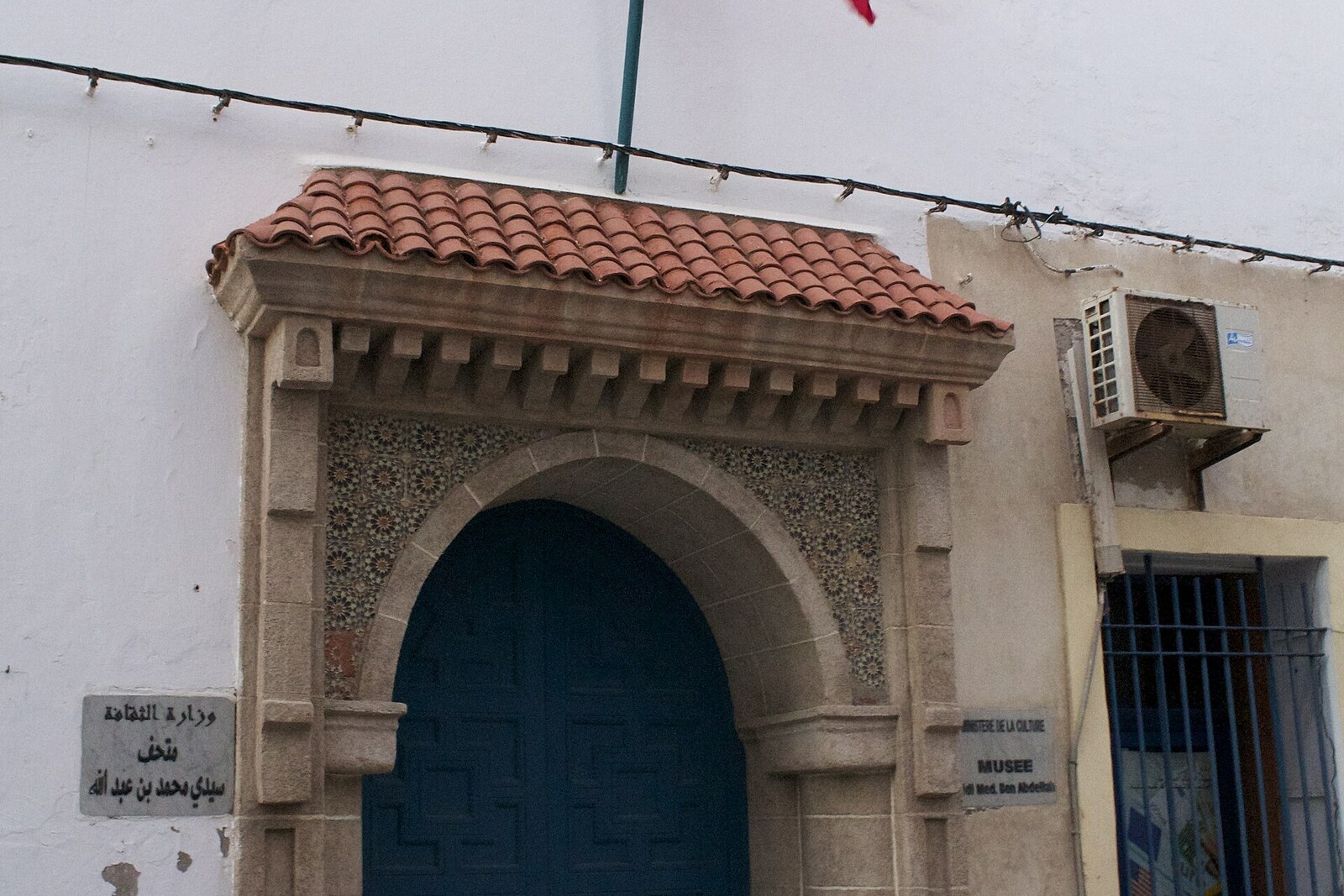
Look around first
What to notice
- Inner courtyard
- Rooms around the courtyard
- Antique coins
- Folk instruments
The story of the place
Above the door is the name of a man who never lived in this house. Mohammed ben Abdallah died before this large residence, with rooms around an inner courtyard, was built in the nineteenth century. Under the French protectorate, it housed the town hall. After independence, the officials were replaced by a youth center, and in the early nineteen eighties the building was handed over to the city museum.
Boujemaa Lakhdar was appointed its first curator. Before working at the museum, he earned a living through wood inlay and jewelry-making; he taught himself painting and sculpture, then studied ethnology—the everyday culture and customs of people. He knew local masters from the inside: he himself carved wood, worked with metal, and asked craftspeople about the techniques they had learned in workshops.
Lakhdar wanted to gather here evidence of Essaouira's still-living traditions. This proved difficult. Memories of the work of many famous masters survived, but hardly any old examples remained. By the museum's opening, Lakhdar had to search out jewelry, carpets, and inlaid objects that could show genuine craftsmanship rather than later copies made for sale to visitors.
At the same time, he collected information about music and rituals. The French sociologist Georges Lapassade, who studied the folk culture of Essaouira, conducted research into the city's and surrounding area's musical traditions together with Lakhdar and local experts. In nineteen eighty-two, they began publishing the journal Transit, where they published material from a music festival and the results of these surveys. That is why the museum objects include ritual and folk instruments, old photographs, costumes, and objects whose significance the curator established by asking people who still remembered how they had been used.
Lakhdar remained here until his death in nineteen eighty-nine. A quarter century later, after the museum was renovated, an exhibition of his works was arranged in these same halls. It was named plainly: “The museum acknowledges its founder—Si Boujemaa Lakhdar.” Here, “Si” is a respectful form of address, roughly “mister.”
The museum's permanent name nevertheless belongs to the sultan. “Sidi” is another honorific. Mohammed ben Abdallah is named here for founding present-day Essaouira: on his orders, the city and royal port were built in the eighteenth century. In one display case lie coins minted in Essaouira during his time. The name above the entrance recalls the man who founded the city; the rooms around the courtyard were filled by the man who had to search for its disappearing objects.
Useful on site
The regular schedule was not confirmed as of 24.06.2026; an agreement on developing the museum was signed in April 2026. Plan to view it from outside.
Checked: date not specified. Check the official source before visiting.Check access on site. If the doors are closed, view the building from outside and do not expect to see the collections mentioned.