 Guide On Map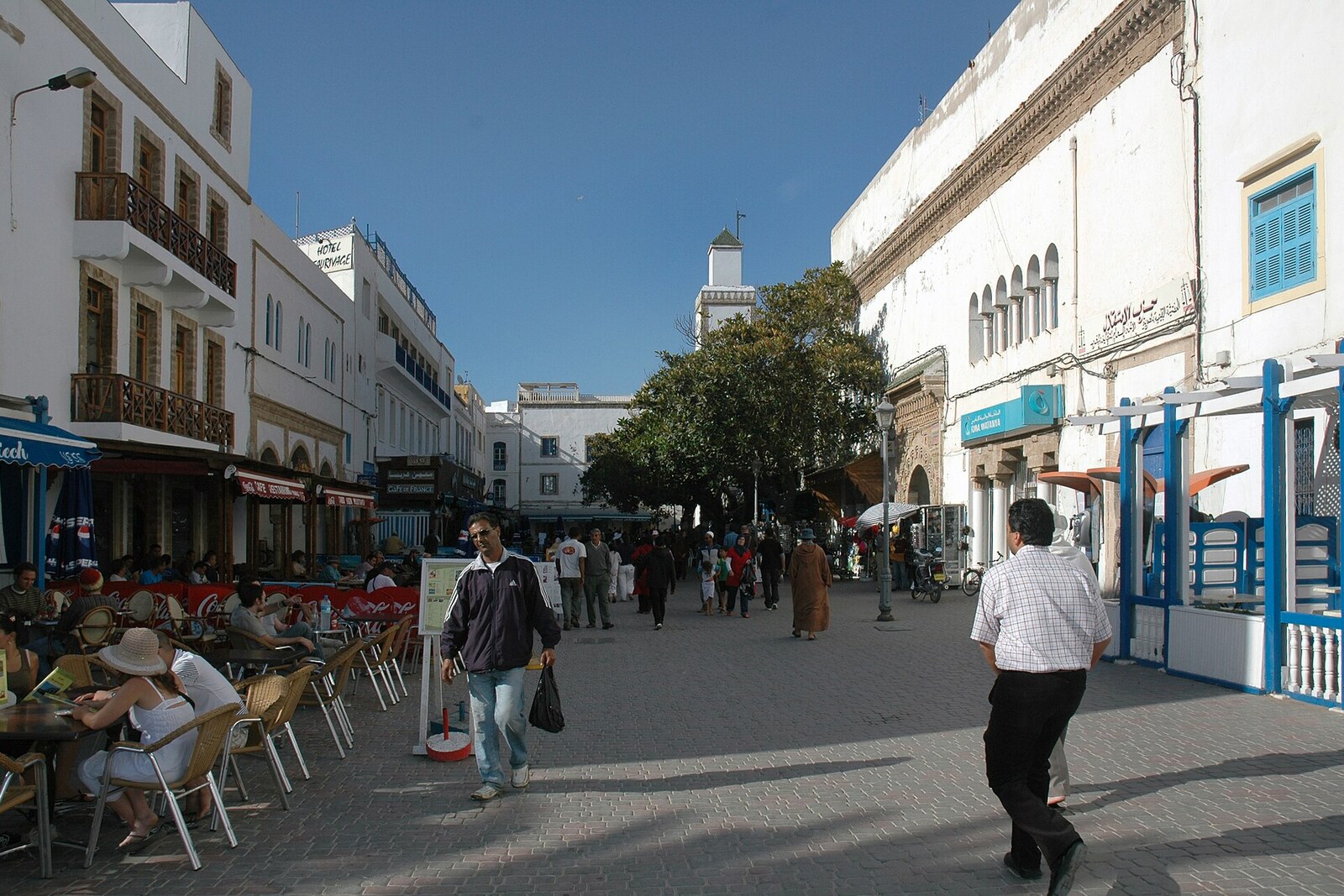
Look around first
What to notice
- Three-arched Bab el-Menzeh
- Pavilion beneath green roof tiles
- Open square
The story of the place
A substantial part of Moulay Hassan Square stands on the site of the sultan's palace. In seventeen sixty-four, the founder of Mogador, Sultan Mohammed ben Abdallah, set this land aside for Dar al-Makhzen—his residence and the port administration. The sultan wanted trade to be controlled from the city: nearby, officials collected the one-tenth of imported goods due to the treasury, while on the mechouar—the ceremonial courtyard in front of the palace—they received ambassadors and high-ranking dignitaries.
Bab al-Achour was the gateway into the complex. Above another gate, a menzeh was built—a roofed pavilion from which the port was watched. This is why the palace stood right beside the road between the harbor and the kasbah: merchants, cargoes, officials, and the sultan's guests all converged here out of necessity.
By the beginning of the twentieth century, the old order had fallen apart. The warehouse where the tithe on goods was collected was turned into a prison. In nineteen thirteen, French landing troops from the cruiser Du Chayla occupied Mogador and moved into this building, turning the former prison into barracks. The colonial administration then demolished Bab al-Achour and most of Dar al-Makhzen. The cleared site gave the military room for drill formations, and a direct passage appeared between the port, the old kasbah, and the new town.
French soldiers marched where the sultan's guests had once been received. The square was named after the cruiser that had brought them—Place du Chayla. After independence, that name was removed. The present name refers to Sultan Moulay Hassan the First; moulay is an honorary title for a member of the ruling dynasty. In eighteen eighty-six, Hassan the First visited Mogador: a reception, a meeting with foreign consuls, and a distribution of gifts were arranged for him. The palace complex was still standing then.
Today, the main concerts of the Gnawa festival and other city celebrations take place here. The size of the site, suitable for a stage and a large crowd, came about after the palace and gates were demolished.
From the sultan's boundary, three-arched Bab el-Menzeh remains, with its pavilion beneath green roof tiles. Beyond its arches there are no longer palace halls or a courtyard for ambassadors: an open square occupies their place.
Useful on site
Public space open around the clock; 25–27.06.2026 festival barriers and access control may be in place.
Checked: date not specified. Check the official source before visiting.The publicly accessible part of the square is enough for this account. During events, stay outside the barriers and do not block the passageways.