 Guide On Map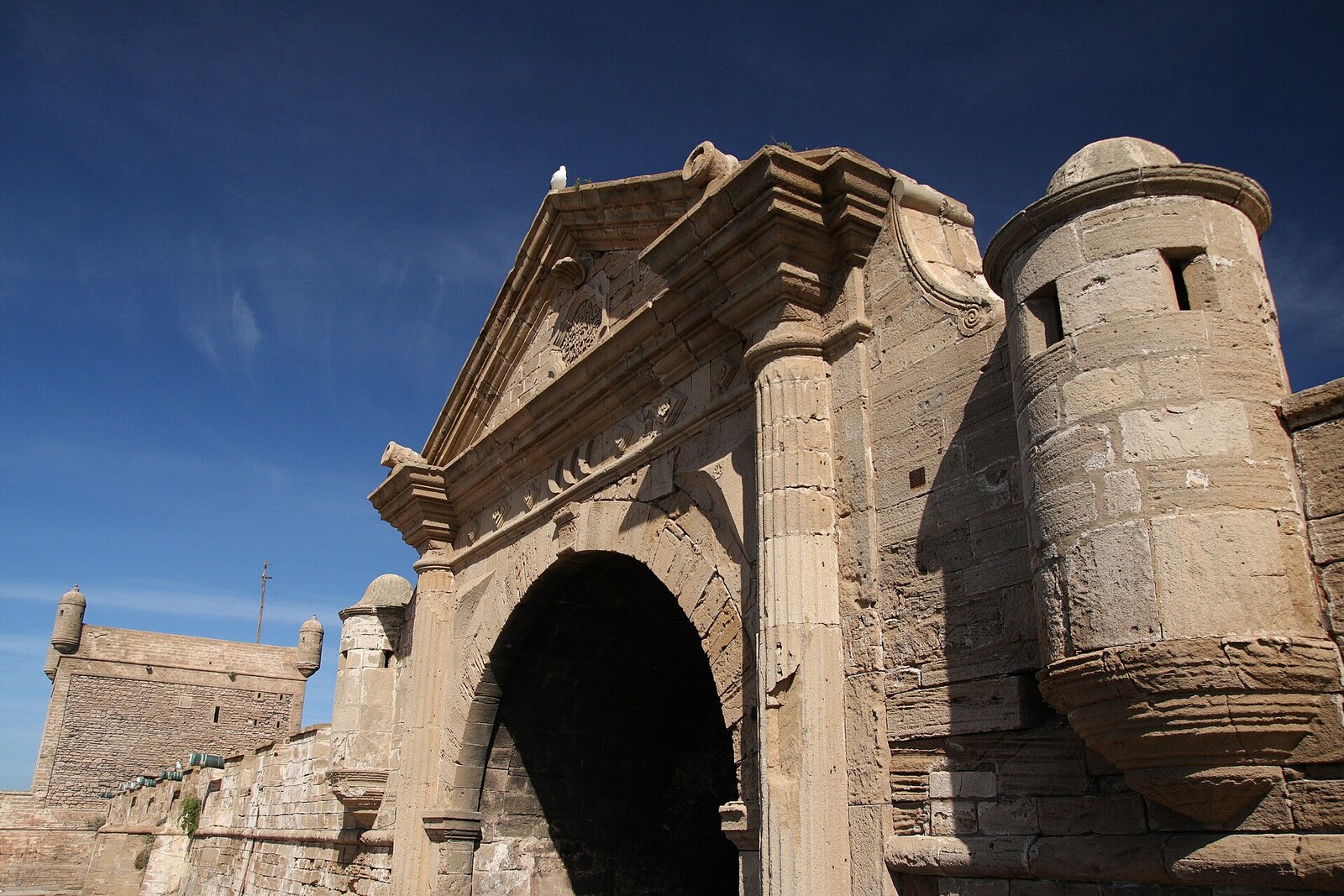
Look around first
What to notice
- Bab el-Marsa
- Stone embrasures
- Customs warehouses
The story of the place
A foreign merchant arriving in Mogador—as Essaouira was called at the time—could not go directly from here into the city. The vessel remained at anchor, the cargo was transferred to a boat, and then a porter carried the bales through Bab el-Marsa. The name means “Port Gate.” The customs warehouses stood on the right. If the merchant did not have money to pay the duty at once, part of the cargo was left here instead of money. The rest was carried farther, to the customs house, where officials assessed the goods and took one tenth of their value.
This system was introduced by Sultan Mohammed ben Abdallah, who was creating a new royal port in the seventeen sixties for trade with Europe. He closed the other harbors on the southern coast to European merchants and compelled the consuls from Safi, Agadir, and Rabat to move to Mogador. Merchants had to bring their ships here, and caravan drivers had to end their journeys here from the inland regions and from beyond the Sahara.
The sultan needed to channel all this traffic through one controlled place. That is why Sqala du Port was built beside the gate: an elevated artillery platform with embrasures, barracks, and powder magazines. The gate admitted goods subject to customs duty, while the artillerymen protected the harbor where they were unloaded.
In eighteen forty-four, the port's revenues were precisely what turned this place into a military target. The Moroccan Sultan Abd al-Rahman supported Emir Abd al-Qadir, who was fighting against the French conquest of Algeria. The commander of the French squadron, François d'Orléans, son of King Louis-Philippe, pressed the sultan to renounce this support. Scouts suggested that he attack Mogador. The commander himself later explained the choice without diplomacy: the local customs office provided a substantial share of the sultan's revenues, and a blow against the port was meant to strike his treasury.
On August fifteenth, French ships took up positions before the fortifications. One of the frigates received a separate order to suppress Sqala du Port. The Moroccan artillerymen were commanded by Omar Laaladj, a European who had converted to Islam and entered the sultan's service. A cannonball killed him at the beginning of the exchange of fire. The gunners kept returning fire for about two hours, but French shells breached the walls, and the gun crews abandoned the platforms. The shelling of the Sqala continued intermittently throughout the night.
The next day, a French landing force occupied the harbor. Sailors spiked the guns, smashed the gun carriages, destroyed the powder supplies, sank several vessels, and declared the port closed. In September, the sultan agreed to cease supporting Abd al-Qadir, after which the French ships and garrison left Mogador.
Bab el-Marsa and the Sqala's stone embrasures remained in their places. The combat battery did not survive in its former configuration: its guns were disabled, and some of the barrels were thrown into the water.
Useful on site
Daily 09:00–17:00 through the official ticketing system; hours verified 24.06.2026.
Checked: date not specified. Check the official source before visiting.The main details of the gate can be seen from outside. Do not linger in the passageway or go beyond the barriers of the port area.