 Guide On Map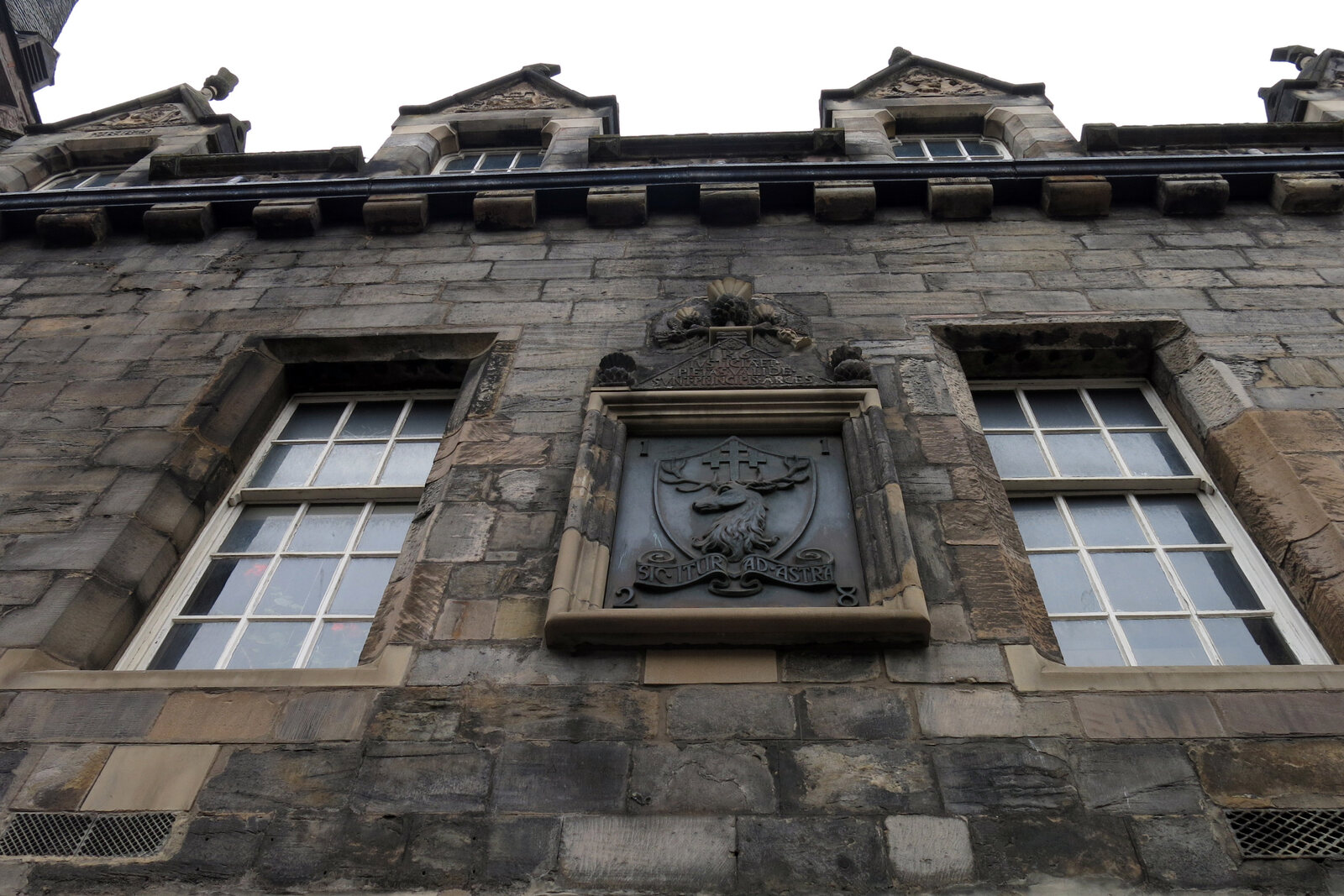
Look around first
What to notice
- Tower above the passage
- Bellenden's initials
- Bars on the windows
- Vaulted chamber
The story of the place
Detainees were once held beneath the narrow tower and behind the bars of the lower windows, while on the floors above Canongate governed itself. This independent burgh lived separately from Edinburgh, with its own council, court, and financial dues. Under one roof, cases were heard, decisions were authenticated with the town seal, and those whom the court sent down were locked up; prisoners had to pay for their own food or wait for help from relatives. The vaulted chamber at the base of the tower preserves the memory of that lower, unfree part of the building.
In sixteen fifty-four, several Scottish prisoners of war tore blankets and sheets into long strips. Oliver Cromwell's soldiers held them here: after the defeat of the Scottish army, the troops of the English Republic occupied the country, and the prisoners were locked up in Canongate's town prison. They tied the strips of cloth together and escaped through a window using them. The guards could not stop them. The names of the escapees and their later fate are unknown, but the escape itself succeeded.
The prison was here because Canongate was not yet part of Edinburgh. It was a separate burgh—that is, a self-governing town outside the city walls. Its name meant “the road of the canons”: the brothers from Holyrood Abbey walked along it to Edinburgh. Canongate had its own councillors, judges, dues, and prisoners.
In fifteen ninety-one, Sir Lewis Bellenden, Scotland's chief judicial official and the feudal superior of the burgh, built its present tolbooth for them. In Scotland, this was the name for a building where the town council met, cases were heard, payments were collected, and detainees were held. The council chamber and court were upstairs, the prison in the lower part. Prisoners were not provided for automatically: the gaoler received payment for their upkeep and bought provisions, while anyone without money or help from relatives had to request a separate food allowance.
Above the passage beneath the tower, Bellenden's three initials and a translated inscription have survived: “The place of the burgh seal. To the fatherland and descendants.” The seal confirmed decisions made in these rooms; the gaoler's key held those sent here.
In eighteen fifty-six, Edinburgh annexed Canongate, and its separate town council disappeared. A museum of the history of city dwellers now operates in the building. A vaulted chamber has survived at the base of the tower, bars remain on the windows, and a prison cell has been recreated inside. The blankets that became a way out have not survived.
Useful on site
The façade is accessible at all times; People’s Story Museum is usually open daily 10:00-17:00, last entry 16:30, but brief unscheduled closures are possible.
Checked: June 15, 2026. Check the official source before visiting.The main details are easy to make out from the opposite side of the street; cross only at a suitable place.