 Guide On Map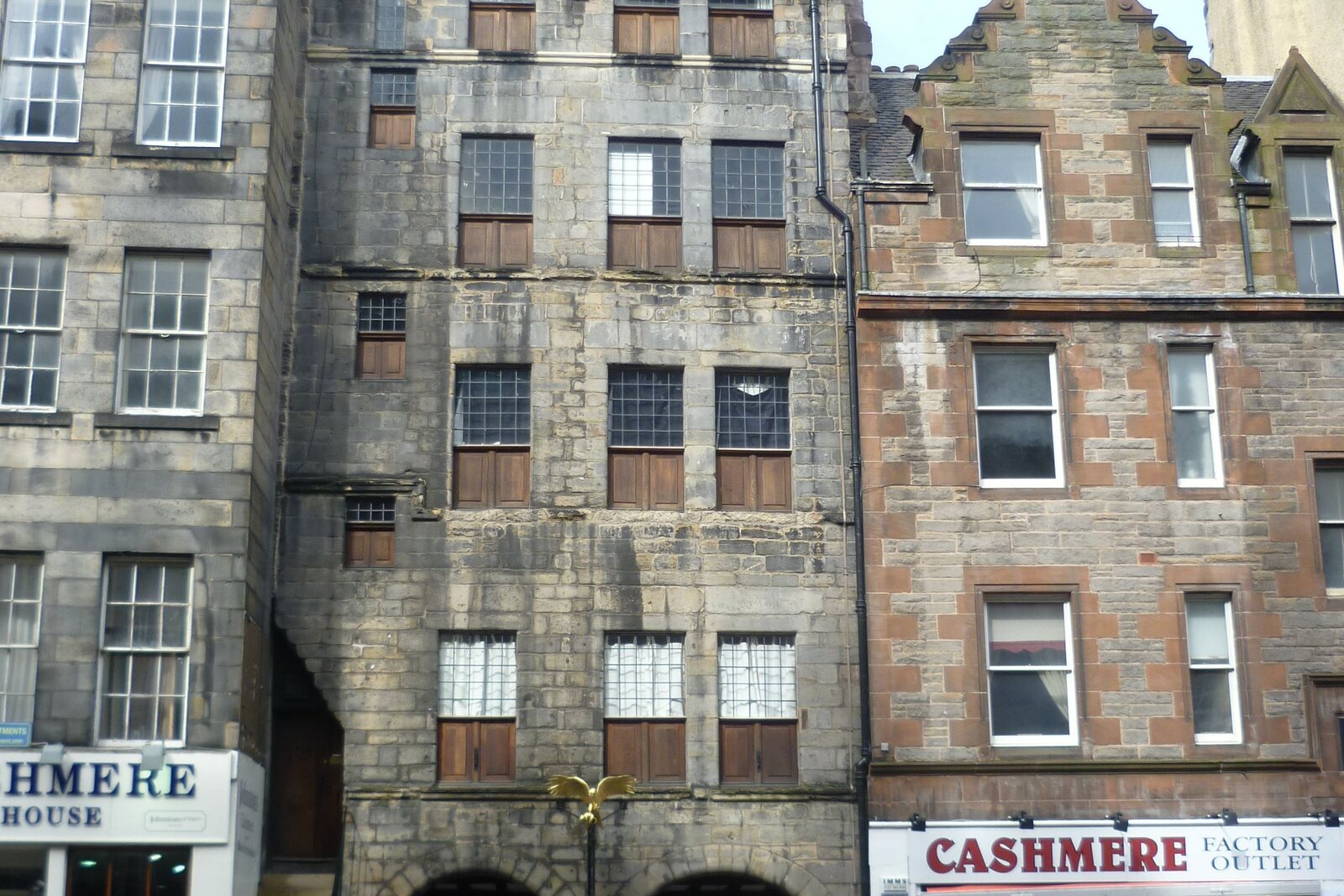
Look around first
What to notice
- The narrow passage beneath the house
- Stone retail arches
- Upper gables
- The owners' initials
The story of the place
The stone arches along Lawnmarket once led into shops, and above them rose a multistory house, known in Scots as a land. Such a house was built right up against the street: expensive fabrics were sold here, while almost no free land remained in old Edinburgh. A tavern was kept in the basement, the rooms above were let to tenants, and the owners occupied the top floor. When wealthy residents moved to the New Town, the large apartments here were divided into smaller ones, yet the house remained a rental property.
A narrow passage beneath a house leads from Lawnmarket into the courtyard of Lady Stair's Close. In old Edinburgh, a “close” is a passage leading to houses at the back of a plot. And Stair here is a family title, not an indication of a staircase. Elizabeth Dundas, the widow of the first Earl of Stair, bought the house of her ancestors standing in the courtyard in seventeen nineteen and lived there until her death. Previously, the passage had been named after her grandmother, Lady Gray, who remained here after her husband's death. The name of the later owner displaced the earlier one. The Writers' Museum is now in her house.
The neighboring tall building right by the street also bears its owner's name, but it was built as an income-making venture. In sixteen seventeen, the merchant Thomas Gladstanes and his wife Bessie Cunningham bought an old apartment house, intending to let its premises. The Scottish word “land” referred to a plot together with such a multistory rental house. The owner's surname later became established in the form Gladstone—hence the present name, Gladstone's Land.
The address was well chosen. Fabrics and other expensive goods were sold on Lawnmarket, while almost no free land remained within the Old Town. Thomas and Bessie lived upstairs, but the main purpose of the purchase was the shops, a tavern in the basement, and apartments for tenants. To gain more premises, the couple pushed the facade out toward the street. Stone arches containing retail spaces appeared below, with new rooms above them.
Thomas needed wealthy tenants who could pay for the best address and finishes. So by sixteen twenty, he commissioned painted wooden ceilings for three rental rooms, with flowers, birds, and animals. The calculation paid off: merchants, a clergyman, a nobleman, and a city official rented homes here. Until the end of the eighteenth century, well-to-do owners and tenants remained in the house.
When wealthy townspeople moved to the New Town built to the north, the expensive apartments on Lawnmarket lost their former clients. Rooms were divided into smaller, more cramped ones, the residents became poorer, yet the house continued to be let. By the beginning of the twentieth century, the city authorities had declared some of the premises unfit for habitation and designated the building for demolition.
In nineteen thirty-four, the National Trust for Scotland bought it and began repairs. Behind later plaster, restorers discovered all three ceilings with which Thomas had once lured wealthy tenants. They are now visible inside, while the initials of Thomas Gladstanes and Bessie Cunningham have survived on the stones by the upper gables—the couple's signatures on the house they intended to let.
Useful on site
The street and close are always accessible as urban spaces; Gladstone's Land and the Writers' Museum are usually open during the day, but you do not need to go inside for this stop. Check opening hours on the day of your walk.
Checked: June 15, 2026. Check the official source before visiting.You can understand the house's story from the street; plan a visit to the rooms of Gladstone's Land as a separate visit.