 Guide On Map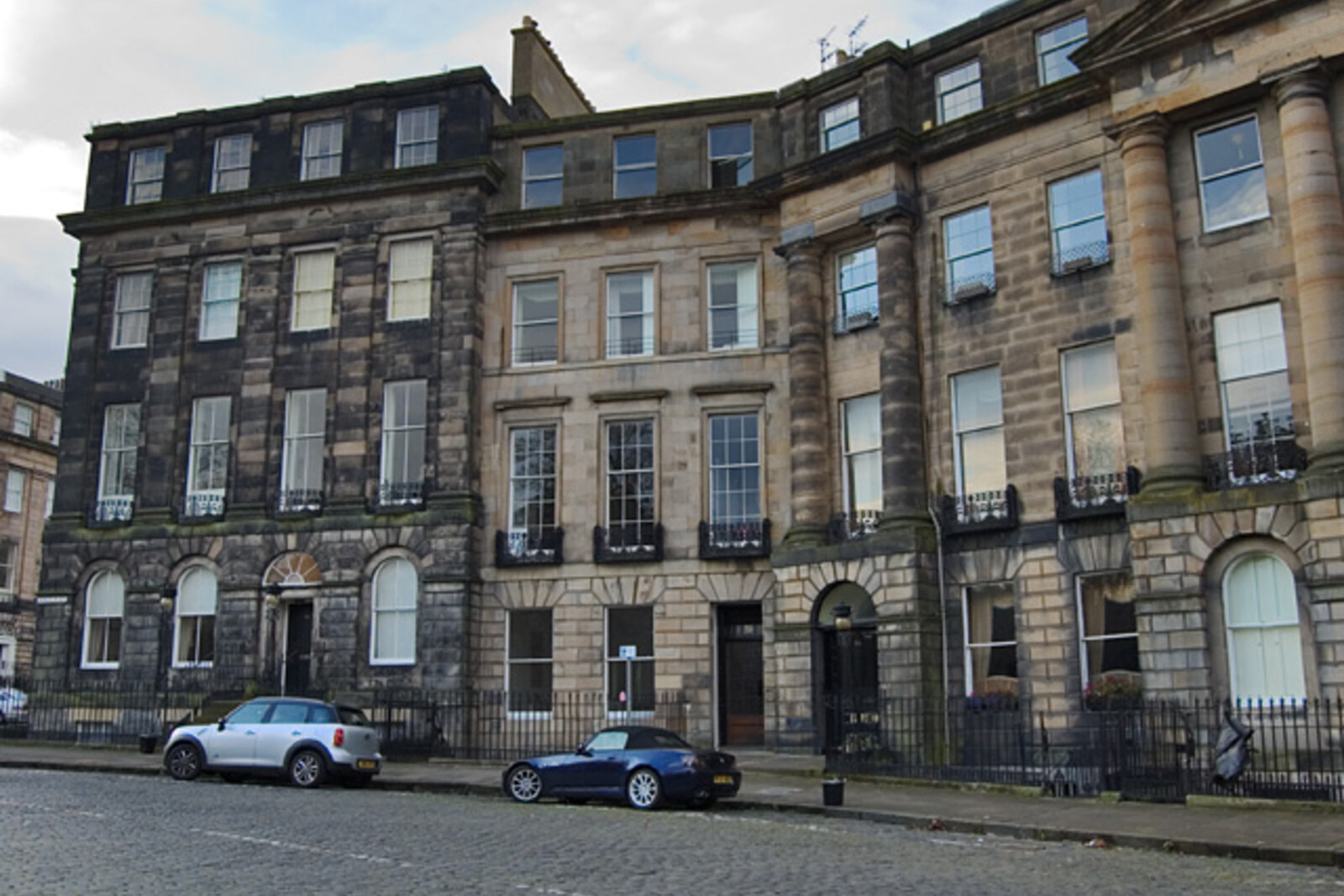
Look around first
What to notice
- The twelve sides of the square
- Repeating stone facades
- The fence around the private garden
- House No. 28
The story of the place
Beyond the fence in the center of Moray Place lies a garden laid out for the owners of the surrounding houses, not for the city. Around it, stone facades maintain the same height and overall pattern, although the houses were built separately. Each buyer was granted a hereditary right to build on a plot, but with it came an annual fee and approved rules for the facade and garden.
In eighteen twenty-two, Francis Stuart, 10th Earl of Moray, ordered his own Edinburgh mansion, Drumsheugh House, demolished and sold its park for development. New blocks had already surrounded the estate on three sides. If the earl had delayed, the city would have reached its boundaries anyway; Stuart preferred to set the price and rules for his future neighbors himself.
He divided the land into one hundred fifty-two plots and offered them under the feu system. The buyer received a hereditary right to build on the plot, but accepted the landowner's conditions and paid him a set annual fee. On different streets, the earl set between sixteen and twenty-one shillings per foot of facade—an average of about thirty pounds per house each year. The house itself cost the buyer two to three thousand pounds. Stuart retained a steady income, while the buyer risked capital and could not build to personal taste.
The architect James Gillespie Graham drew up detailed requirements for the height of the houses, stone facades, and gardens. That is why the twelve sides of Moray Place look like a succession of palaces, although several separate properties lie behind each unified facade. A shared garden was laid out in the center; the owners were required to arrange shrubs and paths there according to an approved plan. This was a garden for those who bought the right to live around it, not a city park.
At the first auction in August eighteen twenty-two, twelve plots were sold. Five years later, more than half had been sold; then demand fell, and the last remaining spaces were built on for another thirty years or so. Stuart himself abandoned the plan to build a new mansion on the neighboring Randolph Crescent and settled here, at number twenty-eight.
The name Moray Place is his earldom title and the name of the family that owned this land. The private Drumsheugh House disappeared; what remain are the facades Stuart prescribed, the house he chose for himself, and the garden that residents of the surrounding houses still manage.
Useful on site
The street is open for passage; the central gardens are private and closed to the general public.
Checked: June 29, 2026. Check the official source before visiting.This is a residential space with a closed garden: stay on the sidewalk, do not enter the gates, and do not look into rooms through the windows.