 Guide On Map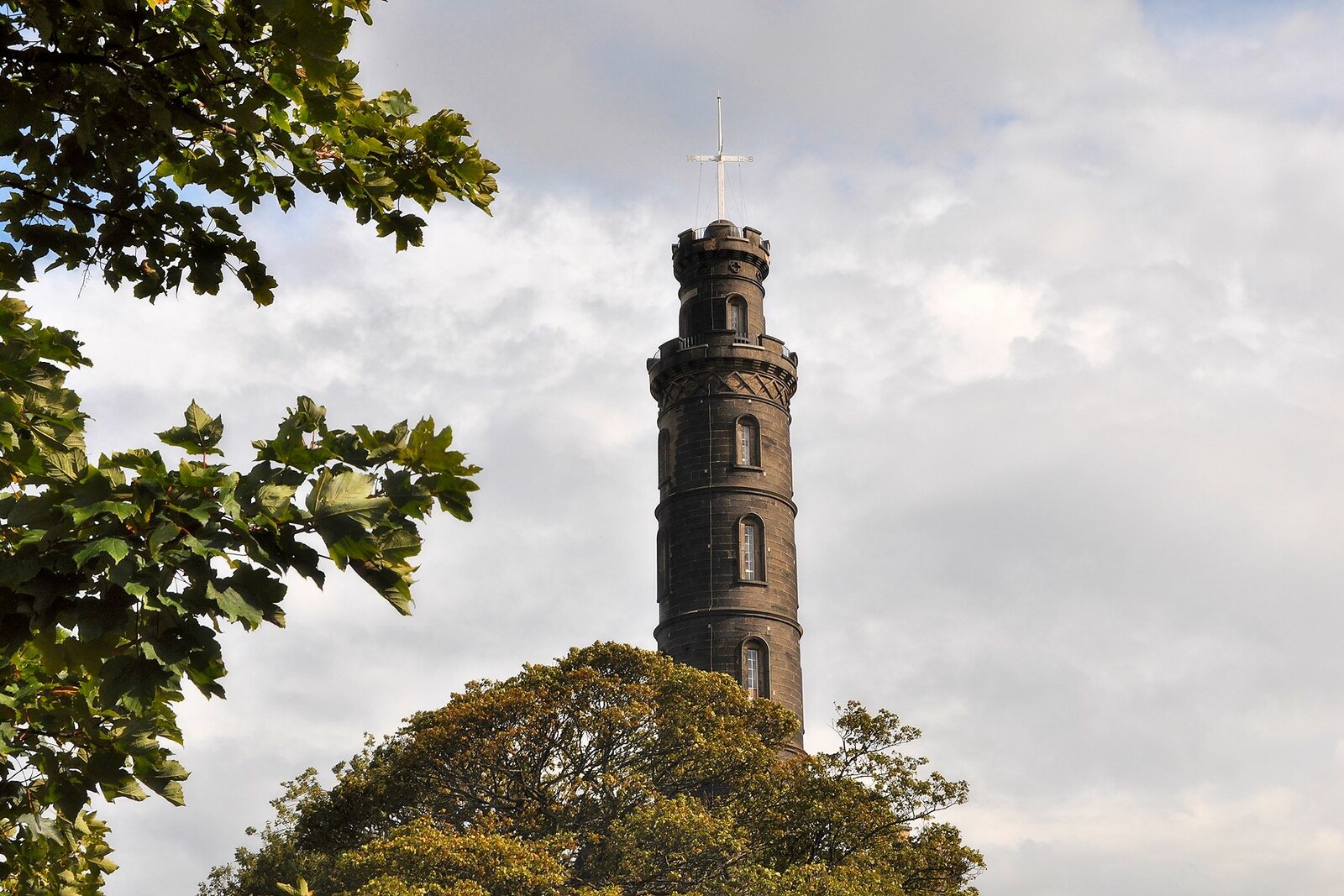
Look around first
What to notice
- Stone tower
- Mast
- Time ball
- Narrow windows
The story of the place
The stone tower at the summit of Calton Hill was erected in memory of Admiral Nelson; architect Robert Burn gave it the shape of an inverted telescope. The site was chosen where a mast for transmitting messages to ships already stood, so the maritime monument was connected with the life of the harbor from the beginning. A mast rises above the narrow windows, and a time ball hangs from it, with a wooden frame beneath zinc cladding. After restoration, it was returned to the tower, and the familiar summit visible from afar once again received its former object.
Until the middle of the nineteenth century, captains from the port of Leith had to climb Calton Hill with their ship’s chronometers. These clocks kept the time of the prime meridian: by comparing it with local time, a navigator calculated longitude—the vessel’s position east or west. An error in a chronometer became an error on a nautical chart.
Charles Piazzi Smyth, Astronomer Royal for Scotland, wanted to transmit exact time from the hill directly to ships. In eighteen forty-six, he secured the city’s and the Admiralty’s consent to install a time ball. This tower was chosen for it: it stands at the highest point of Calton Hill, its summit is visible from Leith and from the Firth of Forth anchorage, and the observatory and its precise clocks stood nearby.
The equipment was made only seven years later. Edinburgh clockmaker Frederick James Ritchie installed the mechanism, which was meant to operate without human involvement at the decisive second. Before one o’clock, the ball was raised up the mast. At exactly one o’clock, an electric pulse came by underground wire from the observatory clock, released the catch, and the ball began to fall. Captains could see the moment of its descent and set their chronometers while remaining aboard.
The first tests revealed an unpleasant fact: the signal was not reliable enough, so it had to be declared unofficial. Ritchie refined the automatic drop mechanism, while Smyth continued tests in different weather. Only in March eighteen fifty-four was the ball recognized as an official signal. Five years later, a professional society awarded Ritchie its highest prize for a model of this release device.
One obstacle remained that the clockmaker could not eliminate: clouds and sea fog hid the summit of the hill. Smyth secured a second signal. In eighteen sixty-one, a time gun was installed at Edinburgh Castle, connected to Calton Hill by an electric wire about one thousand two hundred meters long. If a captain could not see the ball fall, he could set his clock by the shot, allowing for the time it took the sound to reach the harbor.
The tower itself appeared before this system. In eighteen five, Vice-Admiral Horatio Nelson commanded the British fleet in the Battle of Trafalgar and sought to defeat the combined French and Spanish forces. His ships cut through the enemy line and won a decisive victory. Nelson was mortally wounded aboard the flagship HMS Victory; he lived long enough to learn the outcome of the battle and died that same day.
On receiving news of the victory and the admiral’s death, Edinburgh donors raised money for a monument. Architect Robert Burn gave the tower the shape of an inverted telescope. The site was also chosen because a mast for transmitting messages to ships already stood on the summit. From the beginning, the monument to a man who died in the navy was intended for real maritime communication.
The mast still carries a time ball—a wooden frame clad in zinc. After another restoration, it was returned here in June two thousand twenty-five: above the tower once again hangs the device that meant captains from Leith no longer had to go ashore with their clocks.
Useful on site
Daily 10:00–15:30; check the monument’s official page before visiting.
Checked: July 12, 2026. Check the official source before visiting.All the main details are visible from outside. Treat going inside as a separate visit, and check access in advance if it matters to you.