 Guide On Map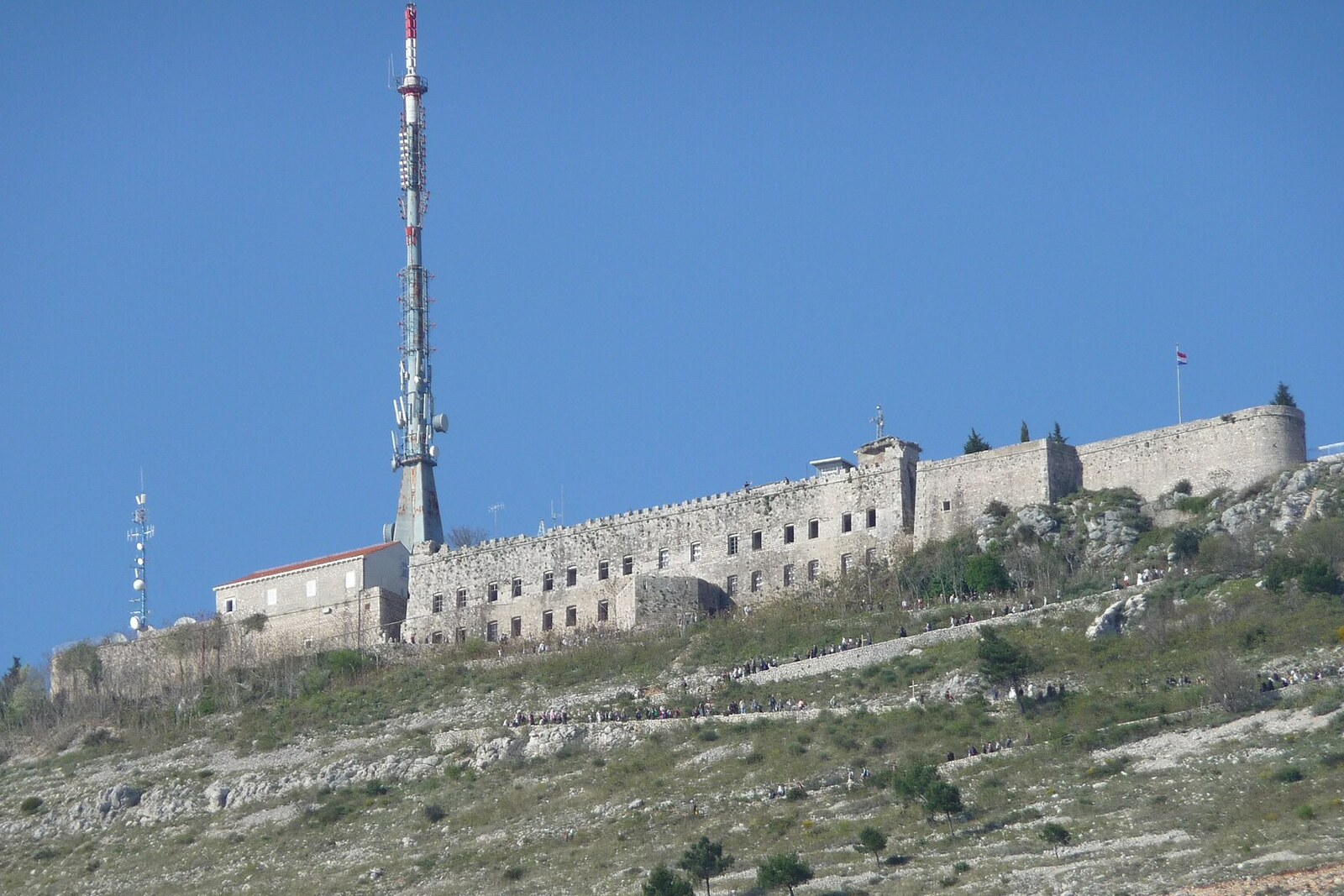
Look around first
What to notice
- Elongated two-story structure
- Side bastions
- Semicircular northern extension
- Stone masonry
The story of the place
The long two-story structure with projections at its ends forms the old part of the fortress, and a rounded extension added by Austrian military forces in the middle of the nineteenth century adjoins it from the north. Residents of surrounding villages dragged stone for the walls uphill together with their mules, and first laid a long winding road along the slope. The Museum of Croatian War of Independence now operates in these rooms.
On July eighth, eighteen oh six, French commanders climbed Mount Srđ and selected this site for a new fortress. A few days earlier, Russian and Montenegrin batteries had shelled the French garrison in Dubrovnik from here. The height made it possible to bring the city, harbor, and roads across the plateau under fire. The French had just experienced this vulnerability themselves.
The siege began because of a decision by the Dubrovnik Senate. The Republic of Ragusa—an independent state centered on the city—tried to preserve neutrality between France and Russia. The senators opened the gates to the French general Jacques Lauriston: he promised to protect Dubrovnik and then continue toward Kotor. His soldiers remained in the city. In response, Russian and Montenegrin troops occupied the surrounding heights. The French drove them back and decided to build a permanent fortification on the site of one of the batteries.
Construction stretched over six years. In eighteen eleven, Napoleon I allocated money for the fortifications and harbors of the captured territory and sent Captain Epron's fortification commission to Dubrovnik. Engineers Blanc and Sebe directed the work on Mount Srđ. Local residents carried up the stone and other materials. Peasants were herded in from surrounding villages together with their own mules: animals on which household life and village transport depended now had to serve the French construction project. Before the walls could be laid, people had to cut a long winding road into the slope.
On August fifteenth, eighteen twelve, the work was ceremonially declared complete. The day was chosen for Napoleon: it was his birthday. The fort was named “Imperial” and dedicated to Napoleon I.
Fifteen months later, residents of those same Dubrovnik districts appeared at the fortress gates. The French army was suffering defeats in Europe, and former subjects of the abolished republic rose in revolt, hoping to regain their state. On November twenty-third, eighteen thirteen, people from Konavle, Cavtat, Župa, and Brgat, under the command of Dubrovnik aristocrats Vlaho Kaboga and Dživo Natali, reached the very gates of the fort. They had mainly rifles; French artillery fired at them from the fortress, from Lokrum, and from the city. They could not take the walls for which local peasants had carried up stone and given up their mules. The insurgents remained in neighboring positions and continued the blockade.
In January eighteen fourteen, the British delivered heavy guns, and Austrian units joined the siege. The people of Dubrovnik transported artillery, manned the British battery, and held the approaches. After four days of bombardment, the French commander began negotiating a surrender. The insurgents achieved the expulsion of the French. The republic did not return: the allies excluded the Dubrovnik residents from the negotiations, Austrian soldiers occupied the city, and the flag of the republic raised by the residents was taken down the very next day.
The Austrian army received the fort as well. The elongated two-story stone structure with side bastions forms the French core of the fortress; the semicircular section on the north side was added by Austrian military forces in the middle of the nineteenth century. The Museum of Croatian War of Independence is now housed inside. The name “Imperial” still refers to Napoleon, on whose birthday local residents finished hauling stone up here.
Useful on site
Exterior viewing is possible when the summit area is accessible; the museum inside operates on a separate schedule and ticket. Temporary restrictions are possible because of future work on the fort.
Checked: June 30, 2026. Check the official source before visiting.Walk around the accessible exterior, without going beyond barriers and service passages. Entry to the museum inside the fort requires a separate visit.