 Guide On Map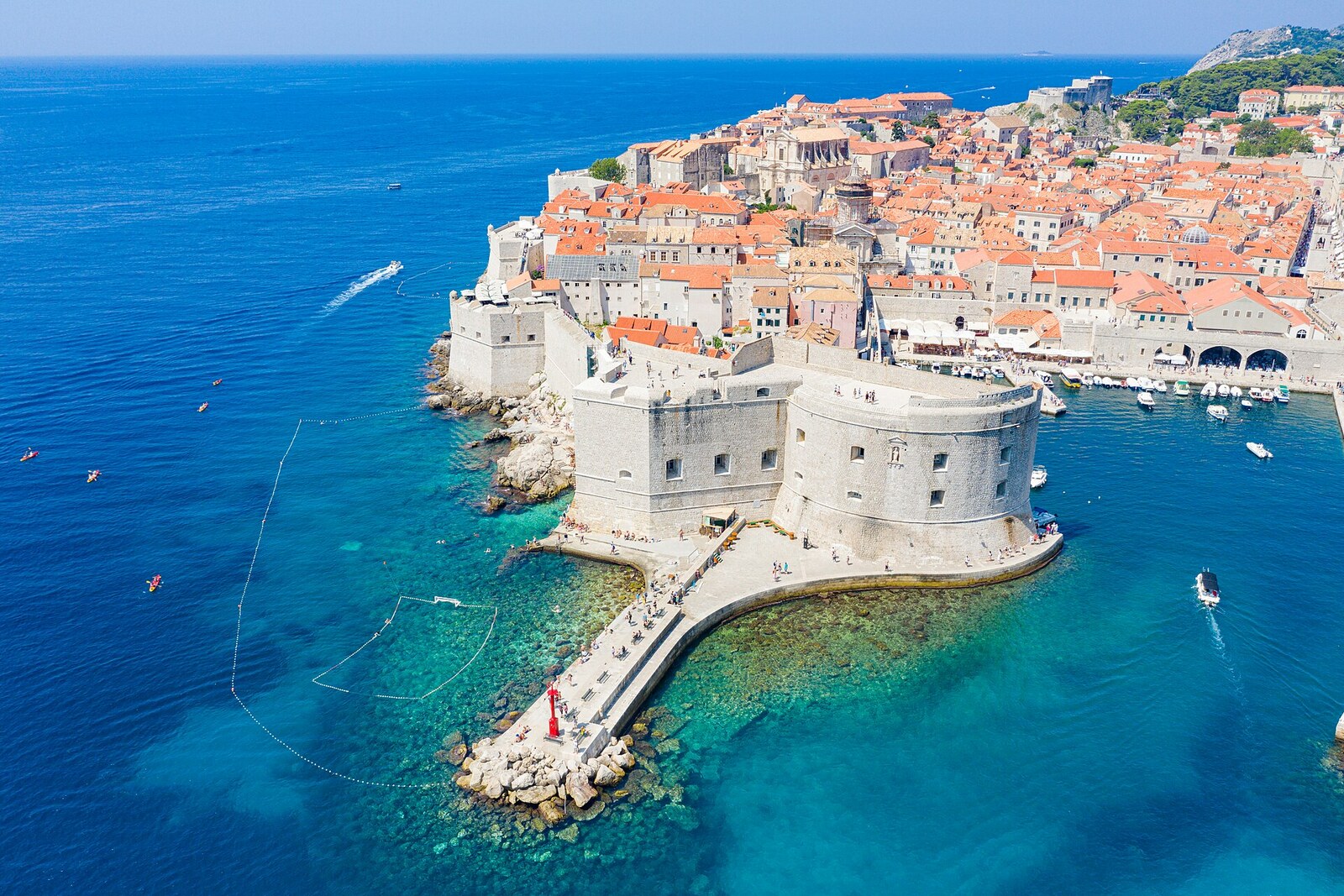
Look around first
What to notice
- Stone mole
- Small lighthouse
- Stone with an inscription about the storm
- Remains of the submerged ridge
The story of the place
The stone Porporela extends from the Old Harbor toward the open sea, and a small lighthouse stands at its end. Its present line rests on a much older submerged ridge, whose traces rise above the water west of the mole at low water. The old coastal word porporaria meant a breakwater made of arranged stones and gave this place its name. In the nineteenth century, the ridge was extended into the present mole, preserving commercial traffic in the Old Harbor; people now walk, swim, and play water polo here.
Vessels entering Dubrovnik's port were several times ordered by the city councils to drop a large stone at the foot of Mulo Tower—the name then used for the tower later incorporated into St. John's Fortress. Captains earned money by carrying goods, while the edge of the harbor, open to southern waves, threatened them with the loss of cargo and vessel. A stone dropped by order was meant to protect the ships that followed—and their own vessels when they next entered the port.
On July twenty-sixth, thirteen forty-seven, the Great Council unanimously ordered an embankment about fifty-one meters long to be extended northeastward from here. Another, smaller one was to be built around the tower itself. One deposit was not enough, so later councils again gave shipmasters the same order. An artificial ridge gradually formed on the seabed, taking the force of the waves. At low water, its remains still rise a little west of the present mole.
In a Dubrovnik record from thirteen sixty-seven, such a ridge was called “porporaria.” The name Porporela comes from this old coastal word: it means an artificial row of stones or reefs made as a breakwater.
In eighteen sixty-seven, engineers of Dubrovnik's construction department, Marin Boriani and Marco Nonveiller, prepared a new project to protect the harbor. They used the stone ridge already lying here as their basis. By eighteen seventy-three, the present stone mole with a small lighthouse had appeared in place of the submerged embankment. It weakened the southern waves, allowed trade to continue in the Old Harbor, and gave townspeople a level promenade by the open water. People now walk, swim, and hold Dubrovnik's “Wild League” water polo matches here.
Six years after it was built, a storm knocked a stone weighing three thousand one hundred fifty-nine kilograms out of the mole. The stone was returned to the masonry, and an inscription was carved on it stating that it had been thrown out by a storm on February twenty-fifth, eighteen seventy-nine.
Useful on site
Accessible around the clock; strong wind or a storm can make the breakwater wet and dangerous.
Checked: June 17, 2026. Check the official source before visiting.In windy weather, the stone is covered with spray and becomes slippery—do not approach the edge during strong waves. It is sensible to enter the water only when the sea is calm and conditions are safe.