 Guide On Map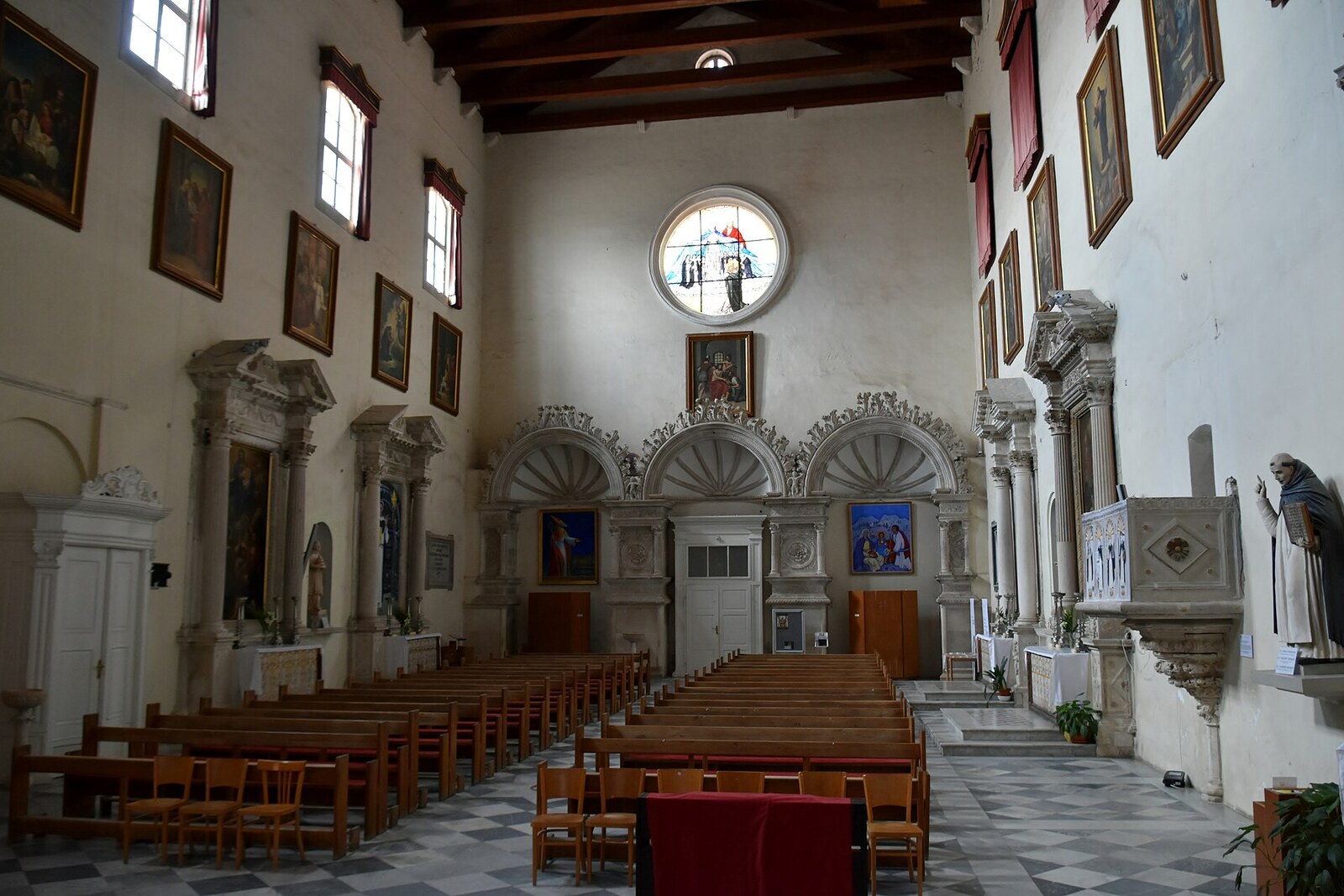
Look around first
What to notice
- The figure of St. Dominic above the southern portal
- The fortress-like outer walls
- The five-meter crucifix
- The triumphal arch
The story of the place
The fortress wall along the eastern approach to the harbor rose around a monastery that initially stood beyond the city limits. The monks received two small churches and a garden here in the suburb of Ploče, then began assembling a large monastic complex. The city paid for part of the work and enlisted residents: the land’s proximity to the harbor made it a defensive site. The fortifications were laid along the outside, so even now the walls resemble a city boundary more than a quiet monastery enclosure.
St. Dominic stands above the southern portal. The followers of the founder of the Order of Preachers are called Dominicans after him. Their community still lives in the monastery, the church remains active, and a museum occupies part of the premises.
The first Dominicans only intended to stop here. In twelve twenty-five, they were heading for Palestine and stayed in Dubrovnik. The city leaders heard their sermons, persuaded the brothers to abandon the rest of their journey, and gave them the small Church of St. James. Three years later, the Palmotić family gave the monks another church and a garden in the eastern suburb of Ploče.
For a mendicant order that lived on donations, this gift meant a permanent home. For Dubrovnik, another problem arose: the monastery stood outside the city, by an important approach to the harbor. When the monks began building a large complex, the city provided money and required residents to take part in the work. In thirteen sixty-five, builders laid fortifications along the outside of the monastery. Thus, the community that had settled beyond the city limits found itself inside the defenses. The fortress-like appearance of the outer walls preserves the trace of that decision.
The church holds an object that shows why townspeople came to the Dominicans at a moment when neither walls nor money offered protection. On March third, thirteen forty-eight, the patrician Šimun Rastić dictated his will. The plague had already reached the territories of Dubrovnik. Rastić belonged to the hereditary circle of families admitted to govern the Republic of Ragusa and managed his family’s property, but in the face of the epidemic he risked his life like everyone else.
He left the Dominicans eighty perpers. After his death, the monks were to commission a large painted crucifix at the high altar and place an image of Christ in Glory above it. Researchers consider this instruction a plague vow: Rastić was giving money for an image whose appearance he might not live to see.
The archive does not allow the commission to be identified with the present crucifix through a single indisputable record. However, art historians link Rastić’s will to the enormous work on the triumphal arch and attribute it to the workshop of the Venetian painter Paolo Veneziano. It is the largest surviving painted composition from the fourteenth century on the Adriatic Sea. The five-meter crucifix still hangs exactly where Rastić ordered his posthumous gift to be placed.
Useful on site
Summer season (1 May – 31 October): 09:00–18:00. Winter season: 09:00–17:00. Access to the church is limited during services.
Checked: June 17, 2026. Check the official source before visiting.From outside, notice how much the monastery resembles a fortification. The cloister, art collection, and other interior spaces require separate access; keep quiet inside.