 Guide On Map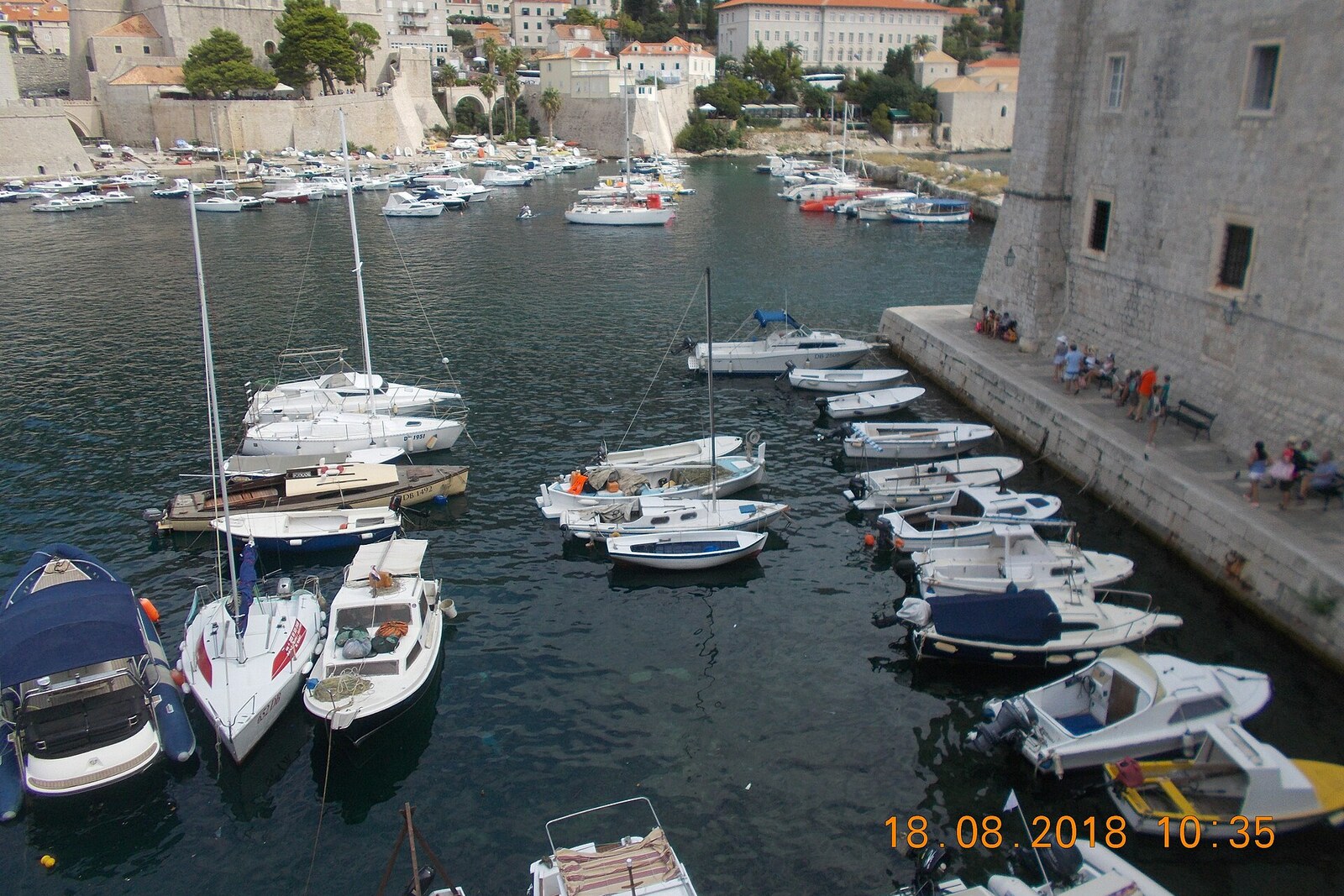
Look around first
What to notice
- Three arches of the Large Arsenal
- Stone vaults
- Facade of the Marin Držić Theatre
The story of the place
During the season, boats leave Old Harbour for Lokrum. Cafes and a restaurant operate behind the three large arches on the waterfront. The arches mark the entrances to the former Large Arsenal, the state shipyard of the Republic of Ragusa. War galleys that protected the city’s merchant ships were built, repaired, and kept here.
Originally, there were four sections. Ships were pulled from the water directly beneath the vaults. From fourteen sixty-six onward, the seaward openings were afterward sealed with a thin wall: this preserved the humidity the timber needed inside and protected the galleys more effectively. Before a ship was launched, the masonry was dismantled. That was why the arsenal’s facade could look like a solid wall in the morning, even though vessels ready to sail stood behind it.
After the earthquake of sixteen sixty-seven, the damaged shipyard lost its former purpose. Materials for rebuilding the city were stored beneath its roof. There was not enough money for a separate public building, so it was decided to turn the two middle ship sections into an enclosed theater. Before that, Dubrovnik actors performed in courtyards, squares, and between houses.
On February fifth, sixteen eighty-two, the noble amateur troupe Nedobitni opened Dubrovnik’s first public theater here. It chose the tragicomedy “Vučistrah” by Petar Kanavelić, a nobleman and playwright from Korčula. The author was present in the hall and wanted to see his play on a permanent stage, rather than on yet another temporary platform.
Before the premiere, a separate box was arranged for the Antunini women. This was the name given to women from Antunini families, wealthy citizens united in the Brotherhood of St. Anthony. Their husbands made their money in maritime trade and held a prominent position, but their lineage gave them no seats on the city councils. Their own box placed their wives closer to the noblewomen and separated them from the other townswomen.
On the day of the performance, the box was torn down. One witness later claimed that members of the troupe had done it; others spoke of young noblemen outraged that the Antunini women had set themselves apart from the other women. The patrician Serafin Bunić approved of the destruction: in his words, everyone had to know their place. For merchant families, the dispute was about recognition of the status earned through trade; for the sons of noble families, it was about a privilege inherited by birth.
Miho Allegretti, secretary of the Republic of Ragusa, reported the incident to Maroj Kabožić, one of the leaders of the post-earthquake rebuilding. The box was put up again. The next day, young noblemen were still shouting taunts at the Antunini women outside the Church of St. Blaise, and on February twelfth the Minor Council began an investigation. The premiere was not canceled, and the women from merchant families got back their allotted place.
The concerns proved more serious than theatrical conventions. A few years later, senators discussed a complete ban on performances at Orsan, but left the stage open. Spectators and actors were forbidden to bring weapons or start scandals. An offender faced a year in a maritime prison, and a nobleman also faced a ten-year suspension from office. After that, the former ship sections served as the city’s main theater hall for more than another century.
The Antunini women’s box and that stage have not survived. The three present-day arches were opened when a city cafe was installed in nineteen thirty-one; part of the masonry collapsed then, and the openings had to be restored. The modern Marin Držić Theatre occupies a later building on the site of the fourth ship section. The premiere of “Vučistrah” and the dispute over the box took place in the arsenal’s two middle sections—where restaurant tables now stand.
Useful on site
The pier and waterfront are open around the clock; restaurants and cafes keep their own hours.
Checked: June 17, 2026. Check the official source before visiting.Watch the harbour from the edge of the pedestrian zone, without occupying the piers or service passages. The theater and the establishments beneath the arches operate separately from the historical visit.