 Guide On Map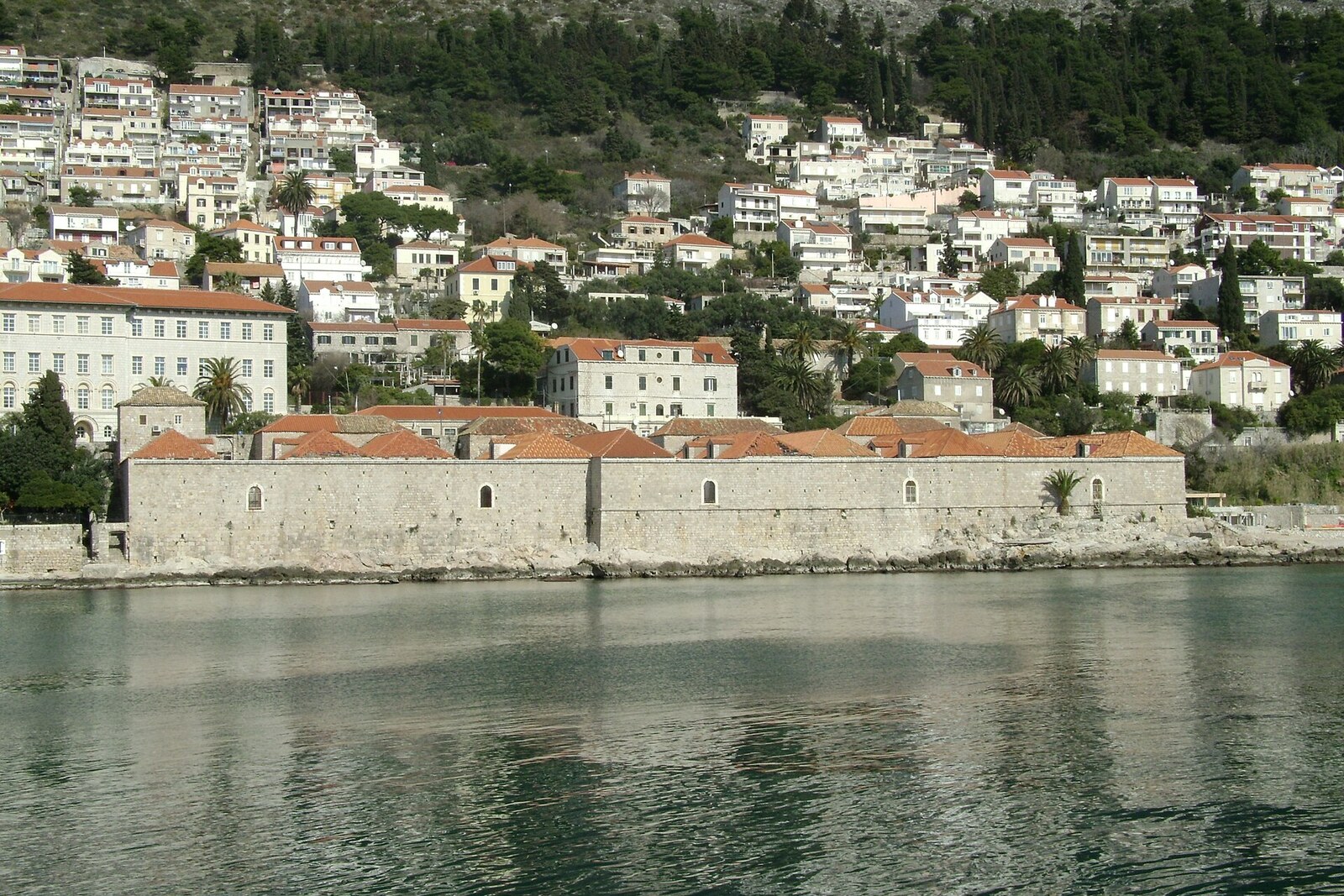
Look around first
What to notice
- Five courtyards
- Roman numerals above the entrances
- Stone buildings
The story of the place
The stone buildings of Lazareti alternate with five courtyards. Exhibitions, concerts, and rehearsals by a folk ensemble take place here now. In the seventeenth and eighteenth centuries, these partitions kept people arriving from different places from meeting. Not only the sick were placed here: outwardly healthy travelers waited until the observation period ended, while their wool, hides, clothing, and other goods were aired, fumigated, or treated with vinegar.
Quarantine was introduced in Dubrovnik as early as thirteen seventy-seven, but arrivals were then sent to the islands. Later, the senators chose Ploče: the caravan road from the Ottoman Empire ended here at the eastern gate, and ships came up to the shore. The complex was built in the first half of the seventeenth century. Merchants and goods could be held, inspected, and then allowed through to the city customs office without stopping trade altogether.
On July twenty-first, seventeen seventy-five, a French ship arrived from Alexandria with forty passengers. Eighteen of them were hajjis—Muslim pilgrims returning home. Some were ill. They were housed in the first and eighth sections and in the courtyard called “above the well.” The forty days were counted only after all the baggage had been brought inside: a person without their belongings was not yet considered fully isolated.
On the very first day, Recep Skenderić, a pilgrim from Mostar, died. The Ottoman emins, representatives at the Dubrovnik trading pier, sealed his property until the heirs arrived. They then began persuading the other hajjis to leave at once and even found horses for them. Three fled. On the road, they met caravan drivers who were already leaving Ploče; sanitary soldiers brought the caravan drivers back to Lazareti and made them undergo quarantine again. One brief contact was enough for people to lose several weeks of travel and earnings once more.
Soon another pilgrim, the hajji Abdurrahman, died here. The emins hid his body in their quarters for three summer days, and sent a servant through Bosnia with the story that Dubrovnik residents had killed Abdurrahman and wounded other hajjis. For the republic, the accusation was dangerous in a very literal sense: if caravans stopped trusting the quarantine, the customs office would lose the revenue from which Dubrovnik paid tribute to the sultan.
Klement Menze, the Dubrovnik ambassador, spent two months persuading the Bosnian governor to send an inquiry. A kadi from Ljubinje arrived in Ploče—an Ottoman judge assigned to investigate the accusation. The remaining pilgrims confirmed in writing that Dubrovnik residents had no part in Abdurrahman’s death; the kadi reached the same conclusion and accused the emins, representatives at the trading pier, of violating quarantine rules. The emins Spahović, Ćeho, and Fetahagić were removed from their posts. A few days after the group’s departure, the first and eighth sections reopened for arrivals.
Roman numerals still stand above the courtyard entrances. They number those very separate sections into which the captain of Lazareti distributed people and goods. Cultural events are now held in the five western buildings; the locked quarantine sections have become halls, but their sequence remains in place.
Useful on site
The complex is open daily; the interior pavilions operate according to the event schedule.
Checked: June 17, 2026. Check the official source before visiting.If the courtyards are accessible, walk through them slowly, noticing the isolation of the separate spaces. If the entrance is closed, the layout of the complex can be understood from the facade; events inside are attended separately.